Environmental History
Version: 3.0, in: Docupedia-Zeitgeschichte, 23.08.2016
https://docupedia.de/zg/arndt_environmental_history_v3_en_2016
DOI: https://doi.org/10.14765/zzf.dok.2.700.v3
Begriffe, Methoden und Debatten
der zeithistorischen Forschung

Version: 3.0, in: Docupedia-Zeitgeschichte, 23.08.2016
https://docupedia.de/zg/arndt_environmental_history_v3_en_2016
DOI: https://doi.org/10.14765/zzf.dok.2.700.v3
Copyright © 2016: Clio-online – Historisches Fachinformationssystem e.V. und Autor:in, alle Rechte vorbehalten. Dieses Werk ist zum Download und zur Vervielfältigung für nicht-kommerzielle Zwecke freigegeben. Es darf jedoch nur erneut veröffentlicht werden, sofern die Einwilligung der o.g. Rechteinhaber vorliegt. Dies betrifft auch die Übersetzungsrechte. Bitte kontaktieren Sie: redaktion@docupedia.de.

Environmental history is the history of the changing mutual relationship between humankind and nature. The various, more or less concrete attempts to define this area of historical study can be reduced to this basic common denominator.[1] In doing so, both sides of this reciprocal relationship, human beings and nature, are accorded their own significance, however inextricably linked they may be. The focus of environmental-history research is the impact of human interaction with nature, both the intended and especially the unintended long-term consequences.[2] The "dialectic tension"[3] between the endeavor to master nature and the concomitant inevitability of individuals and societies being dependent on the physical world is the foundation of environmental history. Accordingly, the environment and history are linked to each other in a complex way, which is why every environmental history is also a history of power and domination.
A special characteristic of this still relatively young historical subdiscipline is its linking of micro and macro levels. Its concern with regional issues and short time spans often includes medium- or long-term perspectives as well as international or global contexts.[4] Environmental history is thus ideally suited to transnational approaches. At the same time, the investigation of concrete phenomena always offers the possibility of making more "universal" assertions about the constitutive relationships of environmental history. Hence the dust storms of the 1930s in the Great Plains,[5] the rubber boom in Brazil,[6] and the development of the Ruhr region[7] allow for more general conclusions about the mutual relationship between social and ecological transformation.
Though the notion of man and nature's mutual dependence may sound pithy at first, it's a rather fuzzy one upon closer inspection. There is no consensus over where to draw the boundaries of this historical subdiscipline, whether it's even a "subdiscipline" in the classic sense at all,[8] nor about what exactly ”nature" and "environment" are supposed to mean. Even "death-defying" attempts to formulate a coherent definition, like that of Douglas R. Weiner in 2005,[9] can ultimately only claim that environmental history resembles a "big tent."[10] Other advocates talk about environmental history as the "product of collective imagination"[11] or an "unevenly spreading blob."[12] They are right, however, in noting that it is this very deliberate openness that makes environmental history so appealing, its structure resembling the complex explanatory models of history conceived of as a "unified" or "total science." Thus, environmental-history research comprises a wide range of topics, from more obvious fields such as the history of water and its pollution, the history of the ground and the air, of forests, their use and their exploitation as well as of other resources, of environmental risks and disasters, of the relationship between humans and animals, right down to the history of ideas of everything that in various epochs has been considered part of "nature" and the "environment" – just to name a few examples. But environmental history also revolves around limits and limitations, the perception of which in many respects gave rise to it in the first place.[13] This perception goes back at least as far as Adam Smith's magnum opus An Inquiry into the Nature and Causes of the Wealth of Nations (1776), in which he points out the limits of land use.
A range of metaphors has been used to describe the twentieth century, and the "age of ecology" is certainly an apt one.[14] In all likelihood, the twentieth-first century will bear the same label. The past century, in any case, was a "prodigal century,"[15] marked by a hitherto unknown acceleration of developments in various areas relevant to the environment, especially the consumption of fossil fuels, population growth, technological innovations, and urbanization. At the same time, however, these developments gave rise to individuals and movements – likewise of an unparalleled magnitude – committed to the cause of viewing and treating the environment as something worth protecting. Moreover, and particularly from an environmental-history perspective, the twentieth century must rightly be considered an "age of extremes," as Eric Hobsbawm termed it.
The emergence and significance of environmental-history research is unthinkable outside of this context. Academia's involvement in environmental policy debates seemed inevitable in the early phases of the subdiscipline, and is still welcomed by the majority of scholars. Environmental historians view themselves as "concerned scientists,"[16] who not only want to have a "better understanding of the past" but also want to "shape the future."[17] Environmental history also clearly exhibits normative and political strains, but these tendencies are no more pronounced here than in other historical approaches.
The core task of environmental history is to establish nature as a basic historical factor alongside other more established focal points of historical research.[18] The question of whether this additional level of complexity in the analysis of historical phenomena is really necessary, if, in other words, environmental history's emphasis on nature as a constituent factor in all fields of historical activity investigated by historiography is indeed productive and essential, can only be answered with a resounding yes.[19] The real question is why the material basis of human history has played such a marginal role for so long.
Not only is environmental history an extremely broad field of research, it is also an exceptionally dynamic and multifaceted one, with little room for scholarly monocultures. Borrowings from a variety of disciplines are virtually inevitable, as many environmental historians are interdisciplinary in their training.[20] Apart from historical subdisciplines, significant impulses have come from linkages to historical geography, geobotany, forestry, climate research, sociology, cartography, landscape ecology, (ecological or historical) anthropology, and ethnology. All of this makes it difficult to draw a clear boundary between environmental history and other disciplines, which turned out to be a source of conflict at least in its early phases.[21] All in all, however, this "lack of discipline"[22] has been a great asset to environmental history and is still one of its hallmarks compared to most other historical subdisciplines.
Recent years have seen the publication of a whole range of instructive overviews on environmental history,[23] including a sadly overlooked three-volume encyclopedia in 2004 whose 500 articles run the gamut of environmental-history topics, from "acid rain" through "nutrition" to "zoos."[24] An excellent survey of fundamental and ongoing issues as well as areas of study is available in Andrew C. Isenberg's just published Oxford Handbook of Environmental History.[25] A particular merit of the handbook is its – largely successful – attempt to combine environmental-history approaches with more general historical inquiries (labor, property, law, knowledge, etc.), an important step in making environmental history compatible with other historical subdisciplines and historiography in general, while at the same time enriching these with the insights of environmental history. Of particular note in the German-speaking world are two works published in 2007: the well-structured Umweltgeschichte im 19. und 20. Jahrhundert (Environmental History in the Nineteenth and Twentieth Century)[26] edited by Frank Uekötter as part of the "Enzyklopädie deutscher Geschichte" series, and the textbook-like Umweltgeschichte (Environmental History) by environmental historians Verena Winiwarter and Martin Knoll, who offer an outline of scientific methods used in environmental history.[27] Both are excellent, clearly written introductions to the complex field of environmental history. Additionally, the 2003 edited volume of Wolfram Siemann[28] and the somewhat misleadingly titled monograph of Franz-Josef Brüggemeier from 1998[29] are very good surveys of the material. Still informative are the edited volume of Brüggemeier and Thomas Rommelspacher,[30] published in 1987, as well as the special issue of Geschichte und Gesellschaft edited by Werner Abelshauser and focusing on the frequently overlooked economic aspects of environmental history.[31] The global context is presented in a particularly comprehensive, informative, provocative, and readable way by Joachim Radkau[32] and by John R. McNeill.[33] Since 2009 three new volumes have appeared offering a good introduction to global environmental history with incisive essays on a wide range of topics and regions: the works of editor duos John R. McNeill/Erin Stewart Mauldin, Sverker Sörlin/Paul Warde and Edmund Burke III/Kenneth Pomeranz[34] go beyond North American and European viewpoints to include Chinese, Latin American, Asian, and to some extent African (McNeill/Mauldin, Burke/Pomeranz) perspectives. Among the classics of (not exclusively) North American environment history used in the classroom (and beyond) are William Cronon's Uncommon Ground and the textbooks of Carolyn Merchant and Louis Warren, both with abundant sources.[35]
Environmental history emerged about forty years ago, and began with reflections on the American "Wild West" and Australia.[36] The original focus was on the concepts of "wilderness" and "frontier," which were closely tied to the history of the United States and Australia.[37] There were of course much older works that could have been classified as "environmental history" or least had an environmental-history slant.[38] As a historical subdiscipline, however, it was only in the 1970s that environmental history emerged on the horizon of historical scholarship. At that time it was closely intertwined with the environmental movement, and many of those involved in the former were also active in the latter.[39] The American Society for Environmental History (ASEH[40]) was founded in 1976, four years after the publication of the famous Club of Rome report, which warned about the "limits to growth"[41] and even today is a cornerstone of environmental policy.[42] In Europe, and Germany in particular, environmental history emerged a decade later. A European equivalent of the ASEH was only founded in 1999 with the European Society for Environmental History (ESEH).[43] The International Consortium of Environmental History Organizations (ICEHO) has united about thirty networks since 2011, including the ESEH, the ASEH, the Latin American and Caribbean Environmental History Association (Sociedad Latinoamericana y Caribeña de Historia Ambiental, SOLCHA) and the Association for East Asian Environmental History (AEAEH).[44] The Munich Rachel Carson Center for Environment and Society has been a hub for the environmental humanities and social sciences ever since 2009.[45] Its research, networking, educational, and publishing activities are considerable.
The following will begin by addressing four basic concepts of environmental history: "nature," "wilderness," "culture," and "environment." I will then argue that environmental history should be taken seriously as a basic category of historiography, as Wolfram Siemann and Nils Freytag have advocated. Two fundamental debates on early environmental history will be followed, in turn, by suggestions for periodization. Finally, the methods and sources of environmental history will be introduced and further focuses of research explored. With the exception of a brief digression on the environmental history of Eastern, East-Central and Southeastern Europe, the frame of reference of these deliberations is generally the United States and Germany, with occasional (and admittedly far too few) references to developments in other regions.
Whereas images and the semantics of destruction and decline dominate popular (and sometimes scholarly) discourses on the environment, environmental history is not a "history of decline and decadence"[46] that views man alone as the "defiler" of an unspoiled nature. Rather, its aim is to historicize the changing relationship between humankind and nature, one which never had an ideal primordial state. The centuries-old motto of "Back to nature!" is thus not only questioned but exposed in its absurdity, itself becoming an object of investigation. The notion of "unspoiled nature" is an entirely human construct.[47]
It is therefore not only a matter of reconstructing environmental conditions of the past, but of investigating how contemporaries perceived and interpreted them, how perceptions – e.g., of "nature" or the "environment" – changed and were instrumentalized in the pursuit of varied interests. Environmental history aims to dispel common misconceptions or clichés, ignorance, or the sheer complacency found in many quarters, historical scholarship included. Environmental history, or so Wolfram Siemann and Nils Freytag provocatively assert, achieves a "historicization of areas of reality that many traditional historians thought resistant to time and change."[48] The seemingly romantic objective of reading landscapes and terrain, conceiving them – not unlike a palimpsest – as archives with their own "memories"[49] is taken quite seriously by environmental historians, who examine the ostensibly trivial and absolute. Non-human nature is included in historical analysis as "both text and context."[50]
Human beings' static ideal of nature has no real correlate in their environment, just as there are no values inherent to nature. Rather, it is a basic assumption of environmental history that the natural environment is constantly changing, even independently of human beings. The notion of decline is based solely on human value systems.[51]
The role of human beings as part of nature is emphasized by a number of authors, such as William Beinart and Peter Coates, who define environmental history as the study of past interactions between humans "and the rest of nature."[52] Joachim Radkau breaks this down even further to the "intimate connection between the outer and inner nature" of humans.[53] He describes the human-environment relationship as a fundamentally intimate one, closely linked to physical (and, I would add, psychological) well-being and reproduction. Radkau aptly refers to this relationship – sometimes wrongly criticized as "biologism" – as the "primary link between mankind and the environment."[54] The meaning of "society" and "culture" are not negated in the process. Rather, he points out that these should be conceived of as parts of the interrelation between the material basis of existence and the propagation of "humans" as a biological organism. A great variety of developments are therefore discernible from an environmental history perspective as key innovations relevant to both humanity and the environment: the introduction of the potato from Latin America, a staple food whose cultivation changed European agriculture, as well as methods of contraception and the use of nuclear energy.[55] These elementary links between mankind and nature have always been perceived by humans. "Environmental consciousness," according to Radkau, is essentially no different than health consciousness, and therefore hardly a product of the twentieth century.[56]
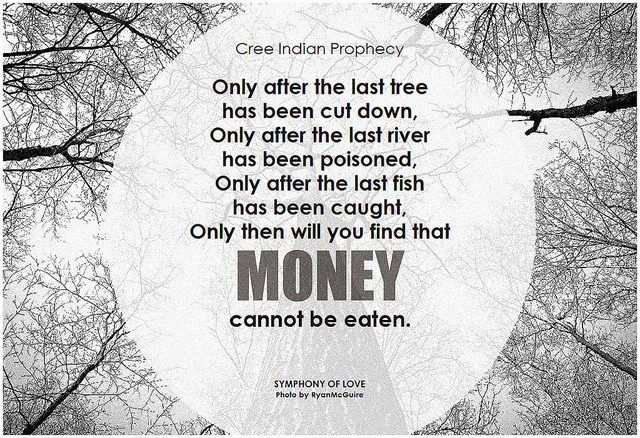
Terms like "culture" and "environment" are frequently used in describing the relationship of interdependence between "human beings" and "nature" (to the extent that humans and nature are considered contrary poles). In North American and Australian environmental history, the concept of "savageness" or "wilderness" is added to the equation. The distinctions are often vague. Equating terms like "wilderness" and "nature" has a long tradition and was especially pronounced during the Enlightenment.[57] The cult of the (natural) "wilderness," which presents the "savage" as the "true and naturally good" on the one hand and as something threatening and barbarian on the other, is deeply rooted in the Western mindset. It can be found in the early, lurid-sensationalist account of the "wild, naked, fierce man-eating people"[58] of Brazil, in the glorification of the native American Chief Seattle as an ecological visionary, or in a television documentary about the "Russian soul" in the supposedly pristine expanses of Siberia. All the more sobering from an epistemological perspective yet nonetheless insightful and characteristic is the fact that the chieftain's putative speech from 1854 with its "Only after the last tree has been cut down…" rhetoric – an almost iconic slogan with veritable cult status, found emblazoned on the walls of many a communal kitchen in the 1980s – was actually penned by a scriptwriter.[59]
Joachim Radkau attributes the persistence of as "meaningless"[60] a concept as "wilderness" to a deep-seated "cult of virginity" rooted in the basic human need for comfort and security.[61] It could also be explained, however, by the widespread longing for "primeval states" and historical authenticity, which witnessed an upsurge in the nineteenth century as well as in the late 1970s. And yet the cult of the wilderness was not merely an isolated phenomenon in the history of ideas; it had an eminently practical impact on nature. It was ultimately this cult that prompted decisions such as the founding of Yellowstone National Park in 1872, the first of its kind in the United States.[62] It also revealed the absurdity of the concept. Because, for one thing, what was being held up as "natural" and worthy of protection was actually the product of native American slash-and-burn agriculture. For another, the "savages," i.e., members of the indigenous population, were driven out of the park.[63]
In contrast to nature, what we commonly refer to as culture is generally understood as the "artificial and technological, the agreed-upon and stipulated, that which is done and enforced, formed and cultivated."[64] In the history of interpreting culture, there is a clear distinction between a model of progress and a narrative of alienation and degeneration. The starting point of the model of progress is a chaotic natural state marked by deprivation which is cultivated and overcome through enlightenment and domestication. The objective is the "height of culture," a state in which the powers of nature have been unlocked and are used for the benefit of mankind. The counternarrative is the history of alienation and degeneration, which tells of the (self-inflicted) expulsion of humankind from a (natural) paradise. The problem is paradoxical, because it is ultimately human culture itself that impacts (i.e., "endangers") nature, whereas this same culture is expected to protect it.[65] Rolf Peter Sieferle thus comes to the logical conclusion that the mere demand for environmental protection signifies the "total victory of culture."[66]
The third term, "environment," though lending its name to environmental history, is no less a metonymy than all of the other basic concepts. Siemann and Freytag define "environment" as the part of nature that, by dint of the existence and impact of humans, becomes the environment that surrounds them and shapes them.[67] Jakob von Uexküll (1864-1944), who coined the German term for environment, Umwelt, pointed out that every living being has its own environment.[68] Thus here, too, what it comes to signify depends entirely on the speaker. A glance at a newspaper or a work of environmental history suffices to show how broad the term environment can be, denoting anything from nature to social milieu.
Wolfram Siemann and Nils Freytag want environment to be established as a fourth basic historiographical category alongside power (Herrschaft), economics and culture.[69] They buttress their proposition with four arguments, embracing most of the basic assumptions of environmental history. They argue, first, that the environment is more than the result of the other three categories interacting. The environment, they claim, is a biological constant of human beings even if it is constantly being reconstructed culturally.[70] Every human behavior is therefore substantially dependent on the environment. Second, as Radkau[71] too has described quite impressively, power and environment are inextricably linked. Ecological effects can hardly be divorced from historico-political contexts. Natural conditions set the framework for the vicissitudes of power, and the entanglement of power and nature has to this day lost none of its validity. Even at a time when nation-states are – at least ostensibly – on the retreat, the access to resources, both their transport routes and as raw materials, plays a decisive and potentially conflict-ridden role. It is now common knowledge that this situation will escalate in the foreseeable future, particularly with regard to ever scarcer resources such as water, soil, and forests. At the same time, this development has created a heightened awareness of the problem, giving rise not only to "green" movements, parties, and other organizations but also influencing government decision-making. The influence of environmental expertise on political decision-making is now evident at all levels of government, comparable to that of NGOs on the process of social decision-making processes. This effectively blurs the distinction between civil society and the state as well as between the roles of "protector of the environment" and "destroyer of the environmental," as Radkau has amply demonstrated.[72]
As a third line of argument, Siemann and Freytag point out the close interdependencies with economic processes. These ties are most visible in the area of energy supply. Whereas until recently the environment was considered a "free commodity," a resource incurring no or little costs in the production process, it is now common practice to calculate the enormous costs that arise from the use of these resources. The extent to which the economy and the environment are intertwined has been highlighted in particular by Christian Pfister with reference to Switzerland.[73] Though his term "1950s syndrome" – see below – may be debatable, Pfister's basic tenets are sound.
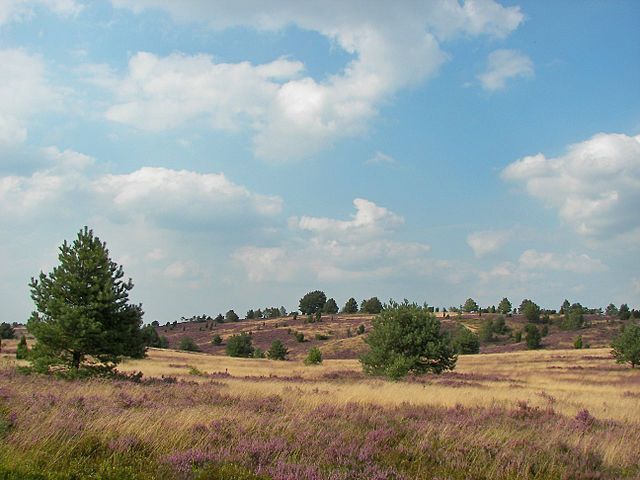
The fourth and final argument of Siemann and Freytag to establish environmental history as a basic historiographical category is the linkage between environment and culture. The human perception of nature is always culturally informed. The textbook example in German environmental history is the Lüneburg Heath. Only through centuries of humans and animals using the Lüneburg forest did the Lüneburg Heath develop into the cultural landscape that is now a recognized national park. It is a striking example of how today's nature reserves are actually cultural-landscape reserves.
Frank Uekötter has justly pointed out that the differently paced developments of the natural world (very slow) and human history (much faster) makes it difficult to divide environmental history into periods due to a lack of clear watershed events.[74] Yet research focused on the Western world has nonetheless discerned some key moments allowing us to speak of different periods. Most scholars have meanwhile accepted a rough division into at least four phases, two of which are relevant to contemporary history and can be subdivided into further periods.[75] Following Franz-Josef Brüggemeier's general outline,[76] which predominantly refers to Germany for the period of contemporary history, these are: "before the great transformation [i.e., industrialization]," the "transformation of the nineteenth century," the "Weimar Republic and Nazism," and the "post-1945 world." This means that some environmental historians are still strongly focused on political watersheds.
The period "before the great transformation" spans preindustrial agrarian society, which was almost entirely dependent on renewable resources, especially wood.[77] The nineteenth century witnessed a transition from the "ancient régime" of environmental history to the modern industrial world. The century was marked by a number of radical changes relevant to environmental history. Fossil fuels increasingly replaced wood. Agriculture underwent a profound transformation with the emancipation of serfs, the elimination of common land, the intensification of agricultural production, and the cultivation of wasteland. Woodlands were increasingly marketed and capitalized. The science of forestry came into existence. Insufficient hygiene in growing urban centers resulted in the spread of epidemics, especially cholera. The harmful influence of human beings on the environment grew and was increasingly palpable in the form of air, water, and noise pollution, which ultimately led to the first reactions and countermeasures, e.g., the construction of central water-supply systems (in Berlin in 1852, and Magdeburg in 1858). The contradictory experiences and negative (environmental) impact of industrialization and urbanization were a much-discussed topic in the early twentieth century. Even though the critics of these developments were relatively few in number and their main concern was not always nature and the environment, Brüggemeier is right in pointing out that the period was not marked by a "general, unbroken enthusiasm for progress."[78] Overall, however, there was a broad consensus that economic growth and the promotion of industry had to be given priority. With social hygiene in its heyday in the Weimar Republic, environmental conditions increasingly became the focus of attention of medical practitioners and social-policy makers. At the same time, more and more people in the German Empire joined cultural-heritage and nature-conservation movements. This was accompanied by a growing perception of "nature" as something worth protecting.
The Nazis continued the traditions of environmental conservation that existed in the Weimar Republic, making human ties to nature and the soil their ideological focus.[79] Radkau describes the environmental-history aspects of Nazism[80] as a "thorn in the flesh of historical reflection."[81] In the area of environmental protection, in particular, the Nazis introduced some epoch-making changes at least at the legislative level. The Reich Nature Protection Law (Reichsnaturschutzgesetz) of June 26, 1935 was an unprecedented regulatory instrument that went well beyond protecting natural landmarks and nature reserves. It mandated specific conservation standards in any plans involving changes to the landscape. Even in the case of the Nazis' pet project, the construction of the autobahns, planners favored "natural" (naturgemäß) criteria, in particular the use of curves to make roads conform to the terrain – unlike railroad tracks, which cut straight through the landscape. In questions of landscape conservation and environmentally friendly technology there was no official party line, and the Nazis even permitted controversial pubic debates. The recycling of industrial waste and raw-material recovery were likewise booming. Overall, however, the environmental balance of autarchic Nazi policy-making was not a positive one. Not only was there no broad environmental-protection alliance; many initiatives barely went beyond the codification stage. The Nazis violated their own environmental laws, and a large part of these ostensibly positive developments were linked to Germany's war preparations and its strategies of justifying an expansion of its "lebensraum."[82]
After the Second World War a period of hitherto unparalleled economic growth began which, given the tremendous boost in global energy consumption it entailed, can be considered a unique phenomenon in world history. Pfister coined the term "1950s syndrome" to describe this period.[83] He cited cheap fossil fuels, especially petroleum, as the main reason for the increase in energy consumption. He also makes a case for energy as a third production factor alongside labor and capital. Pfister combines aspects of economic, social and environmental history. The drastic increase in energy consumption fundamentally changed the lifestyle of the majority of West Europeans, opening up new opportunities while creating a shift in value priorities of interest to historians of mentality. For Pfister the 1950s are the "saddle period" between industrial society and a consumer closely linked to growing mass production. Damage to the environment rapidly increased alongside these developments, and consumers themselves were increasingly the cause of it.
In the current debate among contemporary historians about the epochal threshold of the 1970s, Pfister's theory of the "1950s syndrome" has been criticized by Patrick Kupper.[84] In Kupper's "diagnosis" a thorough redefinition of the relationship between humans and the environment only began after 1970 – and not, as Pfister claims, already in the 1950s. Instead of "accelerated growth" Kupper discerns "exponential growth." Pfister's use of the term "syndrome" neglects, in his opinion, the considerable stability of the "long 1950s,"[85] whose "patients," i.e., contemporaries of that era, hardly perceived these years as "pathological." In his view, the interpretation of pollution as a social syndrome began twenty years later with the emergence of a new kind of environmental awareness.[86] Following Kupper's line of argument, Jens Ivo Engels suggests calling the 1970s an "ecological turning point."[87] Radkau recently expanded this periodization by talking about the subsequent "ecological decades," which he calls the "new age of ecology," the "environmental boom" – the formative phase of environmental politics which environmentalism draws on even today.[88] Much more so than in the 1970s, catastrophes in the 1980s and 1990s, most notably Chernobyl, were a key trigger for transformation processes in the human-environment relationship. The many words of the 1970s were finally being followed by deeds, in Radkau's estimation. Moreover, state and non-state protagonists increasingly adopted a global perspective. Nowhere was this more apparent than in ecological communication, which was much more sustainable on a global scale than it was in the 1970s.[89]
The question has been repeatedly raised in recent years as to what extent a periodization of this sort applies to "non-Western" states. Eastern Europe, in particular, has increasingly preoccupied environmental historians. "Look to the East" was the title of an article in a recent issue of Environment and History by the current president of the ESEH, Dolly Jørgensen.[90] The title is indicative of a trend. After the "Go West" focus of North American environmental history, the "East Side Story"[91] of global environmental history is now in a dynamic period of growth. The last three years have witnessed an increasing interest in the environmental history of the hitherto overlooked Eastern, East-Central and Southeastern regions of Europe. This is reflected not only in recently completed and ongoing research projects with their attendant publications but is also evident in the founding of institutions, in smaller centers of research at universities, as well as in a variety of national and international research networks.[92] The predominance of outside perspectives is gradually being offset by the work of scholars from these countries. Moreover, a generation shift is underway, making room for younger scholars from these regions and challenging the leading role of scholars from more established disciplines such as geography.[93] East-Central European[94] and Southeastern European[95] environmental history have also been catching up since Zsuzsa Gille's comment six years ago that they were light-years behind the work being done on Eastern Europe.[96] Research on the GDR and inter-German history, often dismissed as an area that's been "studied to death,"[97] has also proliferated.
The environmental history of Eastern Europe and the Soviet Union is still predominated by studies focused on Russia.[98] Given the influence and the sheer size of this empire – and hence the range and variety of nature in it – this focus may be justified, and there is certainly still more work to be done here. That said, it's high time that the smaller states and the Central Asian republics of the former Soviet Union are given their due by environmental historians.
The first post-Soviet diagnoses of the environmental history of the Soviet Union had a wide echo, even outside the field of environmental history, prompting many environmental historians to distance themselves from them. Catchy titles with words like "ecocide"[99] and "eco-nationalism"[100] were of course guaranteed to attract attention to the truly devastating environmental problems of a defunct empire in the early 1990s as well as to the frequent links between the environment and national movements, but the analyses they offered only scratched the surface and didn't do justice to the complexity of Soviet realities. Alongside pollution and the squandering of resources there did exist a sensitivity to ecological issues, evident in both individual behavior and in state-level environmental protection measures, such as the network of nature sanctuaries, the zapovedniki. Throughout the entire Soviet Union, individual protagonists in science, bureaucracy, and the population at large used whatever scope of maneuver they had, allowing them a certain degree of involvement and influence at various levels. What's more, the environmental protests of the late 1980s and early 1990s cannot merely be described as the outgrowths of national(ist) aspirations. Ecological arguments not only had a proxy function but – especially in connection with social questions – carried their own political weight. Reducing all of this to "eco-nationalism" underestimates the complexity of ecological debates and their role in mobilization processes.
Though Stephan may go too far[101] in his diagnosis of "Stalinist environmentalism,"[102] the "shades of green"[103] that existed under real socialism and led to a rapid process of ecologization in the late 1980s must certainly be taken seriously. They can help "correct or supplement the grand narratives of Soviet history"[104] as well as those of global (environmental) history. This means specifying the role ecologization processes played in the collapse of the system, as well as explaining the extensive de-ecologization of society that soon set in, a development that went hand in hand with the professionalization and institutionalization occurring at the state and non-state levels. Whereas Fukushima caused alarm in Western Europe and an "energy transition" in Germany, the countries suffering the most from the aftereffects of Chernobyl remained surprisingly indifferent. Though Chernobyl was once a decisive catalyst of mobilization processes, in the long run this nuclear disaster did little to promote a critical debate on the use of nuclear energy in the successor states of the Soviet Union. If there was an "anthropological shock" in Eastern Europe (like the one Ulrich Beck observed in Japan after Fukushima) it must have been a very short-lived one.
Research on Nazism has already shown that dictatorships too are not averse to environmental protection, especially in its classic form. There are research lacunae on the relationship between the environment and society in various dictatorships[105] as well as in the form of cross-system comparative studies.[106] The still palpable and understandable need of East-Central, Southeastern, and Eastern European historians to distance themselves from the monopolizing Soviet/Greater Russian narrative is reflected in the focus of environmental history. Still, the time has come for more cross-system comparative and entangled history approaches.[107] The influence of the Cold War on the dynamic relationship between environment and society as well as on environmental discourses and policies still needs to be examined further.[108] Along with these more overarching perspectives, there is still a dearth of research on the 1980s, perestroika, and the 1990s. The "East Side Story" of environmental history would also do well to open up to other angles that have long since been part of the standard historiographical repertoire, most notably gender history approaches. Women played a central role in mobilization processes, for example, yet the environmental history of the East is too often portrayed as a purely male affair. If it was in fact men who dominated certain areas, e.g. the scientific sphere, this lopsidedness at least needs to be explained, along with the discrepancy between scholarly debates and environmental activism.
The attractiveness of environmental history and its innovative potential are grounded in its plurality of methods. A specific feature of environmental history is its combination of historical methods and findings from the natural sciences,[109] at least when its aim is not a straightforward history of perception. Some basic knowledge of the natural sciences is helpful in any case. This pluralism, however, and the various attempts at an integrative approach make environmental history a "precarious discipline"[110] which necessarily lacks a clear thematic and methodological profile. The variety of methods – from "classic" historical to the inclusion of scientific methods – offers an exceptionally diverse variety of sources, from classic archives to forestry documents. "Conventional" sources such as administrative documents and travelogues can also be reinterpreted. New or hitherto underappreciated sources, some of which are only decipherable to those with a scientific background and that might read like a foreign language to classically trained historians (and are probably of only limited interest to contemporary historians), can be useful for long-term studies. These include the analysis of preserved pollen, of wood (dendrochronology), bones (biological anthropology), petrified fossils (paleontology), of organic remains (radiocarbon dating) or air trapped in perpetual ice (paleoclimatology).
In 2006, Jens Ivo Engels criticized the scant importance given to issues of environmental history in the leading debates on contemporary history.[111] The situation has improved somewhat since then.[112] And yet it is inexplicable in this, the "environmental age," why environmental-history perspectives have not been incorporated more readily, especially given the body of work done in recent years.
In a field as dynamic as environmental history it is well-nigh impossible to provide a comprehensive overview of topics and literature. The following can merely address current trends and a number of examples, with no claim to be comprehensive or complete. The focus is on German, European, and North American environmental history – an inexcusable deficiency, given the many informative studies on Asia, Africa, Australia, and Latin America, neglected here for reasons of space.[113]
Apart from the topics mentioned above, contemporary environmental history has dealt most thoroughly with the history of nature conservation and environmental protection in all of its many facets.[114] Environmental policy and environmental movements occupy a special place here.[115] Only since the turn of the century, against the backdrop of the ubiquitous debate about global warming, has climate history become an integral part of environmental history.[116] The term "Anthropocene"[117] was coined by it to describe the twentieth century.
A current attempt to expand environmental history with an innovative perspective and new regional emphases is a focus on the so-called BRICS states (Brazil, Russia, India, China, South Africa). The approach – borrowed from economics – of viewing these so-called newly industrialized countries as a collective, may in itself be debatable. But every attempt to work beyond the classic fields of comparison, particularly when they include previously unexplored regions, should be greeted with open arms, even if – or precisely because – more questions are posed than answers provided. Questions, after all, are the starting point for new reflections.[118] Overall, more cross-system research would be welcome and, given the often transnational nature of environmental history, would seem to be a logical development.[119]
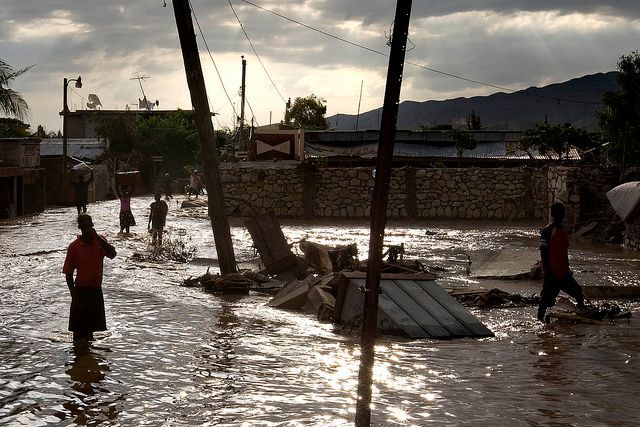
This is especially true of disaster management – environmental contamination didn't stop at the Iron Curtain – which played an increasing role in public awareness as well as serving as motor for environmental history itself. Whereas natural catastrophes are among the classics of general environmental history, more recent studies are focusing on contemporary disaster processes and risk perception.[120] It was the reactor meltdown at Chernobyl[121] that ultimately led Ulrich Beck to diagnose the emergence of a (global) "risk society." Along with the lack of cross-system studies there is a deficit of works on technical or so-called human-made disasters.[122]
All in all, however, there has been a fruitful convergence of technological and environmental history in recent years.[123] Already twenty years ago Richard White's outstanding study on the Columbia River, The Organic Machine, showed how easily the boundaries between "natural," "cultural," "social," and "technological" can be blurred.[124] This book was perhaps one of the first to show that the role of technology in the relationship between human beings and the environment is a complex one that can no longer be portrayed as a history of destruction or a history of progress. In this context, environmental-history perspectives are not simply part of a narrative but help explain technological transformation. At the same time, historians of technology have begun to question the nature of technology in its interaction with the environment. Technology not only has an effect on the environment; the environment affects technology too. Nothing illustrates this better than the cycle of energy production and consumption: no steam engines without coal, no nuclear power plants without uranium. Sara Pritchard sees a transformation of technology from an "agent of ecological change" to an "agent of socio-environmental change." In light of the Fukushima disaster, she pleaded convincingly for abandoning the strict division between natural and technological disasters and replacing it instead with the concept of "envirotechnical disasters."[125] The term "environmental change" is ultimately turning out to be a more neutral alternative to "environmental pollution." The key categories are knowledge/science and the lack of knowledge, i.e., ignorance. The guiding question is which knowledge asserts itself and why, how ignorance is produced, and what they mean for historical analysis.[126]
A relatively recent topic of environmental history is "environmental equity." Categories such as gender, class, and race are the focus here.[127] The inclusion of this additional level of complexity in environmental-history research recently prompted Andrew Isenberg to talk about a "new environmental history" that is radically different from that of the founding generation.[128] Fifty years after the publication of Rachel Carson's environmental classic Silent Spring,[129] which dealt with the consequences of DDT, there is a stronger interest in the human body, its health, and especially the danger of its contamination with poisons or "biothreats."[130]
Along with the relationship between human beings and nature, environmental history has now turned to the relationship between animals, human beings, and nature.[131] In the wake of the somewhat dizzying craze for ever new "turns" in recent years, the "animal turn" has now been proclaimed.[132] It remains an open question, however, whether the relationship between human beings and animals is a facet of environmental history or its own distinct area of study.[133]
Two debates that were central to environmental history in the narrow sense, at least in its early phase – the controversy between so-called anthropocentrists and non-anthropocentrists or biocentrists, as well as the "wood-shortage debate" – seem to have run their course.[134] At the center of the debate between the "anthropocentrists" and the "non-anthropocentrists" was the attempt to define environmental history's object of investigation: humankind or nature? The question of whether or not (non-human) nature has its own intrinsic rights became the big question of environmental history, even though it was basically a "sham" debate.[135] Nowadays it is generally agreed that all approaches and questions are, in essence, "naturally" grounded in an anthropocentric perspective. There can't be a history of "nature as such." The strong link between environmental issues of the day and the questions posed by environmental history, particularly in its early stages, found dramatic expression in the wood-shortage debate of the 1980s. The media-fueled hype about "forest dieback" (Waldsterben)[136] and the discussion about energy sources in Germany unleashed a controversy about a supposed wood shortage in the eighteenth century. It was Radkau, first and foremost, who questioned this then undisputed notion in forest history.[137] He pointed out the power-political instrumentalization of forests inherent to the wood-shortage scare, thus underlying with startling clarity the link between nature and power.
One concept that originally emerged in the "wood-shortage debate" between German forest historians and that initially referred to woodlands is "sustainability" (Nachhaltigkeit). By way of North American environmental history, where the term has been well-established for more than two decades, the term was eventually reimported to Germany.[138] It has basically become a household term since the environmental conference in Rio de Janeiro in 1992. The practical application of environmental history, for instance in museums of industry, also plays a role in contemporary environmental history research, albeit a marginal one.[139] The field of businesshistory has also been illuminated from an environmental perspective.[140] Whereas links to literary studies have been made via the booming field of "ecocriticism,"[141] the analysis of the media in environmental history – a rather promising field, indeed – is still rather underdeveloped.[142]
A particularly attractive feature of environmental-history research is its surveys and syntheses of historical periods.[143] Transnational and transfer history are frequently referenced by environmental history without having really caught on in contemporary environmental history. Studies focused on individual nation-states still predominate, even though its meaningfulness has often been questioned. This, in itself, is not a deficit, as this type of study is surely needed. Nevertheless, the time has come for more research daring to present a synthesis.[144]
There is currently much discussion about a European environmental history. Whereas some are skeptical, claiming that Europe is nothing but a social construct[145] and that it would make more sense to investigate transfer processes that aren't limited to Europe, Uekötter has indicated perspectives that at least allow for an overarching narrative of "natural environments" without necessarily assuming that a European environment per se exists.[146]
The subdiscipline of environmental history has seen some rapid growth spurts since 2007 – when Uekötter expressed his doubts if the discipline had matured at all[147] and when this Docupedia article appeared in its first version. The First World Congress of Environmental History (WCEH) in 2009 in Copenhagen/Malmö was an important step on the path to maturity. The congress was pioneering not least of all because it actually dared to be international, unlike many other gatherings which merely claimed to be so. While it is true that the usual hurdles of international exchange – language skills and the underrepresentation of participants from poorer regions – were yet to be overcome, at least they were openly discussed in Copenhagen, an unusual gesture among historians. Likewise path-breaking was the appeal for more public outreach.[148] The Second World Congress took place in 2014 in Guimarães, Portugal. Its organizer, the ICEHO, has meanwhile unified more than 30 individual institutions as well as national and international networks. Some of these are more "mature" than others. On the whole, however, the subdiscipline seems well-developed. The turf wars of the first generation seem to be a thing of the past,[149] a new generation has become established, and a third is in the making. What's more, the claim to bring the benefits of environmental history to society is being implemented, at least in part: The ICEHO is helping the city of Guimarães apply for the "European Green Capital" award of 2020.
All of this notwithstanding, the critique formulated by Jens Ivo Engels about the "unfortunate disinterest" in the work of environmental historians and the conscious or unconscious reluctance to accept into the "canon" of contemporary history the meanwhile abundant and exceptional work of environmental historians still appears to hold true.[150] The valuable contribution of environmental history as a "subdiscipline" deserves much greater recognition from the outside world and from scholars working in other disciplines. Apart from providing contemporary history with new objects of investigation and new perspectives, it can also help, not least of all, to reassess seemingly "over-researched" topics.
Translated from the German by David Burnett.
Copyright © 2016: Clio-online – Historisches Fachinformationssystem e.V. und Autor:in, alle Rechte vorbehalten. Dieses Werk ist zum Download und zur Vervielfältigung für nicht-kommerzielle Zwecke freigegeben. Es darf jedoch nur erneut veröffentlicht werden, sofern die Einwilligung der o.g. Rechteinhaber vorliegt. Dies betrifft auch die Übersetzungsrechte. Bitte kontaktieren Sie: redaktion@docupedia.de.
![Farm Security Administration, untitled [houses and factories], ca. 1942, source: The Library of Congress: Farm Security Administration - Office of War Information Collection t 11671-30 (missing since 1981 DLC 93845501), Flickr (Public Domain)](/sites/default/files/import_images/1784.jpg)