Infrastructures
Version: 1.0, in: Docupedia-Zeitgeschichte, 20.05.2021
https://docupedia.de/zg/laak_infrastructures_v1_en_2021
DOI: https://doi.org/10.14765/zzf.dok-2215
Begriffe, Methoden und Debatten
der zeithistorischen Forschung

Version: 1.0, in: Docupedia-Zeitgeschichte, 20.05.2021
https://docupedia.de/zg/laak_infrastructures_v1_en_2021
DOI: https://doi.org/10.14765/zzf.dok-2215
Copyright © 2021: Dieser Text wird veröffentlicht unter der Lizenz „Creative Commons CC BY-NC-ND 4.0“. Eine Nutzung ist für nicht-kommerzielle Zwecke in unveränderter Form unter Angabe des Autors bzw. der Autorin und der Quelle zulässig. Im Artikel enthaltene Abbildungen und andere Materialien werden von dieser Lizenz nicht erfasst.


On 1 March 1952 the German daily Frankfurter Allgemeine Zeitung noted that “nothing encourages thoughtlessness and diminishes attention over the long run more than the profligate use of incomprehensible words.” This observation was motivated by a NATO conference in Lisbon, where “the word ‘infrastructure,’ which sounds bizarre and incomprehensible to German ears,” had repeatedly been used.[1] While the author called for the curious term to be jettisoned from the language altogether, his exhortations ultimately went unheeded, for infrastructure soon found wide acceptance in the German-speaking world – and is now used today more than ever.
Traditionally, infrastructures has been used to designate a broad range of systems and services that support or sustain the function of the economy and society, including roads, railways, utility grids, and telecommunication networks. For some years now, however, the term has also become increasingly common outside of economics and urban planning; indeed, it is now used frequently by scholars in history, cultural studies, law, social sciences, and the arts. When a given term or phenomenon begins to attract such wide attention, this can be an indication of instability in existing arrangements – as we find at present, for example, in the area of transport, energy, and climate policy.
In this article, I trace the concept of infrastructure and explain why the material manifestations of societal networks are so revealing, especially from the perspective of contemporary history, and why they are an interdisciplinary topic par excellence. I begin by focusing on what is generally understood by infrastructures, before proposing a more narrow definition. I then discuss the history of infrastructure and outline fields of research that currently study the phenomenon or that could stand to delve into it at greater length.
As a term, “infrastructure” seems to obfuscate rather than clarify. Yet beyond its nebulous contours, the very fact that the term has been charged exclusively with positive connotations should make historians suspicious, or at least alert them that something is amiss. After all, what public good is demanded by all, from the political right to the political left, in Global North and in the Global South? It also appears strange that infrastructure-related topics are considered the proper purview of experts, public administration, or more broadly, “politics.” On the other hand, the ceremonies that have accompanied the inauguration of new highways or improved internet transmission speeds appear to be highpoints in the everyday life of politicians. Yet they also function as ritual celebrations of a society that believes in its future and invests in it both materially and symbolically.
![Eröffnung der Autobahnstrecke Neuenburg - Märkt; Brücke mit Publikum. Foto: Willy Pragher, 19. Dezember 1959. Quelle: [https://www2.landesarchiv-bw.de/ofs21/olf/struktur.php?bestand=60581&sprungId=2751194&letztesLimit=suchen Landesarchiv Baden-Württemberg, Abt. Staatsarchiv Freiburg, W 134 Nr. 055411] / [https://www.deutsche-digitale-bibliothek.de/item/6JROGL2OCAJBA3GNNG6UTXGVNHITZPEV Deutsche Digitale Bibliothek], Lizenz: [https://creativecommons.org/licenses/by/3.0/de/ CC BY 3.0 DE]](https://docupedia.de/zg/sites/default/files/import_images/6486.jpg)
At the same time, there are ongoing discussions about “second nature,” i.e. the built environment, as it is shaped by infrastructures. Common topics include traffic jams, the reliability of rail service, green electricity surcharges, the removal of public postboxes and telephones, and hacking attacks or natural disasters disrupting vital societal systems.[2] They include debates about who should pay for infrastructures; what role the private sector should have in communications, transport, and utilities; whether such resources should be publicly accessible and usable for all; and whether to discipline or ban those who violate common principles. At present, many of these questions are particularly salient for digital infrastructure.
The term “infrastructure” first appeared around 1875 in France to describe the country’s railroad system.[3] It accompanied the rise of a modern administrative state committed to the common good through such concepts as public works, collective goods, public utilities, réseaux/travaux/service publics, and obras publicas. Since the beginning of the 20th century, new terms have emerged to describe that mission. In the late 1930s, the German legal scholar Ernst Forsthoff described the basic material services that the state provides its populace as a Daseinsvorsorge. In the 1950s, the economist Albert O. Hirschman spoke of the “social overhead capital” that state institutions generate. It was not until after the Second World War that the term “infrastructure” entered the vocabulary of scientific and technological modernity, however. NATO used infrastructure to denote the material prerequisites necessary for the operation of military bases or the deployment of military campaigns. For developmental aid organizations, infrastructure meant everything needed to ensure humane living conditions and a thriving economy. The term eventually spread to the Eastern Bloc as well, though not without resistance. The East Germans initially preferred the linguistic monstrosity materiell-technische Territorialstruktur (“material-technical territory-structure”).
Strikingly, what was deemed “infrastructure” became, over time, an ever-expanding descriptor of whatever seemed essential for a functioning economy and society, for general prosperity and a high quality of life. In the process, the term came to stand not only for expectations about the welfare state but also for the assumptions – often preconscious – regarding necessity, predictability, planning, security, reliability, and functionality.
As some of the above examples suggest, “infrastructure” can mean very different things. One important distinction centers on the narrowness or vastness of what is being described. In the broadest sense, it describes everything that enables societal activities of any kind and can thus include language and the media. But this broad sense, which figures prominently in the “cultural turn” and is a modish fixture of conference announcements, runs the risk of becoming a “diffuse all-purpose metaphor for almost any form of system,”[4] robbing the term of analytical sharpness. The contours of the narrower understanding of infrastructure are more distinct: an ensemble of tangible institutions designed for the anonymous population at large and around which an everyday practice has established itself.
Another important distinction is between infrastructure understood as policy “from above” or as practice “from below.” Though people tend to use the term in one way or the other, I argue that infrastructures proper emerges only in the interaction of both. Infrastructures do not only come into existence when they are designed or built. Rather, its components must also become indispensable for a given part of the population. In the case of “green infrastructure,” the population may include flora and fauna, for example.[5] Infrastructures consist not only of their facilities but also of their relationships to life. In this “praxeological” understanding, it is the availability of infrastructures for intensive anonymous use that makes them infrastructures to begin with.
When did infrastructure first emerge, historically? Whole early Bronze Age axes and ploughs do not count, the precursors of modern-day infrastructure go back at least to the Romans, who had impressive supply and disposal networks, especially in Rome, and extensive road and water supply systems as well.[6] I would nevertheless argue that Roman infrastructure did not share the renewed and interlinked aspects of modern infrastructure (not to mention only being available to part of the population). Instead, what we today recognize as infrastructure first arose with what Max Weber called the “institutional state.” Municipalities, regional governments, national authorities, and private entrepreneurs began systematically to build pipelines and roads and create integrated, network-like structures with connections and junctions.[7] They introduced transport, energy, communication structures, supply and disposal networks, and social and cultural services, and defined them in terms of the “common good.”[8] The main purpose was to enable an anonymous mass society of intense exchanges between nature and civilization, city and country, producers and consumers, abundance and shortage. A successful infrastructure would allow an increasing division of labor, the expansion of movement, and the direct participation in resources, goods, and information.[9]
Today, infrastructures consist of large-scale technical systems that the population uses routinely, quasi naturally. The systems are used to dispose of waste, communicate, connect, network, travel, “surf,” open up new horizons, and, if necessary, exclude, leaving a certain portion of the population “disconnected.” It is this last aspect that points to the close intertwining of the discourse of infrastructure with narratives of progress and the threat of regression.
Modern infrastructure can also be defined as the stable or immobile elements that are necessary to enable fluidity, movement, and communication. They produce a networked and circularly organized society that generates trade and change, peace and prosperity.[10] Such a society reflects a liberal bourgeois – and early socialist – concept of modernity, which developed simultaneously with the concept of infrastructure.[11]
A powerful symbol of modern-day infrastructure is the smartphone. A kind of remote control for society, smartphones promise to connect everyone independent of location and background and to grant access to global information and data. Smartphone users can make purchase decisions at any time, participate politically, and take part in a community of world citizens. At the same time, smartphones subject their users to near constant surveillance and spying, often imperceptibly.[12] Moreover, the seemingly infinite possibilities offered by smartphones require that their users be sovereign, educated, and decisive. But maintaining such an edifice is difficult, and leaves many distracted and disorganized and with a permanent fear of missing out.
As the example of the smartphone shows, infrastructure is crucial for everyday life and its cultural influence can hardly be overestimated.[13] Sewers, roads and railroads, airlines, the Internet, electricity and water supply, waste disposal, and tourism services all cost an enormous amount of manpower and money and are the result of lengthy and complex negotiations. Infrastructures are not only a built system that makes up the physical environment; they are a social, cultural, and political achievement.
Many today take infrastructure for granted, unless, that is, some mishap interrupts their daily lives. In this respect, infrastructures represent something like a collective subconscious whose objectives often remain unspoken.[14] The explicit intention of infrastructures is anthropological, a means for broadening human horizons, harnessing natural forces, and providing systems for supply and disposal. But infrastructures also liberate human attention and free people from the toil of basic survival. In this respect, infrastructures are something like a precondition for society and the division of labor. Another subconscious aspect of infrastructures is their effect on time. Designed for ever-present use, infrastructures exist in an undifferentiated temporal space, blending into the rest of the everyday background along with daylight, trees, and run-of-the-mill pollution.[15]
It is precisely because of the relief function provided by infrastructure that many today have come to expect the unhindered access to and free availability of basic services. When connections don’t work, when the Internet is slow, or when strikes occur, tempers quickly flare. People have become highly intolerant of waiting times, technological handicaps, or slow processing speeds.[16] They are seen as disruptions that violate the imperative of modern society, which could be formulated as: “Act in such a way that you do not prevent anyone from being at least as fast, mobile, or connected as you are.” Nevertheless, the relief provided by infrastructure is counteracted by the ongoing parallelization of activities that make it possible in the first place. The permanent preoccupation with everyday logistics demands enormous amounts of human attention: people constantly have to make decisions and familiarize themselves with new routines. The onus can be seen on the disgruntled faces of many, especially as they operate their smartphones.
Sociologists of technology have spoken of “large-scale technical systems” (Thomas P. Hughes, Renate Mayntz) or “actor-network constellations” (Bruno Latour) to describe infrastructure. Human beings today do not live in direct contact with nature. Rather, they rely on these systems and constellations to mediate between nature and society. As such, they must constantly adapt to new innovations in various domains, from telephony and the internet to road traffic and “improved” payment options – all challenges that go hand in hand with modern-day infrastructure.
While infrastructures can create new opportunities for those adept in its use, they are also capable of exclusion. Ideally, infrastructures are accessible to everyone, a powerful instrument for integrating spaces and harmonizing living conditions, but it is not always the case in practice. A prominent example from the more recent past is the segregated infrastructure in South Africa’s apartheid regime. But it can also be found in the practice of “redlining” in the United States, i.e. the systematic denial of services to poor and minority communities.[17] The most obvious example occurred in the “Third Reich”. After 1933, Jews were forbidden to sit on public park benches or use swimming pools; later the ban extended to the use of radios or public transportation. The message was clear: the common good was not available to those deemed to be outsiders.[18] And the segregation of society along access to infrastructure ultimately paved the way for mass murder.
![[https://www.berlin.de/ba-tempelhof-schoeneberg/ueber-den-bezirk/gedenken/artikel.358191.php Orte des Erinnerns im Bayerischen Viertel]: Denkmal zur Erinnerung an die Ausgrenzung und Entrechtung, Vertreibung, Deportation und Ermordung von Berliner Juden in den Jahren 1933 bis 1945. Tafel zum Verbot von öffentlichen Verkehrsmitteln für Schulkinder. Foto: Manfred Brueckels, Berlin 20008. Quelle: [https://commons.wikimedia.org/wiki/File:Bayerisches_Viertel_Erinnern_Schulweg.jpg Wikimedia Commons], Lizenz: [https://creativecommons.org/licenses/by-sa/3.0/deed.en CC BY-SA 3.0]](https://docupedia.de/zg/sites/default/files/import_images/6488.jpg)
To this day, whether or not someone is a “racially” defined member of the nation state or an anonymous customer still contains a social distinction, be it in the form of a temporary privilege or “ethnic favoritism.”[19] Historically, new and improved infrastructures, such as connections for gas, water, and electricity, have generally benefited the more affluent strata of a society first. The less privileged often had to actively demand or even fight for access to modern facilities for hygiene or communication. Connection to infrastructures is one of the most important features of urban living.
The comprehensive scope of modern infrastructure systems suggests a universal reach, but as recent debates on the depopulation of rural areas have shown, the density and quality of the infrastructure can vary widely.[20] This is no mere matter of convenience: infrastructures cement social inequalities and their presence often represents something like an objectifiable and calculable prerequisite of social justice. By contrast, the decay or dismantling of infrastructure has almost always led to social disturbance. Below I will consider why modernity was so fixated on infrastructure and to what extent societies remain so today.
I want now to trace several historical stops in the creation of this crucial element in modern society.[21] I have already suggested that the story begins in the 18th century, with the emergence of the modern administrative state and its commitment to a systematically networked society. Of course, one can always point to exceptions or possible forerunners such as the postal system, clock towers, mills, bridges, and ports.[22] But what we understand as infrastructure today is bound up with ideas of a centrally organized mass society. In the 18th century, national economies, markets, exchanges of goods, commodities, people, and ideas arose in Europe and the US that formed such a society. At the same time, bourgeois liberal ideas emerged of the self-determined, entrepreneurially active individual interested in intellectual exchange, political participation, and as little paternalism by the state as possible.
Nationalism and internationalism relied on the salutary effect of networks to promote communication, either to unite members of a nation state or to forge cosmopolitanism at the international level. In both cases, networks promised to bring people closer together.[23] The promise is no different today: almost every new piece of infrastructure comes with the vision of increased prosperity and peace. Only in cases of crisis, conflict, or war should infrastructure be reconfigured as a security threat and a vulnerable “lifeline” of a society. While the benevolent aspects of networks became the subject of their own “infrastructure poetry” – organic metaphors of growth and blossoming, fed by the “veins” or “nerve tracts” of infrastructure – their “criticality” or “vulnerability” has often been camouflaged to prevent unrest.[24] It is precisely the peace of mind provided by reliable infrastructures that makes them the preferred object of generations of terrorists, who have sought to attack them at vital junctions of transport and supply.[25]
Experts for security and public health expressed strong concerns about the ever-increasing number of “interoperable” infrastructure systems. For them, the emerging networks were a cause for alarm, a possible object of espionage, appropriation, or destruction by adversaries.[26] Such concerns continue to this day. The targeted interruption of infrastructure – terrorist attacks, acts of sabotage, strikes, street protests, demonstrations[27] – can throw sand into the gears of social life. One of the professions historically associated with infrastructure, therefore, has been the engineering corps of modern armies. They have provided the supply networks for modern mass armies by building roads, bridges, and railroads, but also by creating military installations of all kinds for the purpose of enabling force projection.[28]
Among the early examples of modern infrastructure are paved roads and canals.[29] First arising in 18th century England and France, they were intended to connect cities with the countryside, regions rich in raw materials with manufacturing areas, agricultural producers with urban consumers.[30] However, the canals quickly became obsolete due to the rise of the railroad, a more flexible and faster means to expand the state.[31]
In the 19th century, the railroad was considered a fundamental instrument for civilizational progress.[32] The reason for the railroad’s centrality in the history of infrastructure is that the question of who was connected to the emerging 19th century rail system and who was not rested on decisions with long-term consequences, many of which can still be felt today.
In the early days of the railroad, many places built train stations “on spec,” as it were, so as not to miss the connection to the modern world. (Similar behavior occurs today, as in the case of regional airports.[33]) The places that shied away from the railroad missed out on the flow of goods and finances, but the “disconnection” occasionally preserved pre-modern town centers from explosive urban growth. In general, the history of infrastructure has been shaped at least as much by pull forces as by push forces, at least as much by coincidences as by conflicting constellations of interests and power.
Infrastructure systems are the material crystallizations of societal negotiations. Of course, the systems must be accompanied by adaptive practices to be infrastructure in the sense defined here, and not just a “white elephant,” i.e. a massive stranded investment saddled with enormous follow-up costs. The history of modernity is riddled with such projects. Think of dams without reservoirs, bridges to nowhere, stations bereft of trains, or canals isolated from waterway networks.[34]
The large-scale amelioration projects in the 18th and 19th centuries – straightening rivers, digging canals – were part of an effort to make nature “more efficient” in a technocratic sense. They connected existing rivers, lakes, and seas, shortened transport routes, and cut shipping costs. The interventions, conceived of as “corrections” to nature, caught the attention of artists, who sought to render them amid the surrounding landscape. (Consider Paul Cézanne’s painting The Railway Cutting from 1870.[35]) Today, the ecological consequences of these projects, at the time seen as the inevitable sacrifices of progress, are obvious, and governments have endeavored to make them more sustainable and less vulnerable to natural disaster. The efforts reflect a new moral-aesthetic sensibility, which sees efforts to conquer nature no longer as human triumph but as hubris.[36]
![Paul Cézanne: La Tranchée du chemin de fer (Der Bahndurchstich), Gemälde um 1870. Quelle: Neue Pinakothek / [https://commons.wikimedia.org/wiki/File:La_Tranch%C3%A9e_du_chemin_de_fer,_par_Paul_C%C3%A9zanne.jpg Wikimedia Commons], public domain](https://docupedia.de/zg/sites/default/files/import_images/6487.jpg)
It is nearly impossible to understand infrastructure policy without considering the long-term path dependencies created by roads, canals, and railroads.[37] Telegraph and telephone wires as well as power lines were laid next to roads, which themselves often followed trade routes established in colonial times. Later, “feats” of civil engineering allowed designers to select the shortest possible paths, creating distinctive “technofossils” of human spatial control in the Anthropocene.[38] Even defunct networks such as pneumatic tube systems did not simply disappear; they were appropriated and reused by new technologies.[39]
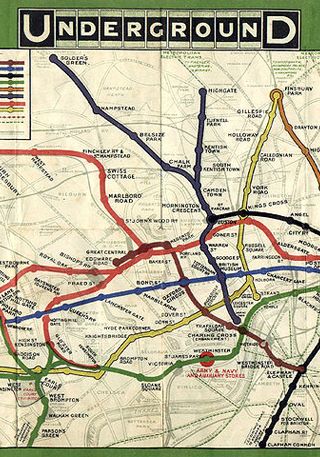
In cities, building networks of pipelines and cables posed numerous challenges. Streets had to be redesigned and tunnels had to be built. Entire urban engineering systems were needed beneath the surface to handle the hygienic and spatial requirements of rapid urbanization.[40] After every major catastrophe, each city had to decide whether to rebuild or replan following the palimpsest of the “underground city.”[41]
The pull and push forces in the history of infrastructure included efforts to expand networks for the sake of “urbanity.”[42] The expansion of local transport systems, subways, communications, and the like has almost always been accompanied by municipal pride as communities have sought to prevent disease and improve health through the introduction of sewage systems or public swimming pools, the creation of a reliable water supply, or the disposal of feces and garbage.[43]
The question of who was ultimately responsible for organizing infrastructure systems resists definitive answers. Was it the private entrepreneurs who – like the notorious railroad barons in the US or in Europe – amassed enormous wealth thanks to favorable economic conditions? The example of the oil magnate John D. Rockefeller, who had hundreds of thousands of oil lamps distributed in China in the 1930s in order to generate customers for his main product, points to the problem of monopolistic companies that seek to generate demand in their customers.[44] (Today, parallels to Rockefeller’s Standard Oil Company can be found in Facebook, Google, and Amazon.) Advertising from infrastructure providers was designed to persuade customers with promises of comfort, status, and convenience.[45] Often, women played a decisive role in the success of an advertising campaign, as was the case for the telephone.[46]
What role did municipalities, communities, and nation states have in the ballooning growth of infrastructural networks? The answer depends greatly on culture and situation.[47] States with centrally planned economies proceeded differently from those with more freedom for private enterprise. Nevertheless, since the turn of the 20th century, internationally identifiable forms of infrastructural governance have existed in the form of municipal utilities or state-owned enterprises, such as the German Reichsbahn.[48] By the time of their emergence, infrastructure had long been considered essential for shaping spaces and societies and was accompanied by legal instruments to ensure equal access to public networks (though in practice access often depended on class). Moreover, levies on infrastructure had become one of the most important sources of revenue apart from taxes, making infrastructure development a paradigmatic “public task.”[49]
The “long” 19th century, from the turn of the 20th century to the 1970s/80s, represents the classical phase of high modernity. But this phase of development continues to this day in view of the activities of the global infrastructure companies, especially outside Europe. Apart from wartime, a strong consensus has existed in Europe and the U.S. that the expansion and continuous improvement of infrastructure was desirable, an essential sign of and return on “good governance.”[50] In the 1970s, many countries began to experience waves of deregulation and privatization, but they have by no means always proven efficient or conducive to social integration.[51]
Since the 2000s, deregulation and privatization have slowed down considerably, at least in Western Europe, and in some cases the process has reversed; certain branches have since been nationalized again or remunicipalized. Today, mixed forms such as cooperatives or public-private partnerships have become predominant in Germany and similar European countries.[52] One reason why the state has retreated from entrepreneurial “infrastructure responsibility” to a purely regulatory role is that, since the 1980s, the deregulated markets for infrastructure services have been served by specialized companies operating throughout Europe and the world.[53]
In the Eastern Bloc, countries sought to collectivize production, which in theory should have led to a functioning infrastructure. But the communist parties that ruled those countries preserved their power by controlling communication and movement.[54] They restricted the circulation of knowledge and as best as possible and used their intelligence services to monitor the population.[55] The socialist infrastructure that did exist was shaped by decisions in industrial production since the early Soviet Union. Especially in the Stalinist period, many were built with forced labor, as was the case with the infamous White Sea-Baltic Canal (1931–1933). They favored classic segments of the industrial economy, but neglected consumption and leisure.[56] Creative competition based on the free use of infrastructure was, therefore, limited. Coupled with the countries’ often outdated technology, its infrastructure reinforced the impression of social stagnation.
![Zwangsarbeiter beim Bau des Weißmeer-Ostsee-Kanals (Belomorsko-Baltijskij kanal). Der Kanal wurde von Oktober 1931 bis August 1933 auf Anweisung Stalins im Zusammenhang mit dem ersten sowjetischen Fünfjahresplan mit Hilfe Zehntausender Häftlinge des Gulag-Lagersystems der Geheimpolizei OGPU erbaut. Fotograf: unbekannt, ca. 1932. Quelle: [https://commons.wikimedia.org/wiki/File:Canal_Mer_Blanche.jpg Wikimedia Commons], public domain](https://docupedia.de/zg/sites/default/files/import_images/6489.jpg)
In Western societies, too, infrastructure development has been in a kind of crisis since the 1970s as the tax revenues of the postwar decades dwindled. Moreover, infrastructure spending was closely associated with industrial growth, which throughout the 20<th century gave little consideration to environmental concerns. Since the 1960s, societies have tended to put more emphasis on quality of life than the maximization of material resources, which has contributed to a focus on the negative consequences of ever-increasing traffic, energy consumption, and continuous communication. Nevertheless, the new focus has not questioned the concept of infrastructure itself.
Infrastructure is still considered a crucial element in the development of society.[57] And who would deny that clean water or the availability of toilets is useful and that a functioning economy requires good transport and communication? But infrastructure is not as sober, neutral, and objective as its image suggests. Rather, over the past two centuries infrastructure has become entrenched in the identity of industrial modernity and deeply inscribed in our everyday lives. It has given rise to a “mental infrastructure” that expects a constant supply of goods, information, and services.[58] Meanwhile, mobility, freedom of information, and the possibility of self-organization, which have accompanied the expansion of infrastructure across the generations, have been deemed “human rights.” This makes any attempt to move beyond the growth model an extremely complicated task, one impossible to solve through technical means alone.
As indicated at the outset, the scholarly attention to “infrastructure” has increased significantly over the past few years. One reason may be that infrastructure services and the concepts linked to them are changing. In truth, earlier phases of infrastructure have long been in a process of historization. In the following, I will outline selected fields of research and raise questions that I find particularly germane.[59]
The study of infrastructures is a broad field with many levels of inquiry. It regards infrastructures as the basis or the result of penetration into spheres of influence and territories. The penetration can come in the form of imperial outreach, colonial subjugation, development aid, or as part of the process that since the 1980s has been known as “globalization.”[60] Infrastructure also encompasses the foundations that are responsible for the secular processes of movement and migration.[61]
As part of the new interest in colonial and post-colonial history, numerous recent studies have “read” infrastructure as a “script” that results from complex negotiations between highly divergent cultures. Infrastructure built before decolonization is not only a precondition for an interconnected world but also a “storehouse of power” for states that now serve as the main trading partners of their former colonies. The infrastructure of the Global South, primarily geared toward extracting resources for the Global North, bears the all marks of the world’s economic and power inequalities.[62]
Surprisingly, the geopolitics of transport, communication, and the raw material supply have often not been linked to infrastructure, but this is changing.[63] China’s global political ambitions represented in the Belt and Road Initiative show the global historical reach across space and time. They also surface the long history of infrastructural imaginaries attached to the transcontinental routes of communication and “world traffic” – whether real like the Suez and Panama Canals or mere vanishing points of imperial planning like the Cape to Cairo Railway. They are fueled by visions of connection and development, and of efforts to shorten distances and times or to subjugate, control, or exploit distant lands.
It is also evident that, as is almost always the case in the history of infrastructure, straightforward planning has only very rarely worked out. Ethnologists and anthropologists focus on the ways that infrastructure is discussed, created, and appropriated in the Global South.[64] They have studied the water systems in Mumbai, electricity supplies in the townships of Johannesburg, the use of cell phones in East Africa, and television and internet in the favelas of Latin America. Infrastructure networks are social relations that are as interrelated as they are changeable, and the everyday practices surrounding them document cultural codes of supply and demand.[65] But they also show how the local intertwines with the global and the symbolic value of being connected to their spaces of possibility. Cultural anthropologists find much meaning in the seemingly banal practices associated with non-places, infrastructural systems, and networking devices.[66]
Scholars realized some time ago that infrastructures have their own political symbolism promising participation, modernization, and future confidence. They also have their own iconography of representation. In the 19th century, their iconography consisted of magnificent railroad station buildings, carefully decorated water towers, and imposing bridges. In the 20th century, the ostentatious pride in public infrastructure gave way to matter-of-fact facades and the invisibility of buried pipelines. The tendency of infrastructures to be independent from the landscape has continued into the 21st century in the form of digitization, radio networks, and satellite systems.[67] Today, enormous bridges or museum buildings are, at best, architecturally impressive landmarks designed to attract tourists. Modern-day infrastructure thus ranges from the imperceptible to the grand spectacle and across all graduations in-between. One can approach infrastructure through the perspective of architecture, art history, or the cultural history of the signs with which public spaces become “text” to provide orientation and guide behavior.[68]
Economic historians as early as Adam Smith have defined infrastructures as a prerequisite for market activity that the market itself cannot create.[69] They have debated whether the state or local authorities should be allowed to act as entrepreneurs for infrastructures without distorting competition.[70] Private companies for their part are always grateful when they do not have to pay for the infrastructure that enables their business. Government economic policy is therefore primarily an infrastructure policy tied to specific locations. In this regard, local administrations control the services of general interest and defines the common good in terms of key figures.[71]
Today, infrastructures are generally subsidized or supported by taxes. But foreign investment in infrastructure projects that are profitable can also be threatened by “nationalization.” In general, thinkers early on have theorized infrastructure in terms of economics but at the same it has conspicuously escaped the concepts of Keynesianism, monetarism, or neoliberalism.[72] While neoliberalism emphasizes the waste, corruption, and inefficiency of state-run infrastructure, Keynesianism celebrates the success that countercyclical investment in infrastructure during economic crisis crisis – such as those of the American New Deal.[73] Contrary to dogmatic economic histories, however, the success or failure of infrastructure systems does not depend on the initiator or whether it emerged centrally or decentrally, whether it developed through democratic planning or whether it is implemented top-down in authoritarian political systems. Generally, infrastructure has rarely been planned as an integral whole; rather, it has proven enormously “adaptable” to local environments, politics, and ideologies.
Due to the complexity of situational factors, however, historical generalizations would be premature.[74] Comparative research across political systems is needed to assess the impact of different social models and concepts of the public good. Infrastructure often acts as the material substrate of political demands such as equal opportunity, participation in decision-making and the economy, and the distribution of social added value and information, which lends them compelling attractiveness. The cost-intensive infrastructure complex has given rise to an interventionist and often technocratically based political model with a wide variety of amalgamations ranging from Marx to market-based systems.[75]
![Karte der Londoner U-Bahn-Linien, 1908. Urheber unbekannt, Quelle: [https://commons.wikimedia.org/wiki/File:Tube_map_1908-2.jpg Wikimedia Commons] public domain](https://docupedia.de/zg/sites/default/files/import_images/6492.jpg)
But what is the common good, and where does the individual good end? Who belongs, who does not, who is connected, who is excluded? These are central questions of general political and social history. If the arrangements of communication and utility systems can serve to maintain power, infrastructures can of course also be used to undermine or attack it.[76] That is why terrorists and foreign enemies tend to strike infrastructure nodes first.[77] They thereby seek to destroy a model of order that aims to increase the technical and social “resilience” of highly complex societies in which a failure of infrastructure produces “cascading” levels of damage.[78]
Alternative underground movements and countercultures can create their own autonomous networks or, in current terminology, their own “filter bubbles,” in order to oppose the conformist systems of thoughts, goods, and people. With the exception of some fundamentalist groups and off-griders, few can completely escape mainstream infrastructures, though opponents have always played a significant role in their forms and vulnerabilities. Protectors of the “homeland” and environmental activists have almost always made their presence felt in new construction or relocation projects. Many have tried to resist bearing an excessive share of the disadvantages of new infrastructure, and they continue to do so today, as local protests against the construction of new solar and wind farms and underground power lines show.
The history of infrastructure also shows that the question of its unplanned appropriation has always been an important issue, be it by migrant workers secretly hitching rides on freight trains (the so-called hobos), or by those who steal electricity, or by hackers who uncover holes in digital networks.[79] Whether this behavior is considered invigorating or criminal will depend largely on the perspective of the observer and, presumably, the situation. The New York City Transit Authority and other public transport companies have tried for decades to get passengers to pay fares, etc., and have experimented with all sorts of models: access control through turnstiles, ticket vending machines, special coins – all of which have inspired subversive practices for which authorities have had to develop countermeasures.[80]
It is an equally important question whether routine access to infrastructure promotes something like conformist behavior.[81] The “appropriate” use of public transport, communication networks, and cars is only possible through lifelong training – the kind of conditioning that Georg Simmel characterized as “inner urbanization” at the beginning of the 20th century. But since Simmel made this observation, the behaviors of inner urbanization have continued to spread and become permanent features in our everyday lives.[82] The control of human behavior through infrastructures – from nudging to biopolitical coercion – has provided rich material for many researchers inspired by the work of Michel Foucault.[83]
The question of who built society’s infrastructure system has a variety of answers. On the side are the ones who were actively involved in the construction. These were very often migrant or seasonal workers and in some cases included forced laborers from prisoner-of-war camps and the Gulag system.[84] It was precisely the combination of a common good orientation and hard physical labor that made infrastructure construction projects into a field of “moral probation.” Many infrastructure networks were not the result of coherent planning, however. Rather, over the years and decades they grew from smaller-scale initiatives into massive networks.
Often, infrastructure projects have been the object of national or “nationalized” pride. This is exemplified by various bridge or dam projects in the 19th and 20th centuries. The Gotthard Tunnel in Switzerland is an interesting example.[85] Not only is it associated with national pride. It is also closely linked to the name of the politician and entrepreneur Alfred Escher. This shows that individuals may well be associated with infrastructure histories. These include the “system builders” profiled by Thomas P. Hughes in his seminal history of urban electrification.[86]
Multinational corporations and financial institutions were active in the field of infrastructure from a very early stage.[87] They were pioneers in using infrastructures as a power to transcend nation-states but also to avoid national responsibilities in order to save taxes and other levies and thus to achieve something like an extraordinary state power (“extrastatecraft”).[88] Other agents involved in infrastructure included technocratic experts such as Albert Thomas or Richard Nikolaus von Coudenhove-Kalergi, who since the 19th century have tried to impose an “internationalist” perspective, especially in the field of infrastructural networking.[89] The international synchronization and standardization of infrastructural systems have received considerable scholarly attention.[90]
Another important question is who actually organizes infrastructures. For many decades, German infrastructure projects such as the Deutsche Reichsbahn, the Deutsche Reichspost, and the Deutsche Lufthansa were massive state-owned enterprises that employed many thousands of proud civil servants.[91] They wore uniforms that telegraphed their status as “railwaymen,” as “postmen,” or as “traffic policemen,” and in doing so, they were able to claim the dignity of state authority. In this way, they acted as a functional elite that guaranteed continuity across politics systems. Today, many of these services have been privatized, and rail customers can order their tickets online and validate them themselves. As a result, more and more infrastructure services have lost their human face and have left tasks to customers once performed by state employees.[92] Numerous professions for the provisioning of public services such as gas lantern lighters and switchboard operators have simply vanished.[93]
The human side of infrastructure has always been accompanied by a “dialectic of order” (Zygmunt Bauman). Since Raul Hilberg’s work on the “special trains to Auschwitz,” scholars have discussed the role that technologically mediated systems can have in abusing chains of command and trade for inhuman purposes.[94] The claim of the functional elite to have “only served technology” has become an excuse to evade responsibility.[95]
The human sides of infrastructure have received less attention than its material or technological history. For decades now, very accomplished studies have existed on the electricity supply, automobilism, tourism, dam construction, and public city services.[96] The integrative role of infrastructure in “nation building” has received a fair amount of research.[97] A particularly innovative area is work reconstructing the integrative function of infrastructure in Europe.[98]
This looks less good for classical social-historical topics. Infrastructures have egalitarian tendencies – producing anonymized customers, end-users, and passengers – but they also create privileges such as preferred connections and different classes of air and train travel.[99] Moreover, those outside the infrastructure systems do not have access to the connectivity, the increased efficiency, the weather independence, the increased capacities, the faster speeds, and the falling transport costs offered by modern infrastructure. Within the networks, however, infrastructure is an essential medium for shaping social relationships, and its importance can hardly be underestimated. One can even speak of “infrastructure regimes” with specific regulatory services in each case.[100]
Much could also be said about infrastructure within the cultural history of material things or gender history. One reason scholars in these fields have given administrative little interest thus far may lie in its administrative and technical connotations. Generally, scholars have treated infrastructures less as a history of the people who were affected by it and who shaped it than as a history of anonymous systems without heroes and dramatic caesuras. As a result, infrastructure came to lie outside the orbit of conventional historical interest. Not surprisingly, perhaps, literary scholars have been more attentive to the greater cultural significance of infrastructure.[101]
Infrastructure is a unique phenomenon Eigensinn that affects almost everyone alive today. Its winding history is rich in contradictions whose mixture of connection and exclusion has both unified and segregated societies while creating complex relations between providers, customers, and multi-layered networks. The power emanating from infrastructures is less one of decision than one of determination, less a voluntaristic force established in a state of exception than a routine operation, less the result of an event than the result of a structure.
The expansion and smooth functioning of infrastructures have become synonyms for good governance, and benchmarks for justice and modernity. Infrastructures produce their own “government knowledge” which, for example, records a given territory through cadasters, or produces statistical calculations of needs.[102] Infrastructures depersonalize and territorially extend state power so that it can, among other things, restrict the autonomy of local elites.[103] They produce particular forms of indirect violence, but also forms of happiness, by expanding the horizons of informatics and tourism, by eliminating the toil of daily organization, and by enabling previously undreamed-of services that increase human comfort and everyday security.[104]
After all, infrastructures supply the supporting elements of an urban cosmopolitan lifestyle, which makes it possible to travel almost anywhere on the planet. The modern world is full of signs that indicate the regulation of traffic, correct behavior, or hidden infrastructure, even if many do not tend to notice them.[105] Dealing with them requires, in part, specialized cultural techniques based on habitualized sensory perceptions, impressions (e.g. of hygiene), sensitivities, and decision-making processes – in short, on “implicit knowledge.”[106] In this respect, they control, condition, and discipline their users by producing regimes of use and standards of behavior.
All that notwithstanding, infrastructure has served to unify the world only in part, for it has been received somewhat differently from culture to culture. Future studies of the infrastructural history of the non-European world are likely to reveal many insights in this regard. There is already some evidence certain infrastructural developments started surprisingly early in Latin America, in East Asia, and in Africa, because planning was “more free” or because new infrastructure could build on systems that already existed in local and indigenous communities.[107] Here, too, social promises of infrastructures were often first related to “Western” models before following their own unique path eigensinnig.[108]
As the concept of infrastructure continues to undergo historicization, it will likely give rise to new perspectives that borrow from cultural studies and postmodernism.[109] As for now, the study of infrastructure has yet to embrace a more “postcolonial” or “ecological” position.[110] Presumably, as the current boom in work on the history of waste shows, scholars will come to focus more on the ambiguities of infrastructural growth.[111] They will address dysfunction, repair, maintenance, and deconstruction along with new construction.[112] They may also examine how demands for open-access or open-source infrastructure have increasingly given way to “tactics of de-networking” whose goal is to revert to an “unplugged” existence, if not permanently than at least for a spell.[113]
In sum, infrastructure is the material that links a society’s past, present, and future. It persists across political caesuras and preserves the legacy of previous generations. Infrastructure has become the hallmark of modern society. It generates uniformity and simultaneity while suppressing its most unpleasant consequences. Nevertheless, modern infrastructure is environmentally unsustainable and the source of much global injustice, besides. It can be adequately described only in terms of the dialectical tensions that exist between security and vulnerability, between movement and control, between the formatting of societal spaces and times and the overcoming of borders and boundaries.
Translated from the German by Lucais Sewell.
Nikhil Anand/Akhil Gupta/Hannah Appel (Hrsg.), The Promise of Infrastructure, Durham 2018
Penelope Harvey/Casper Bruun Jensen/Atsuro Morita (Hrsg.), Infrastructures and Social Complexity. A Companion, London 2017
Per Högselius/Arne Kaijser/Erik van der Vleuten, Europe’s Infrastructure Transition. Economy, War, Nature, Basingstoke 2015
Dirk van Laak, Alles im Fluss. Die Lebensadern unserer Gesellschaft – Geschichte und Zukunft der Infrastruktur, Frankfurt am Main 2018
Susan Leigh Star, The Ethnography of Infrastructure, in: American Behavioral Scientist 43 (1999), H. 3, S. 377-391, online https://www.imtfi.uci.edu/files/articles/Star.pdf [08.10.2016]
Copyright © 2021: Dieser Text wird veröffentlicht unter der Lizenz „Creative Commons CC BY-NC-ND 4.0“. Eine Nutzung ist für nicht-kommerzielle Zwecke in unveränderter Form unter Angabe des Autors bzw. der Autorin und der Quelle zulässig. Im Artikel enthaltene Abbildungen und andere Materialien werden von dieser Lizenz nicht erfasst.