Authenticity
Version: 3.0, in: Docupedia-Zeitgeschichte, 12.04.2016
https://docupedia.de/zg/saupe_authentizitaet_v3_en_2016
DOI: https://doi.org/10.14765/zzf.dok.2.645.v1
Begriffe, Methoden und Debatten
der zeithistorischen Forschung

Version: 3.0, in: Docupedia-Zeitgeschichte, 12.04.2016
https://docupedia.de/zg/saupe_authentizitaet_v3_en_2016
DOI: https://doi.org/10.14765/zzf.dok.2.645.v1
Copyright © 2016: Clio-online – Historisches Fachinformationssystem e.V. und Autor:in, alle Rechte vorbehalten. Dieses Werk ist zum Download und zur Vervielfältigung für nicht-kommerzielle Zwecke freigegeben. Es darf jedoch nur erneut veröffentlicht werden, sofern die Einwilligung der o.g. Rechteinhaber vorliegt. Dies betrifft auch die Übersetzungsrechte. Bitte kontaktieren Sie: redaktion@docupedia.de.

"Be authentic!" was a common refrain in countercultural milieus from the 1960s onwards. This imperative to the modern self is taking on fresh significance in today's increasingly media-driven and digitally connected world. The multi-faceted concept of authenticity became a ubiquitous catchphrase and a widely-recognised phenomenon in cultural studies in the second half of the twentieth century. Nowadays, it is becoming increasingly important in contemporary historical studies in methodological terms and as a research subject. Historians are confronted with the issue of authenticity when they deal with questions regarding the genuineness or originality of historical records, for example, or the evidential status and relation to past reality of their interpretations. Issues of authenticity affect many areas of historical culture.
But what does "authentic", or the attribution of authenticity, mean? According to the ancient Greek etymology of the word (αυθεντικός authentikós; lat: authenticus), it signifies in the first instance genuineness in the sense of something that has been validated by someone "as original". The meaning also includes the idea of authorship, credibility, veracity, sincerity, and being true to yourself. However, in addition, the ancient Greek word is also related to the word for "master" and "ruler", which links the concept closely with "authority" and the "authorization" of (cultural) records. In ancient Greek, authentikós could even mean "murderer" and "doer".[1]
To put it in somewhat simplified terms, it is possible to differentiate between object-related authenticity – in the sense of something being materially genuine or verified as genuine – and subjective authenticity – as an expression of being true to yourself. Authenticity can relate to the authentic text (philology) or the authentic exhibit, authentic depictions and performances (the authentic art work, authentic photography, the authentic historical representation or authentic acting) as well as subjects (for example, an authentic existence or an authentic embodiment of the self). The "authentic" – which always seems to possess something over and above the "genuine" and the "original" – can therefore be understood either as something abstract or as a concrete characteristic. It is always tied to mediated (self)representation. Authenticity is attributed to someone or something. In the case of individuals, it is associated with certain forms of self-expression. Authenticity is frequently ontologically or essentially connoted, for example when people talk about the "embodiment" of authenticity. Rather than simply attributing authenticity, it is therefore preferable to examine authenticity primarily in terms of communicational structures, i.e. to ask to whom and when authenticity is attributed, as well as how and why. In this context, it is worth remembering Helmut Lethen's sceptical words: "It is impossible to clarify what is authentic". He therefore concluded that it was only possible to analyse the "effects of the authentic".[2]
The following article aims to investigate three aspects in greater detail. Firstly, it will deal with the rise of the modern concept of authenticity, which is closely linked to the history of the modern subject. Secondly, it will examine the concept of authenticity against the backdrop of the development of modern media and consumer society and interrogate the relationship between politics and authenticity. Thirdly, it will depict the issue of authenticity in historical research in thematic and methodological terms.
The rise of the concept of authenticity is closely related to the history, conception and ethics of the modern subject. Authenticity can be comprehended as a source of the modern self and is often distinguished from the concept of autonomy in political theory, which, in the process, draws the distinction between "self-determination" and "self-realization".[3]
A turning-point can be discerned within the work of Jean-Jacques Rousseau, who is regarded as the "founder of the ethics of authenticity"[4], even though he seldom used the concept himself. For Rousseau, the unfolding of moral consciousness is only possible, if "people have an authentic relationship to themselves, which can be metaphorically described as a truthfulness to their own inner nature. This candid relationship to the self does not depend on moral teachings, but emerges from the sense of one's own existence, which is already inscribed with a conscience."[5] Rousseau's work can, to this extent, be understood as an indicator of a long-term process of transfiguration, which led modern culture to develop ideas of more profound inwardness and radical autonomy. Philosophical theories of self-examination draw upon Rousseau in one way or another, as do beliefs that regard freedom through self-determination as the key to virtue.[6]
Aside from Rousseau, the idea of the authentic self can be traced back to Johann Gottfried Herder. In his Outlines of a Philosophy of the History of Man, he wrote: "Every man has a particular proportion, a particular harmony as it were, between all his sensitive feelings".[7] The idea that everyone is unique was formed at the end of the eighteenth century in the course of the Enlightenment, the culture of sensibility and Early Romanticism, and it is now deeply rooted in modern consciousness. The concept of authenticity gained significance with the discovery of originality and the "inner voice". This notion that every individual is something profoundly distinct contained within it, at the same time, the obligation that everyone should do justice to their own originality.[8]
At the beginning of the second half of the twentieth century, Theodor W. Adorno still felt the need to justify his use of the term authenticity within the framework of his aesthetic theory, attributing to it the quality of a "magical word".[9] However, the discourse of authenticity soon began to experience a rapid rise in popularity, drawing in part on the existentialist philosophy of Martin Heidegger and Jean-Paul Sartre. Since the 1960s, the ethics of authenticity have been held in high esteem within the hippie movement, left-wing counter-culture and other alternative social movements, and also later within the New Age movement and esoteric groups, whose roots date back to the Lebensreform movement of the late nineteenth century.[10] The value of authenticity was linked to a "revolutionizing of everyday life", a striving for "self-determination, self-activity and self-realization" – as the left-wing activist Dieter Kunzelmann put it – and with the "immediacy of the political", "first-person politics" and "holistic, body-conscious conceptions of politics".[11] In the left-liberal milieu in which authenticity functioned as an "identity marker" as well as a "self-management technique", you "did not just have the right to live a self-realized life, but very much the duty to account for yourself and communicate your self-knowledge to others. Part of the commitment to an alternative lifestyle was the admission of ostensibly personal shortcomings".[12]
There was growing scepticism towards authenticity in the 1970s and 1980s, as alternative social movements underwent critical examination. Trivial forms of the pathos of authenticity, of self-realization and self-fulfilment were regarded as revealing a tendency towards self-segregation, self-centredness and narcissism. While Christopher Lasch described, from his culturally conservative perspective, consumer society as a culture of narcissism largely devoid of values, Lionel Trilling regarded the contemporary authenticity discourse as a dogmatic "moral slang", which showed how unsure people were about the meaning of their own lives.[13]
In The Fall of Public Man in 1977, Richard Sennett spoke of the "tyranny" and the "ideology of intimacy" increasingly dominating twentieth-century political culture and concluded that it had led to the "end of public culture".[14] For Sennett, "narcissism and the market exchange of self-revelations structure the conditions under which the expression of feeling in intimate circumstances becomes destructive." He said it was increasingly common to talk about the "'authenticity' of relationships", which had led to a "self language" and created the feeling that "people feel they need to get to know each other as persons in order to act together; they then get caught up in immobilizing processes of revealing themselves to each other as persons and gradually lose the desire to act together. […] When some one person is judged to be authentic, or when society as a whole is described as creating problems of human authenticity, the language reveals one way in which social action is being devalued in the process of placing more weight on psychological matters."[15] In societies in which "the reigning myth [...] is that the evils of society can all be understood as evils of impersonality, alienation, and coldness", the predominant view is that "closeness between persons is a moral good" and "the reigning aspiration [...] is to develop individual personality through experiences of closeness and warmth with others". In those terms: "social relationships of all kind are real, believable and authentic the closer they approach the inner psychological concerns of each person".[16] Sennett concludes that "the ideology of intimacy transmutes political categories in psychological categories".[17] That can also be seen in the imperative to just "be who you are" ("Be authentic!) which is often linked with the pathos of authenticity and is nothing other than a performative contradiction.
More recently, discussion has repeatedly revolved around the extent to which intersubjective "responsibility and ties should be grasped as a source of authentic living conditions",[18] the extent to which the authentic self has to be regarded as a basic precondition for positive and negative freedom and how the ideas of "self-realization" and "self-fulfilment" that are linked to the concept of authenticity can be reconciled with the societal. In his communitarian approach Charles Taylor views the authentic self as the starting-point for human dignity and mutual respect. In this context, the imperative to be authentic is an injunction not to imitate anyone else. "If I am not [true to myself/A.S.], I miss the point of my life, I miss what being human is for me. […] Being true to myself means being true to my own originality, which is something only I can articulate and discover. In articulating it, I am also defining myself."[19] The ideal of authenticity in Taylor's work is linked with the goals of self-fulfilment, self-realization and self-determination. It is "the background that gives moral force to the culture of authenticity, including its most degraded, absurd, or trivialized forms. It is what gives sense to the idea of 'doing your own thing' or 'finding your own fulfilment'". On the one hand, Taylor associates the concept of authenticity with a creative and constructive dimension, as well as with non-conformism and the possibility of resistance against social conceptions of morality and, on the other, with an openness for the significance of the self and the recognition of others, and with a dialogic definition of self, with which he aims to counter Sennett's claim regarding the fall of public man.
The authentic self is always associated, in one way or another, with the idea of the identity and autonomy of individuals, i.e. their chance to achieve self-determination and self-realization, as well as the meaningfulness, consistency and consonance of existence. Self-discovery and the search for the authentic self were once perceived as a critique of modern or "late capitalist" societies, but they face new challenges in the age of new capitalism, of the New Economy and the "corrosion of character" (Sennett) due to the flexibility of the labour market. Some are even convinced that the new spirit of capitalism co-opted this "artist's critique" (Boltanski/Chiapello) some time ago.[20] The flexibilization of the labour market, the acceleration of work processes, the growing demands on employees ("lifelong learning"), the increasing lack of job security, as well as the imperative to move house at a moment's notice for professional reasons mean, according to Sennett, that values and virtues such as loyalty, responsibility and the work ethic are becoming increasingly less important, as is the capacity to forego the immediate gratification of desires and pursue long-term goals.[21] Whereas the unity and identity of the subject were once stressed, nowadays this appears increasingly fragmented – a "biographical illusion".[22] Other developments have also undermined the idea of the originality of the subject and the authentic self. Fundamental scepticism has been expressed towards the idea of authenticity in the critique of subject and identity philosophy, in the critique of identity politics and in postmodernist discourse with its references to simulation, ambiguity, dereferentialization and the much-cited "death of the subject" (Roland Barthes).
The injunction upon the modern subject to be authentic is often a response to contemporary interpretations that regard the individual as alienated or that are related to a "theory of decline" in an "unsheltered modernity"[23]. This alienation of the subject can, as described above, be traced back to labour relations in capitalist production regimes, or to the constitution of modernity and the process of civilization. It can also be attributed to societal challenges – which led Ferdinand Tönnies, for example, to differentiate between societies and traditional, authentic communities.[24] This alienation can also be explained by the dissolution of traditional milieux, but also by the development of mass society or information society. In the process, conflicts have been detected between the individual as "a human in general" in their role as part of societies, communities, organisations and groups and the individual as a unique, singular being. To that extent, the rise of the concept of authenticity can also be understood as an "expression and, at the same time, a symptom of a crisis" in which individuals paradoxically see themselves forced to "incomparably represent an incomparable comparability".[25]
Structural anthropology was one of the driving forces behind the expansion of the term authenticity to describe social relations. While old-school anthropology was interested in "primitive", "uncivilized" and "traditional" peoples and tribal languages without written language, Claude Lévi-Strauss diagnosed the increasing loss of authentic, undisguised face-to-face communication in modern societies.[26] Here, too, the search for authenticity is mainly placed in the explanatory context of alienation and post-industrial identity problems. It is possible to trace in the rise of the concept of authenticity a "longing for immediacy, primordiality, genuineness and truthfulness and not least for individuality" which can be "fostered, channelled and exploited by a globally operating authenticity industry".[27]
Tourism is, no doubt, one of the most illuminating examples of an "authenticity industry" of this kind. In his studies of modern tourists from the early 1970s, Dean MacCannell was already stressing that their desire to take a look behind the scenes, their desire for authenticity and authentic experiences was ultimately creating "staged authenticity".[28] What they are offered are folkloric events rather than real traditions and rituals, or fish rolls in places where fish have not been caught for a long time. In opposition to the ontological or essentialist difference between authentic and inauthentic that can still be read between the lines in MacCannell's work, other researchers on tourism have emphasised that the concept of "authentic cultures" is outdated – after all cultures keep on renewing themselves and evaluating and ordering traditions in different ways.[29] Furthermore, Feifer writes that the "post-tourist"[30] is aware of the game with authenticity. The concept has thus been widely developed in tourism research,[31] including the analysis of consumerist perspectives in heritage tourism.[32]
In "the age of mechanical reproduction" (Walter Benjamin) there is a shift in meaning of the original. Benjamin argues that "with the secularization of art, authenticity displaces the cult value" of the art work, which is replaced by its "exhibition value".[33] For Benjamin, however, this exhausts any further questions about authenticity with respect to the fetishized character of the original in the world of art: "From a photographic negative [...] one can make any number of prints; to ask for the 'authentic' print makes no sense." However, this restrictive interpretation of the question of authenticity is premature. While the "aura" of an artwork is, no doubt, changed by the fact that it can be reproduced, photography also renders the authentic visible in a new way. On the one hand, light leaves a "natural" imprint on the photochemical material and, on the other, portrait photography, in particular, always strives – no matter how standardized it is – to give expression to the subjective moment.
Television is another medium predestined to create authenticity effects and has also clearly contributed to the rise of the authentic, as it is able to suggest a direct view of reality and create the illusion that we are eye witnesses. Television is present at historic events. It interviews historical agents at the place where the events happen and permits them to report on their experiences and emotions, their pain and suffering – always sure-fire guarantors of authenticity effects.[34] However, it also produces pseudo-events that only happen because a camera is nearby. The interviewees – well-rehearsed in the rules of self-representation and chosen by the producers of the authenticity fiction – depict their feelings, seeking to communicate an image, which does not seem artificial.
Media formats such as "Big Brother", the exposés and intimate revelations of talk shows and Facebook pages, as well as mobile phone culture and other intimization processes within the public sphere, point to new opportunities for self-representation. Of course, they can be traced back to older traditions of confessional literature and the more recent history of therapeutic talking cures. The "expansions and appropriations of spaces for autonomous individualization"[35] go hand in hand with those type of formats because this culture of intimacy and self-realization creates its own ritualized or habitual forms of expression of the authentic self.
Nowadays all branches of the media strive to create authenticity effects. News anchors, presenters and entertainers have to be able to mediate between private and public, and between intimacy and distance to achieve credibility and authenticity. The advertising industry also relies on authenticity to promote brands. Today's markets are characterized by product and brands that are largely regarded as interchangeable (brand parity). The concept of brand authenticity can thus be defined as the "perceived veracity of the proclaimed brand value proposition (brand positioning)", and the effect of a brand that is perceived to be authentic is intended to "raise credibility, build up trust and, in addition, increase acceptance and appreciation of the brand as a result".[36] One strategy, for example, is to define the origin of the brand as its unique selling point, which is then, in turn, associated with factors such as "genuineness" and "honesty". Often advertising links this narrative with the identity and the history of a company – the authenticity and quality of a product is said to be based on tradition or on traditional craftsmanship.
Jean-Jacques Rousseau referred to the "actes authentiques de la volonté general"[37] (authentic acts of the general will that served the common welfare) as long ago as 1762. While authenticity was rediscovered in political culture by alternative social movements, nowadays the concept is carving its path through the political establishment. A dictionary of political terms that was published in 2006 defines authenticity as "a positively connoted characteristic of democratic institutions and processes, which creates subjective approval (for example, due to credibility, reliability)". Since "modern democracies are dependent on the subjective, individual approval of their citizens", it explains that "authenticity is an important hallmark of quality" and states that it is seen as the antithesis of alienation.[38] Whether this spread of the concept of authenticity to political institutions and processes makes any sense is a completely different matter. However, few politicians are likely to object, if the manner in which they present their political convictions is perceived as authentic.
Of course, politicians or other media figures cannot personally claim that they are authentic, or admit that they would like to convey an authentic impression, as the intentional communication of authenticity is essentially counterproductive. The reception of authenticity is predicated upon an act of communication, the character of which is non-instrumental and intention-free.[39] If someone is perceived as authentic, this goes far beyond the question of their credibility. Today's politicians achieve charisma not purely on the basis of their political actions, but by means of a culture of personality, which relies on authenticity, i.e. credibility, sincerity, persuasiveness and emotionality. To that extent, authenticity can be regarded as an ideal of modern communication, linking the objectivity and stringency of the arguments to their perceived authenticity and moral credibility. This implies a moralization as well as a privatization of political communication.[40]
Documents whose authorship can be clearly verified are generally accepted as being authentic. As well as signifying credibility, the concept mainly meant "authorized" in the seventeenth and eighteenth century. The "interpretatio authentica" was an interpretation of judicial and religious texts, in particular, that cannot be contested. It was the preserve of legislators and rulers to lay down the final, "authentic" interpretation.[41] This legal meaning continues to exist today when the wording published by the legislative (for example in the "Bundesgesetzblatt" / Germany's Federal Law Gazette) is called "authentic". This stands in contrast to other communiqués or published statements, for example, in legal textbooks or commentaries whose wording is not legally binding.
If we consult the influential methodological historical theories of the nineteenth century, they show that the terms authenticity and authentic were not prominent despite the rise of the historical-critical method and source criticism. Johann Gustav Droysen was, indeed, familiar with the idea of "authenticating documents" , but he uses the expression in its traditional sense to mean the legal verification of an official document by the legislative authorities. In the nineteenth century, the term "authentic source" cropped up seldom – a source is either genuine, or a forgery, but it is not authentic. Exceptions prove the rule here: Friedrich Engels' book about the Condition of the Working Class in England carries the subtitle: From Personal Observation and Authentic Sources.[42]
Even though historicism focussed on historical personalities and tended to biographize entire historical eras, the idea of a more profound subjectivity, which is inscribed in the contemporary concept of authenticity, remained alien to historical writing in that age. That was due not least to the methodical approach of the traditional historical-critical method, which attempted to uncover facts and evidence by using sources, remains, records, materials or by reading "clues" – to use a more contemporary term. There is little scope for reflection upon the subjective authenticity of what was reported– which can flag up the act of witnessing and its emotional aspects – when "facts are drawn from sources".[43]
Nowadays it has become accepted common parlance to talk about authentic documents, thereby specifying their genuine character and stressing their originality. Such references are often associated with a particular "allure of the genuine".[44] This underpins what the documents are said to have "proven", lending them authority. It is possible to discern the dual character of the concept of authenticity, in particular, in the analysis of forms of autobiographical writing and oral history, as well as when it comes to dealing with "contemporary witnesses" – a term that emerges in the second half of the twentieth century and whose genesis is closely linked to the pluralization of the understanding of history, as well as the subjectivization and embodiment of historical experiences and their representation in the media.[45] The authenticity of what is reported refers, on the one hand, to issues of whether the report is credible and truthful. On the other hand, there is the subjective dimension, relating to the manner in which something is told – a factor that is always implied by the concept of authenticity nowadays.[46] In addition, questions of historical authenticity affect many historico-cultural fields. Existing surveys of this topic tend to come from the area of cultural studies, in particular ethnological research.[47]
The "authentic object" has a traditional place in museum exhibitions. The museum is the site par excellence for the display of authentic objects, which undergo fetishization via their presentation. As a result, the original document does not only lay claim to being genuine, but also to "originary authenticity". On the one hand, the presentation of the object thereby offers visitors an opportunity to remember and to experience, but, on the other, it is circumscribed by the exhibition context. Museum visitors can rely on the fact that the object – catalogued and displayed in a museum – is historically and culturally significant, even if they are not necessarily emotionally affected by it.
The issue of the authenticity of objects has been frequently discussed in museum studies – and cultural studies specialist Gottfried Korff has explored this topic particularly extensively. He regards the "quality of sensuous and emotional appeal"[48] and the specific materiality of objects (or historical places etc.) as facilitating an emotional link to the past. Individual objects or groups of objects can thereby be understood as media, as "historical signs" and identity markers that refer to a concrete time in the past, to historical processes, to a particular practice or manner of usage of things. In an increasingly media-driven world, Korff argues that the museum is one of the few places where it is possible to directly encounter what has been passed down to us via "relic authenticity" and the "contrasting fascination of the authentic".[49]
"Memory objects"[50] create a link between the world of the here and now and a past world. They are "historical eye witnesses" and thus "wanderers between two worlds".[51] Objects are marked by attribution as historically "authentic" through the narration of stories about their roots, origin and increasingly the manner of their usage. As soon as they enter the institution of the museum, their epistemic function is nevertheless variable; things can be placed in various contexts as a "witness", as a "work" (originals in a classical art museum) or as a "specimen" (for instance in a natural history collection). Thus one and the same thing can assume one of those three functions.[52] The description of things as "witnesses" is also potentially problematic because it does not capture the multiple historicities of many things and the layers of time that can be read from them. The historical authenticity attributed to things often derives from a rather vague "age-value" rather than from a specific "preservation value", as the Austrian preservationist Alois Riegl put it.[53]
Constructivist approaches have often tried to demystify the authenticity phenomenon of the museum. It has been remarked critically: "Authenticity is not about factuality or reality. It is about authority."[54] In museum work, objects are authoritatively attributed with a cultural value by social institutions. In contrast to positivist and essentialist standpoints, constructivist approaches regard authenticity as a culturally specific product. According to this viewpoint, authenticity is attributed to things largely independently of their material substance, the story of their manufacture and usage and this attribution is held to be credible until the social and cultural contexts of authorization shift.[55] Furthermore, from a narratological perspective, authenticity in museums has been described as a "rhetorical mode", which is generated within the framework of exhibitions by a "pact" or a "collaborative hallucination" between visitors, exhibition makers and institutions.[56]

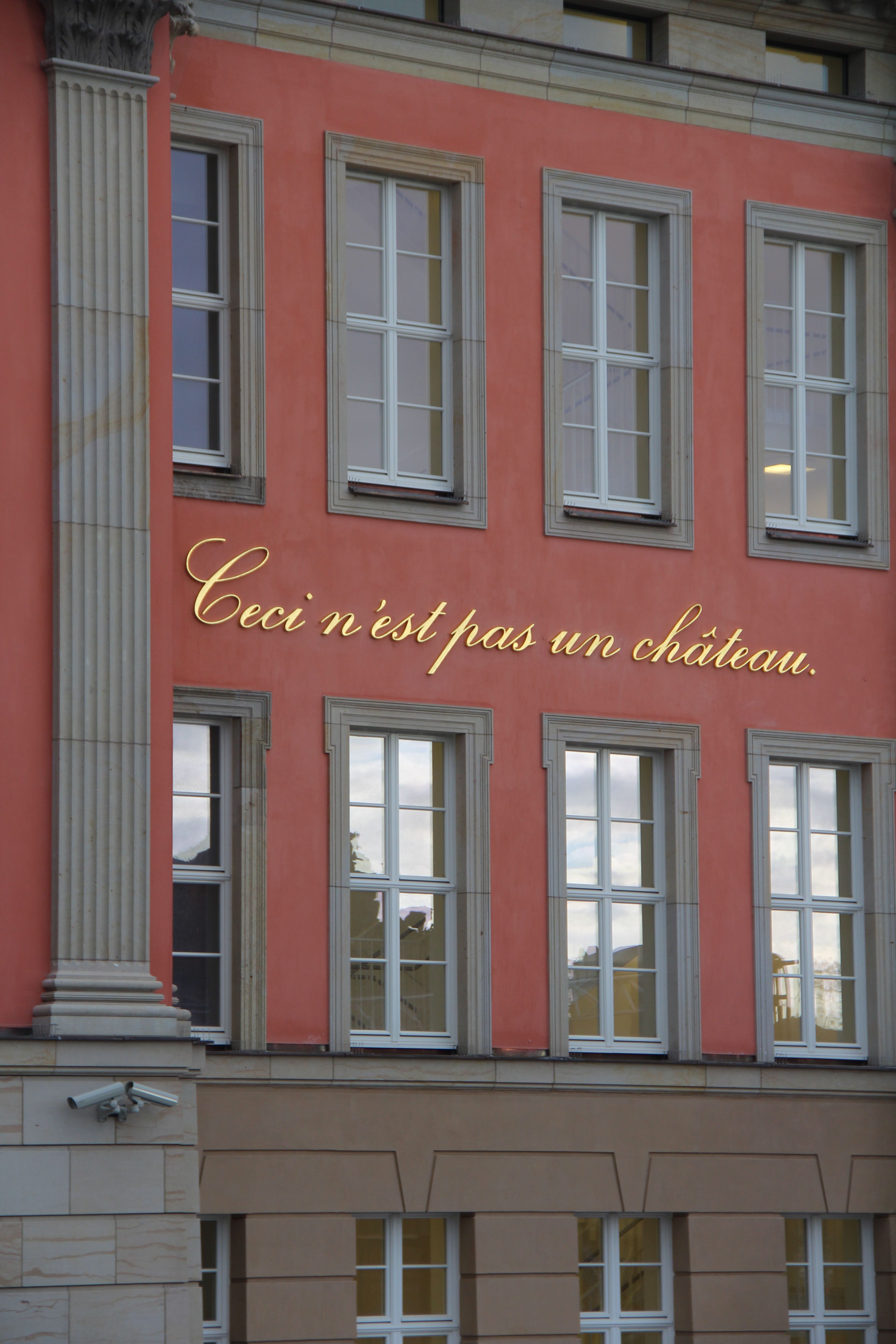
The safeguarding of historical authenticity became a prominent concept in international historic preservation in the last third of the twentieth century, beginning with the Venice Charter in 1964.[57] So-called tests of authenticity were established as a pre-requisite for world heritage sites in 1977 and have undergone various modifications since then.[58] From a European perspective, historic preservation was obliged to retain the "original substance" in keeping with "authentic" historical records. In the course of debates about how to deal with the reconstruction of buildings destroyed in the Second World War and in the light of reconstruction and restoration practices in the Far East, the Nara Declaration (1994) presented a broader, post-modern and post-colonial understanding of historical authenticity that recognised the cultural diversity and the regional specificity of authenticity. Subsequently, authenticity has come under fire as "one of the most slippery concepts" in world heritage discourse.[59] The issue of historical authenticity is, of course, also pivotal to the work in national institutions concerned with historic conservation – even if it is not as prominent as it is in UNESCO guidelines. In Germany, there have, for example, been extensive debates in recent years about the reconstruction of buildings after 1989/90 that were destroyed in the Second World War or by the East German regime. Some regard this process as a reconstruction of national identity, while others place this reconstruction work in an international and historical context of longstanding tradition.[60]
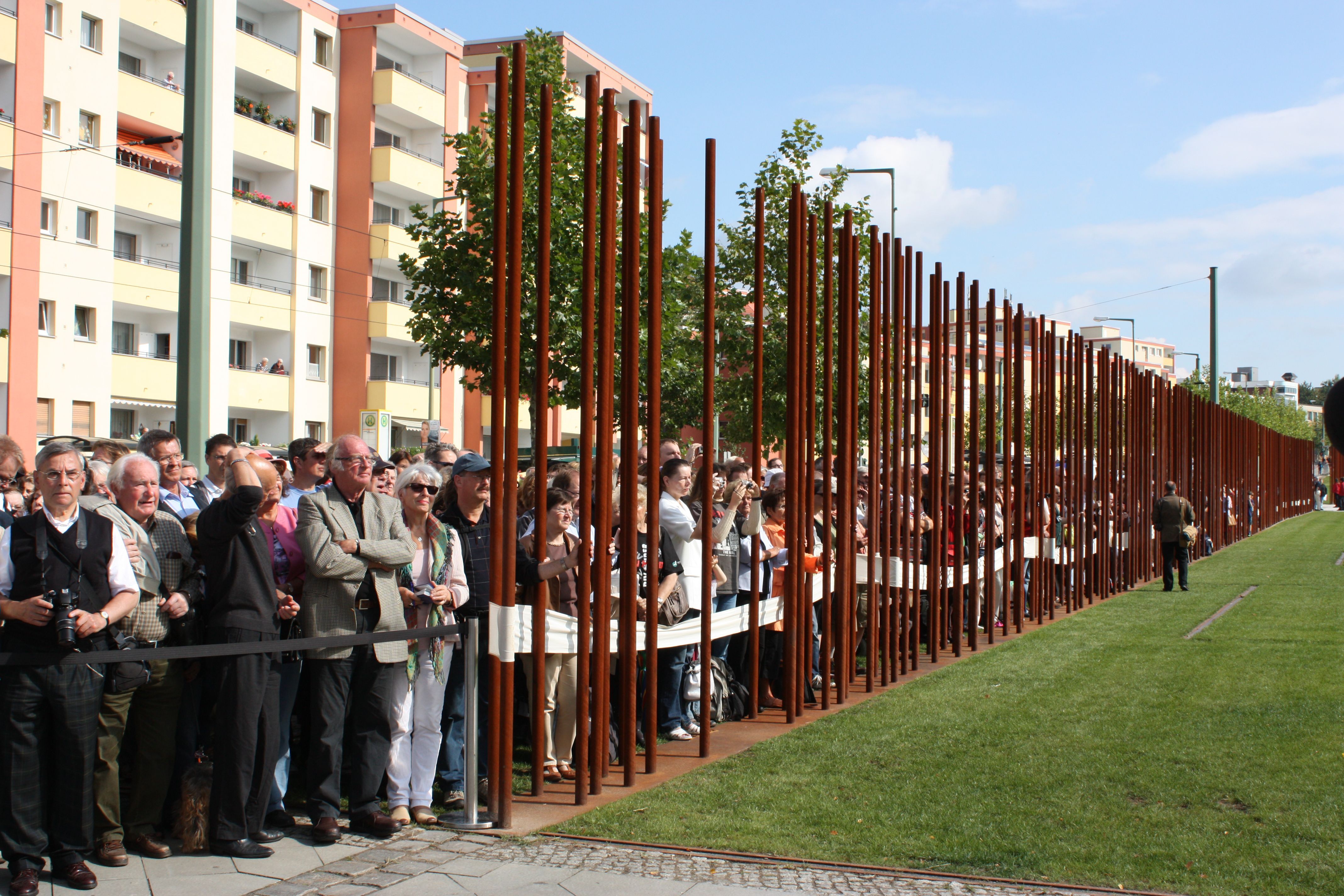
Closely interlinked with the discussion about historic preservation and world heritage, the concept of authenticity also assumes considerable significance at sites of remembrance and memorials.[61] Heidemarie Uhl argues that the presence of remains, relics and traces of the past – and thereby "the emotional appeal of the memorial as an authentic site" – increasingly decides "over the degree of affective attentiveness".[62] The "new sensibility for historical sites and their potential as material anchor points for the history of Nazi atrocities" correlates with the growing interest in "testimonials from Holocaust survivors" from the 1970s onwards.[63] The concept of the authentic site was first mentioned in German government funding programmes for memorials and sites of remembrance in 1999, and it was highlighted again in 2008 as an important criterion in determining memorial status. A memorial was thereby deemed to be worthy of funding, if it was "a historical site" that distinguished itself "in terms of authenticity as well as in terms of a concrete link to the victims or to the persecution measures" practised in Nazi Germany and in the German Democratic Republic.[64] The decision to refer to "historical sites" rather than authentic sites was clearly a conscious reaction to the ongoing and necessary discussion about which particular historical layers from a memorial should be retained and whether it is possible to reconstruct an "original state". At the same time, it also served to counter overly simplistic notions about the immediacy of history and our ability to experience it.[65]
The attribution of authenticity to historical representations (memoirs, literature by contemporary witnesses, historical novels and films etc.) must be understood as a result of media effects. It always involves a relationship between representation and that which is independent of representation, which gives rise to the impression of immediacy. This has led to a paradoxical definition of the term insofar as "that which is represented is presented as something that has not been represented".[66] The authentic is perceived as "something that has not been represented" because it is associated with immediacy. The constitutive process of communication and reception via a particular medium recedes into the background.
When it comes to literary and artistic representations of the past, Matías Martínez argues that it is possible to distinguish between four different forms of authenticity with relation to the production, referential status, form and effect of those representations.[67] Accordingly, authenticity is attributed to novels and works of art in terms of their authorship, if their creators – authors, artists, directors – appear particularly qualified as a result of their personal experience. What results is a "legitimating connection between authorship, authority and authenticity". Secondly, historical representations – which are to be generally distinguished from one another in terms of whether they are fictional or non-fictional representations – are described as authentic in terms of their referential status insofar as they depict specific historical figures or events. Thirdly, the configuration of a historical representation can be called authentic or "typologically authentic" [68] whereby it is not decisive whether it actually refers to concrete historical events, but rather whether it accurately captures exemplary situations or typical characters, such as a "party activist" or "member of the Hitler Youth". What is crucial is the extent to which a representation manages to trigger reality effects.[69] Fourthly, Martinez argues, authenticity effects can arise in the context of artistic practices, for instance in museums or at commemorative events.
Since the 1990s, the question of authenticity has been particularly highlighted and problematized in the course of the debates about the representability of the Holocaust and the representation of the Holocaust in memoirs, literature and the arts. In contrast to postmodern discourses that are sceptical towards authenticity, such postulates as authenticity, truthfulness and moral integrity, in fact, define the reception of the Holocaust, as well as those of other genocides and atrocities committed in the twentieth century.[70] Particular importance is thereby attached to authentication instances and authentication strategies, for instance, authors and witnesses, as well as production, form and reception.
But what about the authenticity of memory? How can something that comes from our memory and is tied to personal experience be understood as an adequate representation of the past? This issue was dealt with around 1900 by the new discipline of Aussagepsychologie (psychology of testimony) and subsequently became a topic of discussion in the discipline of history.[71] As Hanno Loewy and Bernhard Moltmann remarked: "There is no such thing as authentic memory." Rather, they add, "authentic memory only [exists] as an alienation of the actual event, as pain, as the experience of rupture, as the ongoing disruption of a discourse that erroneously believes that it can catch hold of the past."[72] This link between authenticity and pain can be universalized. As Helmut Lethen argues, pain is a "certain indicator" of authenticity because in the expression of pain, humans appear as "unmasked beings". This is perceived as proof that this expression is genuine.[73] Whenever you are confronted with a painful story, with a story of suffering and with a sufferer, the effect of authenticity is created. The voice that talks of its suffering is adjudged to have had the authentic experience of something drastic – and in this experience – which is expressed in language or visualized in images – the painful memory is turned into a coping narrative. To this extent, the rise of authenticity is closely tied to traumatic experiences and psychoanalytic discourse. Generalizing further, you might even say that emotionally moving images unleash the effects of authenticity.[74]
Authenticity effects are always embedded in specific concepts of realism. In the context of popular fictional representations of history, the term "authenticity fictions" seems fitting.[75] Films such as "Downfall" (2004) or "The Baader Meinhof Complex" (2008), both produced by Bernd Eichinger, are examples of this. They take the rhetoric of "this is the way it was" to the extreme and try to conceal their artifice by representational means. Films of this nature present themselves as sources, staking their own claims to originality, and by stressing their immediacy they disguise the fact that they always make an interpretation of the past.[76] Actors are even sometimes asked during making-of films or similar formats how they felt when they were playing a particular historical figure. This recourse to authenticity identifies – and confuses – the actors' representation with what they are representing.

This has led to a shift in the concept of authenticity. What we now increasingly find are what might be called "authentic experiences of a second order". In the context of living history and popular reenactments, protagonists taking part in these "historical theatricals" often refer to their authentic experiences in the process of enacting and reliving past events.[77] Approached playfully by some and taken deadly seriously by others, living history can be regarded as a modernized form of affirming identity – a function that was served by folklore societies in the past. Living history comes in many different forms and includes reflective attempts to critically come to terms with the past.[78]
The German novelist and political activist Juli Zeh has also added her voice to the chorus of authenticity sceptics, lamenting the "reality craze of the entertainment industry" that rubs "the enticing smell of 'realness' under the nose of the public […] right, left and centre", "so that it can get intoxicated by the illusion of being an empathetic witness, of being there in person".[79] While it is important to keep such justified criticism in mind, we should not allow ourselves to be frightened off completely. The topic can provide productive research fields for contemporary historians who take a historicizing approach to the boom in enthusiasm for authenticity and the pointed criticism of it. Firstly, the analysis of authenticity discourses and practices from the standpoints of cultural history, the history of everyday life, the history of mentalities, media history, as well as economic and social history can provide information about the self-conception of the modern subject and subjectivization processes. It would be interesting to examine ideas of self-determination and self-realization in relation to the appropriation of history by certain individuals and groups. Research on authenticity discourses and practices could thus provide a contribution to the history of fundamental values, such as freedom and privacy, and thus to political culture.
Secondly, numerous research possibilities also exist in the areas of political history, memory studies and historical culture. In the field of historical culture, one could investigate the links between ideas about authenticity and political and social change, for instance, when societies emphasize their ostensibly authentic traditions. There is much scope for further study in the field of the "politics of authenticity".[80] Only a few studies deal with post-colonial Africa[81], for example, from this perspective, or the fight for recognition by socially marginalized groups.[82]
With respect to issues of authenticity in museums, research could address the effects of collecting strategies, processes of restoration and preservation, display and communication practices on attributions of authenticity and authenticity effects. Previous research on the reception and effect of museum objects,[83] their aura and authenticity could be expanded to different types of museums and exhibitions. This additional research could help to evaluate the above-mentioned approaches to authenticity in museums and shape future exhibitions.
If we turn to the world heritage program, global heritage tourism, historic conservation, as well as to the conception of memorial sites in different countries, it is interesting to consider whether concepts of authenticity are increasingly converging against the backdrop of different national traditions. Research in the field of architectural history has often concentrated on individual buildings or groups of buildings; here it would be possible to explore – in international comparison and viewed from a long-term perspective – how political, sociological and generational changes have promoted the search for "historical authenticity". The limits of attributions of authenticity is another field of inquiry; here it would be worth investigating how formerly faceless cities and regions have gained historical identity either in the course of the discovery of industrial heritage or the authentication of city centres and outskirts, new towns or "cultural landscapes".
In the field of historical representation it would be interesting to examine how different media affect the authentication of history and which instances contribute to the authorization and canonization of images of history. Ultimately, it could be explored whether the boom in re-enactments and the ongoing recognition of intangible cultural heritage by UNESCO reflects a new type of history linked to emotion and personal experiences and whether heritage marketing is a response to this development.[84]
Translated from the German by Julie Gregson.
German Version: Achim Saupe, Authentizität, Version: 3.0, in: Docupedia-Zeitgeschichte, 25.08.2015
Copyright © 2016: Clio-online – Historisches Fachinformationssystem e.V. und Autor:in, alle Rechte vorbehalten. Dieses Werk ist zum Download und zur Vervielfältigung für nicht-kommerzielle Zwecke freigegeben. Es darf jedoch nur erneut veröffentlicht werden, sofern die Einwilligung der o.g. Rechteinhaber vorliegt. Dies betrifft auch die Übersetzungsrechte. Bitte kontaktieren Sie: redaktion@docupedia.de.