Historical Biographical Research

1. Introduction
„Jetzt schießen, mit und ohne Komfort, / die Biographien aus dem Boden hervor: / Kaiser Gustav der Heizbare; Fürstenberg; / der Herzbesitzer von Heidelberg; / […] / sie alle bekommen ihre Biographie / (mit Bild auf dem Umschlag) – jetzt oder nie! / Heute so dick wie ein Lexikon, / und morgen spricht kein Mensch mehr davon.“
“Now, with or without comfort, / biographies are springing up like mushrooms: / Emperor Gustav the Heater; Fürstenberg; / the heart owner of Heidelberg; / [...] / they all get their biography / (with a picture on the cover) – now or never! / Today as thick as an encyclopaedia, / and on the next day no one talks about them anymore.”[1]
Kurt Tucholsky wrote this ironic poem in 1927, referring to the heated debate in German-speaking countries (and beyond) between representatives of academic and popular historical biographies. This discussion about biographies has lost none of its relevance, just as biographies themselves have not lost theirs. For historical scholarship in general and contemporary history in particular, the genre of biography is an important avenue of approach: recent years have seen the publication of a large number of historical biographies, and the latest boom has occasioned theoretical and methodological discussions across the disciplines.
Current research defines biographies as the “presentation and interpretation of an individual life within history,”[2] as “an individual life story that encompasses both the external course of life and intellectual and psychological development,”[3] or as “a textual representation of a life” in which “a real person” is always at the centre. Biographies are thus what we might call narratives of reality.[4] Historian Cornelia Rauh has vividly described biographical works as “the efforts of historians to reflect on the relationship between the individual and society, and about the relevance attributed to ‘real people’ — significant and ordinary, known and unknown, men and women — in the historical process through representation and theoretical reflection.”[5]
Understood in this way, biographies in the narrower sense refer neither to one’s own life story (autobiography, memoirs) nor to texts that use the term for inanimate objects or the like.[6] In recent years, worthwhile literary and historical overviews of the history and genre of biography have been published in both German- and English-speaking countries.[7] Biography is a literary and academic genre that only becomes a conceptual approach to historical science through the process of theoretical and methodological reflection. A biographical perspective can help to explore structural factors, subjectification processes, modes of action and motivations in history. Biography as actor-centred historiography offers the opportunity to discuss, at the level of both content and theory, questions of representativeness and scope for action.
This article begins with an overview of the development of biography in (German- and English-language) historical studies. I then discuss the popularity (and limitations) of the genre and present selected current fields of research in biography that are devoted to “new” subjects and topics. After providing some comments on the writing of biographies, I conclude with an appeal to use biographies to decentre history.
2. History and Biography
2.1 Debates and trends
Tucholsky’s intervention a hundred years ago concerned both the genre as a literary art form and the role of the individual in history, not to mention political viewpoints.[8] Academic historians considered best-selling historical biographies to be unscientific, saw them as a threat to historical scholarship, and perceived this development as a crisis. Nevertheless, biographies continued to be written in the historical sciences.[9]
The (academic) criticism of popular biographies led to an internal discussion about the genre, which continued steadily, albeit not always with the same intensity, initially particularly in the Anglo-American world and, in the last 20 to 30 years, also in German-speaking historical studies.[10] Seventy years after Tucholsky, literary critic Stanley Fish took a similarly negative view of the genre, albeit in less cheerful terms: “Biographers [...] can only be inauthentic, can only get it wrong, can only lie, can only substitute their own story for the story of their announced subject. […] Biography, in short, is a bad game, and the wonder is that so many are playing it and that so many others are watching it and spending time that might be better spent on more edifying spectacles like politics and professional wrestling.”[11]
Has too little changed since earlier considerations, despite the ongoing debate about biographical narrative – represented in Great Britain primarily by Samuel Johnson and James Boswell, and in German-speaking countries by Johann Gustav Droysen?[12] Biographies themselves have existed since ancient times, and biographies as a genre have been the subject of reflection since at least the Early Modern period.[13]
Sociopolitical and cultural changes after the First World War led to a transformation of the biography genre in Germanophone and other European countries, as well as in the USA. Biographies enjoyed great popularity in Germany, the new biography was an economic success in Great Britain and the USA.[14] This new variation on the biography bore greater parallels to fictional writing and moved from pure description to an interpretation of the life being portrayed. The interplay between life and work, especially in biographies of writers, became the focus of attention.[15] After this upswing in the 1920s, biographies continued to be published – often as hagiographies – but the genre lost scholarly significance in English- and German-speaking countries: in the USA due to the dominance of the literary paradigm of new criticism, social history and intellectual history, and in Germany due to the caesura of National Socialism, as representatives of cultural-historical perspectives were expelled, persecuted and murdered.
The socio-historical approaches that dominated from the 1960s onwards focused on collective social structures, while individuals and their scope for action were understood as having less historical significance.[16] Hans-Ulrich Wehler noted: “If history is concerned with general structures and processes on the one hand and individual actions and decisions on the other, [...] historical science [...] can help to identify important structural conditions and procedural developments that are worth knowing in themselves, but at the same time set limits that are difficult for individuals or groups to transcend in their intentional actions [...].”[17]
Historical subjects – the focus of biographies – therefore initially lost importance in specialist academic discussions in German-speaking countries. However, the historical social sciences led to theoretical and methodological developments that had a positive influence on biographical studies from the 1980s onwards, as socialisation and structural influences were incorporated more strongly into the analysis in order to examine the extent to which individuals “take up the existing structures and actively reproduce or change them”.[18]
While biographies remained a popular genre in the United States in the twentieth century, theoretical and methodological debates only intensified again there from the late 1970s onwards, leading, among other things, to the slow institutionalisation of biographical research (see Institutionalisation of biographical research). Influential anthologies[19] and monographs on biography were published. Leon Edel, for example, proposed a renewal of the new biography and combined biography with literary criticism and a psychoanalytical approach in order to comprehend the thinking and the unconscious of biographical subjects. Although Edel’s psychological approach was influential in the Anglo-American world, it was also criticised by other biographers.[20] The debates of the 1980s and the theoretical approaches of literary and historical studies in the 1990s led to a pluralisation of biography in the USA, with poststructuralist, feminist and postcolonial theories in particular contributing to the transformation of the genre, since “the ‘coherence’ and ‘continuity’ of ‘the person’ [...]” are, according to Judith Butler, “socially instituted and maintained norms of intelligibility.”[21] For biography, this means that if individuals can no longer be seen (only) as intentionally acting subjects, and life stories are understood as constructions, the classic retelling of a life story no longer works. Pierre Bourdieu explored this phenomenon in his 1986 article, “The Biographical Illusion”.[22]
The illusion of biography also affects forms and norms of representation, because the mechanisms of the genre and its conventions are reproduced, for example, by chronologically narrated individual biographies. The social sciences were not the only field to point out that life is fragmented and changeable, that people act differently in different fields and that, therefore, a life is more likely to be heterogeneous than coherent.[23] The constructed nature of biographical identity is now being taken into account more strongly, at least in biographical theory. As Simone Lässig notes, the assumption that a life is coherent hardly applies anymore: “More and more biographers recognise that every ‘life’ is fragmented and that each person combines several changing roles and acts differently in different fields. Neither the individual roles nor the corresponding fields can simply be added together and formed into a coherent whole; rather, heterogeneity is typical of every personality.”[24]
The field of biography has expanded in the wake of criticism of the genre (expressed since the 1980s), new methodological and theoretical approaches, and intensive academic debate.[25] Instead of portraying Western, White,[26] male subjects, the presentation of new subjects was intended to challenge the hegemonic culture.[27] According to critics of traditional biography, this would require, on the one hand, a change in the Eurocentric and ethnocentric perspectives of historiography,[28] and, on the other, the inclusion of the analytical categories of race, class and gender. In historical studies, these discussions were and are linked to approaches from the history of everyday life, historical anthropology and gender history. Natalie Zemon Davis exemplified this decentring of historiography in her biography of so-called Leo Africanus,[29] which responded in a new way to the question of how to select subjects for biographies – i.e., who is “worthy” of a biography? Her work was a consequence of a new research interest in people who had previously played hardly any role in historical studies.[30]
The historian Angelika Schaser asserts that the genre itself is pluralistic and therefore lends itself to new perspectives for highlighting the diversity of different life paths. At the same time, she criticises the fact that many of her colleagues still ignore existing studies on lesser-known people:[31] “Historical biographies reflect the pluralisation of historical science in terms of their conception, their historical approach, their source base, the selection of persons considered worthy of biography, and their reception. At the same time, however, the canonisation of important biographies relevant to political history continues unabated.”[32] According to Schaser, the gender hierarchy runs “like a red thread through historical science – and its biographies”.[33] This is another reason why reflection on the genre of biography remains necessary.
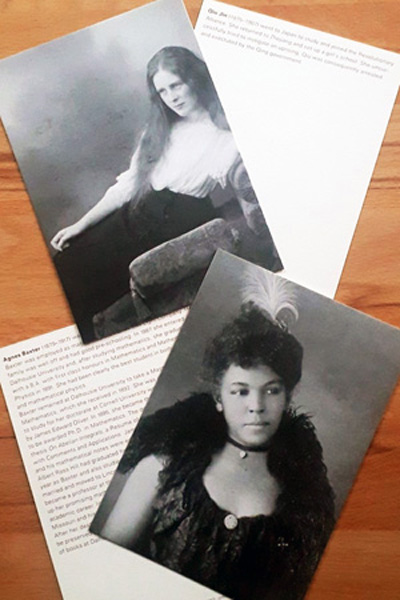
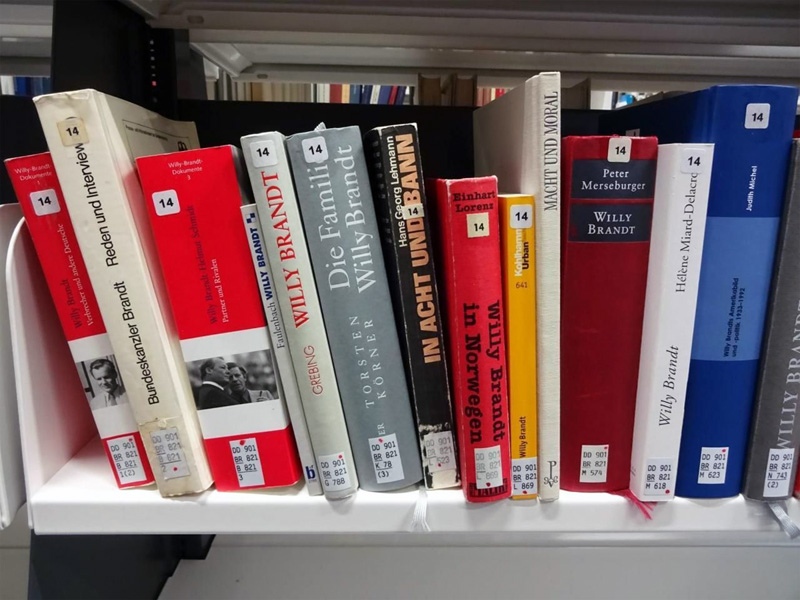
At the same time, the theoretical and methodological debates since the cultural turns have had little impact on the success of the genre; on the contrary, a look at the popular book market, as well as academic publications in Germany and the USA, shows that biographies are being written and sold in large numbers.[34]
By biography, we usually mean a biography of an individual person that constructs and stabilises a (biographical) unity by depicting a life story. Many successful biographies are devoted to the “great” men of history.[35] Cultural scientist Birgitte Possing’s analysis of historical journals in Europe and the USA confirms that biography remains a male-dominated genre: Among the biographical studies she reviewed, the proportion of female protagonists in 2011 was only 15 per cent, while female authors of biographical studies accounted for 28 per cent, with female historians mostly working on women, and male historians even more frequently on men, especially political figures and intellectuals.[36] In any case, the genre is far from “exhausted”[37]; as Angelika Schaser, Johanna Gehmacher and others argue, the crisis of biography – a diagnosis that is repeatedly asserted, especially in German-speaking countries – can hardly be substantiated in quantitative terms.[38] Gender historians in particular point out that there is no crisis in biography, but rather that primarily male biographers repeatedly suppose that there is a crisis in order to increase their own significance.
2.2 Institutionalisation of Biographical Research
The theoretical and methodological debates of recent decades have been accompanied by the establishment of research centres and specialist journals. The (now) Center for Biographical Research at the University of Hawai’i at Mānoa was founded in 1976 as the first such institution, followed by the launch of its journal “Biography” in 1978.[39] In addition, the Autobiography Society has been publishing “a/b: Auto/Biography Studies” since 1985, while the journal “Life Writing” has existed since 2004.[40] The Leon Levy Centre for Biography opened at the City University of New York in 2008 and offers a master’s degree programme.[41] In German-speaking countries, the Institut für Geschichte und Biographie (Institute for History and Biography) at the Fernuniversität Hagen has been publishing the journal BIOS since 1988,[42] while the scholarly network Zentrum für Biographik (Centre for Biographical Studies) has been focusing on this topic since 2004 and the Forschungsverbund Geschichte und Theorie der Biographie (Research Association for the History and Theory of Biography) in Vienna since 2005 (until 2019 as the Ludwig Boltzmann Institute for the History and Theory of Biography). In the Netherlands, the Biografie Instituut was founded in Groningen in 2004.[43] In 1999, the International AutoBiography Association was founded, which includes regional associations in Europe, the Americas, Africa and the Asia-Pacific region.[44] There is also the Global Biography Working Group, which offers workshops, publications and a newsletter.[45] As the titles of the journals and names of the professional associations show, biographies and autobiographies are not as sharply distinguished from each other in the Anglo-American tradition of life writing as they are in German-language (historical) scholarship.[46]
2.3 The Appeal of the Genre
New subjects, questions, methods and forms are changing the genre of biography and at the same time inspiring historical scholarship itself.[47] Biographies are a productive form of historiography because they:[48]
- counteract the “weariness with a historiography that, in its sharp analysis of structures and processes, has completely lost sight of people as subjects of their own history”;[49]
- take up current developments and thus respond to the “social and political upheavals before and after the turn of the century”;[50]
- cater to the renewed interest in the subject (or also in “new” subjects), which is partly due to paradigm shifts within an academic discipline;
- be combined with other research disciplines in an interdisciplinary manner: social sciences or literary studies, gender or migration studies, postcolonial studies, oral history, history of science or regional history, etc.;
- depict the individual in society, in their scope of action and contexts, thereby enabling an understanding of subjectivity, the subject and subjectification (including images of oneself and others);
- trace the transformability of subjects and their limits, as well as those of society;
- go beyond caesuras and common periodisations;
- fulfil social functions both with regard to past processes (individual and collective memory) and with a view to the future (legitimation);
- are particularly well suited to telling.
The appeal of the genre is reflected in a wide variety of formats. Barbara von Hindenburg’s study of the members of the Prussian Landtag, for example, focuses on actors who have been neglected in political history to date. Carolyn Steedman has written the everyday history of an English stocking knitter; anthologies question the myth of Danton in terms of content and collective authorship, or approach different facets of the scientist and dissident Robert Havemann.[51] Historically well-researched graphic biographies not only combine text and images,[52] but also often reflect on the writing or drawing of biographies, the process of selection and the (problematic) transmission of sources.[53] In addition, there are biographically oriented feature films and documentaries,[54] exhibitions and artistic explorations, especially in the field of (social) media, which have the advantage of being able to circumvent chronological hierarchies.[55] The boundaries between these formats, as well as between academic, popular science, journalistic and fictional biographies, are becoming increasingly blurred.
3. Newer Fields of Biographical Research
Historical biographies have been and continue to be researched, written and published both within and outside the field of history. As a historiographical approach, the genre is particularly effective when it is combined with current issues and innovative methods, as is presently the case in some sub-disciplines.[56] In the following, I begin with a look at biography in political history, and the move on to biography in postcolonial, transnational and migration research, in social and economic history, and in gender history. These different thematic perspectives are followed by a methodological approach to collective biography. The boundaries between these areas are fluid, especially since many biographical studies touch on several fields of research. In addition, this system could be supplemented by other currently productive areas of biography: the history of science and intellectual history, as well as, in terms of specific eras, research on National Socialism and the history of the GDR. Biographical research on the GDR is less common than on other periods of German history, but is increasingly being used as a productive approach to East German contemporary history[57] because, as Martin Sabrow emphasised in 2013, “the astonishing stability of the communist social order and its sudden collapse cannot be adequately explained from a social history perspective without taking into account the life stories of its rulers.”[58] One of the more recent biographies on contemporary and GDR history is Ilko-Sascha Kowalczuk’s two-volume study on Walter Ulbricht.[59]
3.1 Biographies in Political History
German-language historical biography is an established approach in the field of political history.[60] Political historical biographies became a central component of historiography with the emergence of history as a university subject in the 19th century, and they have not lost any of their popularity since then. Usually told chronologically, biographies of male politicians (more rarely: female politicians) are used, for example, as a means of explaining a period of time and its events,[61] in particular (but not exclusively) the history of National Socialism.[62]
Other authors focus on the legend surrounding a political figure[63] or emphasise the political and intellectual development of the protagonist, as Karl Heinrich Pohl does in his study of Gustav Stresemann. Like many other politicians, Stresemann has been the subject of various biographies. Pohl sought to construct a “largely unknown picture”[64] in order to “enrich, expand or question the common image of Stresemann” by using new approaches to biographical research and cultural-historical methods, as well as to enable consolidation and deconstruction through other sources.[65] Instead of a purely teleological-chronological structure, Pohl organised his book along the concepts of cultural, social, economic and political capital according to Pierre Bourdieu, enabling him to highlight both the social conditions of Stresemann’s career and social advancement – hence the “border crosser” in the book’s subtitle – as well as Stresemann’s public image. In addition to Stresemann’s position in the social field, Pohl also uses psychohistorical considerations and incorporates his physical condition into his interpretation. A biography such as this can therefore be productive for contemporary history by providing new ideas for current fields of research, in this case, for example, for research into the 1920s. Currently, there are also (often shorter) studies on actors in left-wing and right-wing political movements and transnational women’s movements, which highlight political life paths and at the same time reconstruct the transnational interconnections of political activism.[66]
Overall, political-historical biographies in particular have mostly exhibited – and in some cases still feature – clear national boundaries against the backdrop of the development of nation states and nationally organised research, thereby contributing to the reproduction of imagined communities (Benedict Anderson) and the stabilisation of identity.[67] In addition, conventional political-historical biographies often repeat a gender-specific separation of private and public; women are hardly recognised as actors in their own biographies, nor do biographies about politicians address gender relations; wives are at best mentioned briefly as marginal characters.[68] Biographies about political figures of decolonisation, for example,[69] or about political activists,[70] are still comparatively rare (see below). This is despite the fact that Ernst Piper’s biography of Rosa Luxemburg, as well as Karina Urbach’s study of Queen Victoria, which has been reprinted and expanded several times, show that scientifically sound, readable biographies about female politicians and rulers can be written and sold in large numbers.[71]
3.2 Transnational, Postcolonial and Migration Biographies
Transnational, postcolonial and migration biographies examine transgressive life stories, because people have always crossed national, linguistic and “cultural” boundaries. Outside of exile research, there were initially few biographical studies on mobile lives.[72] For some time now, however, global and postcolonial historiography has been inspiring biographical writing. Germanist Hannes Schweiger, for example, advocates a “pluralisation of life stories” and the “cosmopolitanisation of biographical writing”[73] in order to describe cultural transfer processes, transnational networks and scope for action. Historians Johanna Gehmacher and Katharina Prager outline different forms of transnational life, reflecting on their differences and similarities as well as power relations, positioning and scope for action.[74] Recent research examines the biographies of colonising and colonised subjects in order to analyse imperial power relations, their actors, their colonial experiences and – in the sense of entangled history – global transfer processes.[75] Post-imperial and migration biographies also open up “actor-centred perspectives on transnational and global historical processes”.[76]
Lisa M. Leff succeeds in doing this by linking the transnational movements of people, objects and knowledge in her study of the historian Zosa Szajkowski. Born in 1911 as a Polish-speaking Jew in the Russian Empire, Szajkowski emigrated to France in 1927 and fled to the USA in 1941 to escape Nazi persecution. Having already begun collecting Judaica in France, Szajkowski continued this activity during and after the Second World War, first as a US soldier in occupied Germany, sending materials to the YIVO Institute for Jewish Research in New York, and later in the United States and Israel, trading/trafficking in holdings from French state and private institutions, some of which he stole. In her chronological narrative, Leff melds historiography and archival history, the situation of Judaica in Europe and the United States during the Holocaust and the post-war period, with current research questions on looted art and provenance history. The life story of Szajkowski, who took his own life in 1978 after a theft was discovered in the New York Public Library, is embedded in the context of transnational networks of colleagues and friends around YIVO. Through these various thematic links, Leff explains in a multifaceted way how – and not whether – the man who salvaged books became an “archive thief.”[77]
3.3 Biographies in Labour History
Similarly, biographical approaches have long been the subject of stimulating debate in labour history, social history and economic history.[78] Unlike political history, this field develops innovative, primarily microhistorical approaches to biographies, as they can test theories and provide different research tools.[79] Jürgen Finger proposes a microhistorical biography for corporate historiography that integrates family and kinship as social institutions, private life, modes of economic activity (“business modes”), and also space and temporality.[80] For example, Hartmut Berghoff and Cornelia Rauh-Kühne tell the story of an average German medium-sized company owner in the Nazi and post-war periods, and Elizabeth Heineman examines the case of Beate Uhse (an exception as a female entrepreneur) – and both of these works do so in terms of economic and cultural history.[81] Or networks take centre stage, as in the case of the Morgan banking family and the Thyssen industrial family.[82] The latter is unusual for a biographical study in that Simone Derix also uses quantitative methods to evaluate sources. Using extensive network analysis, she presents a convincing argument that interprets the significance of transnational relationships for the family’s economic activities. This also allows her to expand the circle of actors to include lesser-known family members, financial advisors and employees. The history of this wealthy transnational family from the late 19th century to the 1960s can thus also be read as a history of capitalism.
Alongside corporate history oriented towards biography, there is the tradition of worker biographies, which has been somewhat overshadowed by structural-historical approaches, but has been “on the rise” again for a good decade.[83] Historian Nick Salvatore argues that social and labour history biographies are less about representativeness and more about showing the individual in their social contexts, asking about possible decision-making patterns and thinking about the world of work in connection with the private sphere, i.e. including the intersections of gender, religion and race.[84] Until now, “history from below” has often portrayed (male) leaders, and many biographies in this field follow a narrative of White nationalism, meaning that the racist policies of leaders, or discriminatory discourses, are ignored in favour of a positive history of the labour movement.[85]
Since these are social movements that have historically been organised on a national level for a long time, authors of biographies in labour history are confronted with more general problems of biography, namely that they continue to be very nation-state oriented and thus potentially reproduce nationalism. Not least for this reason, historians Mark Hearn and Harry Knowles have argued that we need more biographies covering the entire spectrum of activists and workers, as well as more biographical studies on specific gender relations in the labour movement, in order to portray the significance of individuals for social transformations, and indeed of very different people.[86]
3.4 Biographies in Gender History
Reflecting diversity – this is the fundamental goal that authors of biographies in gender history have set themselves. Initially, feminist biographers since the 1970s and 1980s devoted themselves to re-writing women into history. In the 1980s, particularly in the Anglo-American world, feminist biography was developed methodologically and theoretically.[87] Historians and literary scholars declared that the biographical canon not only needed to be expanded to include female authors and protagonists, but that concepts and methods also needed to be changed.[88] Using gender as a category of historical analysis[89], biographies examine women’s lives as well as symbolic and social gender orders, inequalities and marginalisation.
Feminist biography has also dealt intensively with questions of topic selection, narration, accessibility and analysis of sources, as well as the relationship between author and protagonist.[90] This has resulted in a conceptual and narrative innovation: authors either choose a radically subjective approach or explicitly discuss the role of the biographer in the text, because the observing subject is always also part of the observation.[91] Hilde Schramm, for example, chooses to approach the biography of her teacher, Dora Lux, in a way that does not conceal the autobiographical motivation of the study, but uses it productively to create a scientific and at the same time emphatic biography.[92]
The critical examination of the genre, which is not exclusive to feminist biographers, has highlighted both the impossibility of objectivity and the constructed nature of biographies. Gender-historical biographies are closely linked to current issues in gender studies and feminist theory, and with their theoretical and methodological innovations and their interest in social power relations, they often provide decisive impulses for historical biography.[93] Current topics in gender history biographies also include, for example, transnational lives,[94] female political actors[95] or the construction of masculinity, as examined by Falko Schnicke using the example of Johann Gustav Droysen, Maurizio Valsania using Thomas Jefferson, and Julia Voss using Charles Darwin.[96]
Biographical research and practice in gender history was also influenced early on by intersectional approaches that examine the junctures between categories of difference (gender, race, class, nationality, sexuality, age, ability/disability, religion) and power relations.[97] Intersectional biography examines both marginalised subjects and structural privileges – an aspect that has been neglected in conventional biography research to date.
The linking of biographies with LGBTIQ*[98] and queer history is also productive, as it can inherently challenge notions of a “uniform” subject.[99] Although auto/biographical approaches have played a major role in early sex research, Joris Atte Gregor notes that the systematic “research of queerness, i.e. gender nonconformity, sexualities beyond heterosexuality, trans* masculinities/femininities or intersexuality” is still lacking in biographical studies. The construction of heteronormative binary gender can be analysed biographically, just as queer biographical writing can “oppose normative attributions of identity and produce new forms of knowledge.”[100] Political and social scientist Christiane Leidinger, for example, traces the life and career of lesbian activist and writer Johanna Elberskirchen, while Laurie Marhoefer critically reconstructs the relationship between Magnus Hirschfeld and Li Shiu Tong in the double biography, Racism and the Making of Gay Rights.[101] Many (collective) biographical studies also see themselves as interventions in the politics of memory.[102] Similarly, biographical studies are written in the field of body history and/or the history of sexualities in order to examine gendered embodiments and inscriptions based on a person, subjectification processes or even the political and scientific struggle for the regulation of sexuality.[103]
3.5 Group and Collective Biographies
Representations of life stories are not only conceived as individual studies, but also as group and collective biographies.[104] In general, these have the advantage of responding to methodological debates about representativeness by (often) depicting lesser-known life stories and thus offering alternative courses of life stories.[105] “Representativeness” refers to the questions already mentioned above about who is considered worthy of a biography and who is not – or, in other words, which individuals and groups are examined and portrayed as historical actors. These aspects have been (and continue to be) raised by, among others, historians performing research on the history of everyday life and microhistory, feminist biography, racism and de/postcolonial history.
At the same time, especially in National Socialist research, it is also important to examine the “completely normal” perpetrators. In 2002, two studies were published that have had a lasting influence on collective biographical work in German-speaking countries: Dorothee Wierling wrote about the generation born in 1949 in the GDR and Michael Wildt about the leadership corps of the Reich Security Main Office.[106] For her cultural history of the GDR, Wierling evaluated 20 biographical interviews, among other things, in order to portray family and upbringing in the post-war period, politics, spheres of action and perceptions of various actors. Wildt, on the other hand, analysed over 200 personnel files of Nazi perpetrators, which provided information about their generational experiences of the First World War, education, career paths and post-war careers. Supplemented by individual case studies, Wildt succeeded in providing a detailed description of the institutions and actors and how they implemented the policy of extermination.
As with Wierling and Wildt, collective biographies usually focus on a specific period in the lives of the selected group of people, set a thematic focus, or concentrate on social interactions and networks.[107] This is because a group can be used to illustrate patterns of advancement and career development, (familial, social, intellectual) influences, inequalities and power relations, as well as special features and individual specifics. Collective biographical methods are therefore particularly well suited to intersectional research questions.[108] Group and collective biographies encompass different approaches and forms: Prosopographies that work with large samples and quantitative methods,[109] double biographies[110] and biographies of smaller or larger groups that constitute themselves as such or are constructed by the biographer.[111]
One example of a collective biography that constitutes the group as such is Diana Miryong Natermann’s work on colonial actors from Europe in the so-called Congo Free State and German East Africa, which intertwines histories of racism, gender and colonialism. In contrast, Christa Wirth researches several generations of a transnational family, i.e. a collective that understands itself as such. In her collective biography, Wirth combines migration and family history. Both studies are based primarily on ego documents and, through the critical analysis of these sources and their innovative approaches, bring new perspectives to collective biography.[112] A collective biographical approach can also be used to retell (national) history in a different and new way in order to make previously marginalised actors visible.[113]
Collective biographical approaches have long been used in the history of science, including in connection with gender history issues.[114] Prosopographical approaches[115] stand alongside studies that examine scholars (in individual chapters) via a biographical connecting element, such as Onur Erdur, who reconstructs the (post-)colonial contexts of French poststructuralist thought.[116] Family biographies are a conventional yet newly conceived approach to collective biography. Whereas the previous focus of this collective biographical writing was primarily on the families of important artists, rulers and entrepreneurs, family biographies are now linked to current issues. Alexa von Winning, for example, uses a Russian noble family to analyse the empire as a family affair, while Erich Keller conceives of “biography as a space of memory” in his study of the Wyler-Bloch family.[117]
Rebecca J. Scott and Jean M. Hébrard tell the remarkable transnational biography of the Vincent/Tinchant family, which ranges from an enslaved woman in Haiti around 1800 to the global cigar trade around 1900 to the Belgian resistance against National Socialism. In a similarly transnational biography, Maiken Umbach and Scott Sulzener analyse the private photo albums of the Salzmann family to reveal both the construction of national identities in Germany and the USA and the experience of Nazi persecution, flight and exile.[118] In the field of family history in particular, there has been a trend in recent years for authors to use an autobiographical approach to research the biography or biographies of their own families, whether it be the Industrial Revolution in England, the Jewish labour movement in Eastern Europe, or migration from Turkey to West Germany.[119]
4. Inventing Life? – Writing Biography!
This overview shows that more recent biographies – whether individual or collective studies – usually focus on a specific period and/or content.[120] This focus is extremely relevant for biographical research and is also reflected in the conception and narrative of the biography. Some biographies make the biographical representation itself the subject; such is the case with Mark Roseman in his study of Marianne Strauß-Ellenbogen, who survived the Nazi era in hiding as a Jew. The same applies to The Orientalist by American biographer Tom Reiss, who describes his adventurous search for clues to the plural and fragmented personality of Lev Nussimbaum, a Jew who became the Muslim Essad Bey and enjoyed success as the writer Kurban Said.[121]
One award-winning work that implements many of the newer methodological and theoretical considerations is Barbara Stollberg-Rilinger’s “post-heroic” biography of Maria Theresa.[122] Stollberg-Rilinger deconstructs the nation-state hagiographies of the ruler by keeping “the heroine at arm’s length”[123] and understanding Maria Theresa and her time as alien to us. Instead, the biographer chooses a multi-perspective narrative that also reveals the constructed nature of the character. Stollberg-Rilinger shows that both the contemporary performance and staging of Maria Theresa as regent and mother, as well as the later formation of the legend of her as an exceptional ruler, were shaped by binary gender ideals, even if courtly Europe in the 18th century “played” with gender differences. By combining family, court culture, war, reforms, body politics, self-perceptions and perceptions of others, Stollberg-Rilinger embeds microhistorical insights into the larger context of social and political events and structures: “The aim is to understand the figure of Maria Theresa in her time – and, conversely, to understand the time pars pro toto through this figure.”[124]
Those who work biographically must therefore make a multitude of methodological, theoretical and analytical preliminary decisions and consider presentation and narration – possibly even more carefully than in other scholarly studies.[125] Preliminary considerations in biographical work include a wide variety of questions and aspects: What is a biography, and what do I understand by it? Why am I working biographically? Of course, the selection of the biographical subject or subjects is central:[126] Who am I writing about and why? The person or persons chosen do not necessarily have to be representative or typical; they can also stand on their own, but either way, the selection should be well justified. Like all historical studies, a biography should also be oriented towards a thematic focus and an insight-driven research question.[127] A well-defined focus can help to break up an exclusively linear narrative.[128] This also includes making clear what theoretical assumptions exist and which methodological approach is chosen and why.
Closely related issues include the type, scope and accessibility of the materials that can be used as biographical sources, especially if there is no estate.[129] Or, as biographer Angela Steidele sums it up in her “Poetics of Biography”: “‘Biography’ means ‘writing life’. First and foremost, however, it means reading life, in the truest sense of the word: legere, collecting, gathering, picking up.”[130] Text-based tradition can be expanded with oral history and participatory methods,[131] on the one hand, and with photographs, sound, film and music on the other, provided these sources are incorporated into the presentation in an analytically reflected manner and not merely used as illustration.[132] In biographical studies in particular, it is essential to examine (autobiographical) sources with regard to self-constructions and constructions by others.[133] Subsequently, the form of presentation must be carefully considered, as there are different biographical forms.[134] Since life was and is not linear, temporality/temporalities and spatialities should be incorporated, and contingency taken seriously. It cannot be a matter of conceiving of life stories solely as “success stories”; rather, biographers should also ask about (supposed) failures or develop entirely different evaluation schemes.[135]
In the best case, a biographical study is structured and designed in such a way that its constructed nature is clear. It is therefore important to decide on the structure of the biographical work as early as possible, to review it constantly and to set limits on the subject: Christian Klein structures his biography of the writer Ernst Penzoldt along the metaphor of the house, while Myriam Richter Werner links Melle’s path closely to the history of Hamburg and and its university. Sandra Richter sketches the man (rather than the poet) Rainer Maria Rilke from an “ironically broken distance” in order to “discuss the obstinate and questionable aspects of Rilke’s work.”[136]
Narration itself, including language and style, is particularly important in order not to reproduce myths or reinforce attributions. In doing so, a biographer can experiment (at least mentally) with different modes of representation, styles and narrative forms. Tilman Lahme uses the present tense in his book about the Mann family to achieve a more fluid, fast-paced narrative, avoiding a retrospective view and instead emphasising the openness of the historical situation.[137] Instead of a teleological approach, the biographer should continually broaden their perspective, for example by considering the biographical subject from the margins or from the perspective of “opponents,” drawing on comparable life stories or engaging in counterfactual thinking (What if ...?).
Jörg Später situates the main character Siegfried Kracauer in his social and intellectual environment and conceives his study as a “social biography,” i.e., relating historical contexts to life and work in order to clarify connections between different areas and persons.[138] The biography is therefore also a group biography of his colleagues Theodor W. Adorno, Walter Benjamin and Ernst Bloch, as well as their mutual views of each other, thereby decentring Kracauer. By combining close-ups (of the individual, the particular) with long shots (the representative, the contexts), Später also applies Kracauer’s historical-theoretical considerations in his narrative. The expectation that a biography should be complete is perhaps even greater in this genre than in other historical narratives. Like any historical study, a biography will never be exhaustive; instead, thematic or temporal emphases or missing traditions can be used constructively, for example to explain what is omitted and why (such as private life, childhood, old age).[139]
Historical studies in general must find ways of dealing with these difficulties – and like all historiographical approaches, biography also has its limitations. As historians, we are always faced with gaps, and at the same time, every historical question carries the risk of a teleological answer. Biography is probably considered particularly “vulnerable” because it was partly disconnected from theoretical and methodological debates in German-language historical scholarship. That has changed and perhaps even been remedied. At least as a dissertation thesis, a biography requires thorough advance consideration of working methods and narrative styles, a circumstance that may even be advantageous compared to other approaches.
Authors of biographies should reflect on the design of the biographical presentation so that the identity described can be perceived as constructed. This concerns both the subjectification that underlies every life story and the narrative forms and structures that characterise a biography as a biography. Discussions over the last few decades have pointed out that biography as biography always stands within social, academic and literary traditions. Biographers and biographical subjects, as well as published works, operate in specific discursive fields that are associated with processes of legitimisation or delegitimisation, because the rules of the academic field, contemporary discourse and the book market enable or prevent biographies or even more experimental forms of representation.[140]
In this context, pluralisation means, on the one hand, reflecting on the authors of biographies: who writes biographies and why? Who succeeds in publishing the texts and where? On the other hand, these norms explain why, for example, German biographical research has so far hardly dealt with certain questions and subjects; biographers however have written and continue to write primarily about personalities from their own region. This national limitation is currently loosening, especially in the context of global, migration and transnational history.
5. Conclusion: An Appeal for more Biographies
Criticism of biographies, along with the theoretical and methodological pluralisation of the field since the 1980s, have led to changes in biographical research and introduced “new” subjects and topics. This kind of biography no longer assumes the coherence of a life course, but rather its construction, even though the theory and practice of the genre still diverge widely in some respects. The capabilities and limitations of biography must be constantly re-evaluated, the genre itself reflected upon and linked to historical-theoretical considerations. This is because writing a biography also means producing a historical case study and thus navigating the tension between the “generally typical” and the “individually special”.[141] In my opinion, this exaggeration is unnecessary and does not apply to many lives (or life stories); can a “person as a whole” ever be representative, or is it not rather certain stages of life or themes in a biography?
Questions like these should be discussed in historical science and contemporary historiography. History can draw inspiration from other disciplines to pluralise historical biography. Biographies, as well as theoretical and methodological reflection on the genre, can contribute to decentring history by taking fictionality and contingency seriously and addressing them rather than reducing them to a single meaning. Biography is therefore well suited to complicating history – in a positive sense.
I advocate for an expanded concept of the genre that includes thematically marginalised subjects, postcolonial, queer and other methodological approaches, and that attempts new forms of narrative. Both the narrative and the material basis of biographies are changing as a result of digitalisation and medialisation.[142] Historiography should actively shape and utilise this change. Consequently, it is no coincidence that biographies are written (not only in historical studies). Since we follow in the footsteps of someone else’s life story, the genre offers the joy of discovery and, at the same time, the opportunity for remembrance, for inscribing actors into history.[143]
Translated from German by Lee Holt.
References
[1] Kurt Tucholsky, All people on board!, in: Die Weltbühne, 29 November 1927, p. 870; online http://www.zeno.org/Literatur/M/Tucholsky,+Kurt/Werke/1927/All+people+on+board [30 July 2025]. All translations of German quotations by Lee Holt.
[2] Jacques Le Goff, Wie schreibt man eine Biographie? in: Fernand Braudel/Lucien Febvre/Arnaldo Momigliano/Natalie Zemon Davis/Carlo Ginzburg/Jacques LeGoff/Reinhart Koselleck, Der Historiker als Menschenfresser. Über den Beruf des Geschichtsschreibers, Berlin 1990, pp. 103–112, here p. 106.
[3] Margit Szöllösi-Janze, Biography, in: Stefan Jordan (ed.), Lexikon Geschichtswissenschaft: Hundert Grundbegriffe, Stuttgart 2002, pp. 44–48, here p. 44.
[4] Christian Klein, Analyse: Kontext, in: idem (ed.), Handbuch Biographie. Methoden, Traditionen, Theorien, Stuttgart ²2022, pp. 303–307, here p. 303.
[5] Cornelia Rauh-Kühne, Das Individuum und seine Geschichte. Konjunkturen der Biographik, in: Andreas Wirsching (ed.), Neueste Zeit, Munich 2006, pp. 215–232, here p. 215.
[6] Peter Ackroyd’s “biography” of London is a popular cultural history: Peter Ackroyd, London. The Biography, London 2000; Stefan Wolle’s “biography” of East Berlin is (also) contemporary history of the GDR: Stefan Wolle, Ost-Berlin. Biografie einer Hauptstadt, Berlin 2020. See also, for example: Kunst- und Ausstellungshalle der Bundesrepublik Deutschland/Marie-Louise von Plessen (eds.), Der Rhein. Eine europäische Flussbiografie, Munich 2016; Jeannie Moser, Psychotropen. Eine LSD-Biografie, Konstanz 2013; Paul Nolte, Lebens Werk. Thomas Nipperdeys Deutsche Geschichte. Biographie eines Buches, Munich 2018; Rebecca Skloot, The Immortal Life of Henrietta Lacks, New York 2011. Object biographies are a productive field of research, particularly in the history of science and in the museum sector, as they allow for the examination of working methods, institutions and actors in science, as well as provenance history and changes in meaning: Samuel J.M.M. Alberti, Objects and the Museum, in: Isis 96 (2005), no. 4, pp. 559-571; Lorraine Daston (ed.), Biographies of Scientific Objects, Chicago/London 2000; Cornelia Geißler, Konzepte der Personalisierung und Individualisierung in der Geschichtsvermittlung. Die Hauptausstellung der KZ Gedenkstätte Neuengamme, in: Oliver von Wrochem (ed.), Das KZ Neuengamme und seine Außenlager. Geschichte, Nachgeschichte, Erinnerung, Bildung, Berlin 2010, pp. 315-328.
[7] Thomas Etzemüller, Biographien. Lesen – erforschen – erzählen, Frankfurt a.M. 2012; Bernhard Fetz (ed.), Die Biographie – Zur Grundlegung ihrer Theorie, Berlin 2009; Klein (ed.), Handbuch Biographie; Hermione Lee, Biography. A very short Introduction, Oxford 2009; Birgitte Possing, Understanding Biographies. On Biographies in History and Stories in Biography, Odense 2017; Hans Renders/Binne de Haan (eds.), Theoretical Discussions of Biography. Approaches from History, Microhistory, and Life Writing, Lewiston 2013. Elsbeth Bösl and Doris Gutsmiedl-Schümann have published a series of blog posts on biographical research that are well worth reading; The starting point for the posts is: Elsbeth Bösl, Biografien und Biografierte, in: AktArcha, Hypotheses, 1 December 2024, https://aktarcha.hypotheses.org/8255 [30 July 2025].
[8] Christopher Meid, Biographik als Provokation. Wilhelm der Zweite (1925) von Emil Ludwig, in: Christian Klein/Falko Schnicke (eds.), Legitimationsmechanismen des Biographischen. Kontexte – Akteure – Techniken – Grenzen, Bern 2016, pp. 223–244, here pp. 224f. On the contemporary debate, see also: Siegfried Kracauer, Die Biographie als neubürgerliche Kunstform [1930], in: Das Ornament der Masse, Frankfurt a.M. 1970, pp. 75–80; Leo Löwenthal, Die biographische Mode, in: Theodor W. Adorno/Walter Dirks (eds.), Sociologica. Aufsätze. Max Horkheimer zum sechzigsten Geburtstag gewidmet, vol. 1, Frankfurt a.M. 1955, pp. 363–386.
[9] There is a good overview in Angelika Schaser, Emil Ludwigs Fingerzeig auf die Biographien in der Geschichtswissenschaft, in: Melanie Unseld/Christian von Zimmermann (eds.), Anekdote – Biographie – Kanon, pp. 176–193, here pp. 180ff.; Stephan Porombka, Populäre Biographik, in: Klein (ed.), Handbuch Biographie, pp. 181–191.
[10] Almost all of the introductory and overview works cited in the footnotes begin with a historical overview of the development of the biography genre. Reference should be made here to Bernhard Fetz, Die vielen Leben der Biographie. Interdisziplinäre Aspekte einer Theorie der Biographie, in: idem (ed.), Die Biographie, pp. 3–66, here pp. 11ff., the corresponding sections in Klein (ed.), Handbuch Biographie, pp. 329ff., and in Anne-Marie Monluçon/Agathe Salha (eds.), Fictions biographiques XIXe – XXIe siècles, Toulouse 2007, pp. 33ff.
[11] Stanley Fish, Just Published: Minutiae without Meaning, in: New York Times, 7 September 1999.
[12] For an overview of the biographer Johnson and his biographer Boswell, with further references, see Barbara Caine, Biography and History, London 2019 [2010]; Nigel Hamilton, Biography. A Brief History, Cambridge 2007; Michael Jonas, Britische Biographik, in: Klein (ed.), Handbuch Biographie, pp. 423–432; Caitriona Ní Dhúill, Den Stil bestimmen. Samuel Johnsons Ratschläge für Biographen, in: Bernhard Fetz/Wilhelm Hemecker (eds.), Theorie der Biographie. Grundlagentexte und Kommentar, Berlin 2011, pp. 13-17. See also the collective biography by Leo Damrosch, The Club. Johnson, Boswell, and the Friends who Shaped an Age, New Haven 2019. On the historian Droysen, see Falko Schnicke, Prinzipien der Entindividualisierung. Theorie und Praxis biographischer Studien bei Johann Gustav Droysen, Cologne 2010, as well as the same author, Elemente biographischer Legitimation, Funktionen historischer Forschung: Johann Gustav Droysens “Friedrich I. König von Preußen” (1867, GPP IV/1), in: Archiv für Kulturgeschichte 96 (2014), no. 1, pp. 27–56.
[13] On the history of biography, see, among others: Caine, Biography and History; François Dosse, Le pari biographique, Paris 2005; Caitríona Ní Dhúill, Metabiography: Reflecting on Biography, New York 2020; Olaf Hähner, Historische Biographik. Die Entwicklung einer geschichtswissenschaftlichen Darstellungsform von der Antike bis ins 20. Jahrhundert, Frankfurt a.M. 1999; Hamilton, Biography; Klein (ed.), Handbuch Biographie; Lee, Biography; Helmut Scheuer, Biografie, in: Helmut Reinalter/Peter J. Brenner (eds.), Lexikon der Geisteswissenschaften. Sachbegriffe – Disziplinen – Personen, Vienna 2011, pp. 80–85; William Roscoe Thayer, The Art of Biography, Folcroft 1977 [1920].
[14] For developments in the USA, see Levke Harders, US-amerikanische Biographik, in: Klein (ed.), Handbuch Biographie, pp. 463-474. There you will find a more detailed description and further references. For Great Britain, see Jonas, Britische Biographik.
[15] Marietta A. Hyde, Modern Biography, New York 1931; Howard M. Jones, Methods in Contemporary Biography, in: English Journal 21 (1932), no. 2, pp. 113-122; Thayer, The Art of Biography.
[16] Christian Klein/Falko Schnicke, Biographik im 20. Jahrhundert, in Klein (ed.), Handbuch Biographie, pp. 365-381, here pp. 372f. See also Fetz, Die vielen Leben, pp. 26ff.; Andreas Gestrich/Peter Knoch/Helga Merkel (eds.), Biographie – sozialgeschichtlich. Sieben Beiträge, Göttingen 1988; Hagen Schulze, Die Biographie in der „Krise der Geschichtswissenschaft“, in: Geschichte in Wissenschaft und Unterricht 29 (1978), pp. 508-518.
[17] Hans-Ulrich Wehler, Deutsche Gesellschaftsgeschichte. Vol. 1: Vom Feudalismus des Alten Reiches bis zur defensiven Modernisierung der Reformära, 1700-1815, Munich 1987, p. 30.
[18] Andreas Gestrich, Einleitung: Sozialhistorische Biographieforschung, in: Gestrich/Knoch/Merkel (eds.), Biographie – sozialgeschichtlich, pp. 5–28, here p. 20.
[19] See, among others, Anthony M. Friedson (ed.), New Directions in Biography, Honolulu 1981; Stephen B. Oates (ed.), Biography as High Adventure. Life-Writers Speak on their Art, Amherst 1986.
[20] Leon Edel, Writing Lives. Principia Biographica, New York 1984. Criticism by Ira B. Nadel, Biography. Fiction, Fact and Form, London, Basingstoke 1985.
[21] Judith Butler, Gender Trouble. Feminism and the Subversion of Identity, New York, London 1990, p. 17.
[22] Pierre Bourdieu, Die biographische Illusion, in: BIOS 3 (1990), no. 1, pp. 75–81, online https://doi.org/10.3224/bios.v32i1-2.05 [30 July 2025]; reprint of the English translation: Pierre Bourdieu, The Biographical Illusion, in: Paul du Gay/Jessica Evans/Peter Redman (eds.), Identity: A Reader, London 2000, pp. 297–303.
[23] Simone Lässig, Die historische Biographie auf neuen Wegen?, in: Geschichte in Wissenschaft und Unterricht 60 (2009), no. 10, pp. 540–553, here p. 546. See also, for example: Peter Alheit/Bettina Dausien, „Biographie“ in den Sozialwissenschaften. Anmerkungen zu historischen und aktuellen Problemen einer Forschungsperspektive, in: Fetz (ed.), Die Biographie, pp. 285–315.
[24] Lässig, Die historische Biographie, p. 546.
[25] A selection of theoretical and methodological texts on biography as a genre can be found in: Fetz/Hemecker (eds.), Theorie der Biographie, and in a slightly modified English edition: Wilhelm Hemecker/Edward Saunders (eds.), Biography in Theory. Key Texts with Commentaries, Berlin 2017. Sabina Loriga discusses the theoretical and methodological debates in European, especially German-language, historical scholarship in the 19th century in Le petit x. De la biographie à l’histoire, Paris 2010.
[26] In order to (attempt to) highlight racist constructs and the associated inequalities, I write ‘White’ in upper case. See, among others, Emily Ngubia Kuria, eingeschrieben. Zeichen setzen gegen Rassismus an deutschen Hochschulen, Berlin 2015, p. 22 and Words Matter: Our Thoughts on Language, Pseudo-Science, and ‘Race’, in: German Historical Institute London Bulletin 42 (2020) 2, pp. 3–8.
[27] Desley Deacon/Penny Russell/Angela Woollacott (eds.), Transnational Lives. Biographies of Global Modernity, 1700-Present, New York 2010; Mary Rhiel/David Suchoff (eds.), The Seductions of Biography, New York 1996. With a focus on autobiographies: Bart Moore-Gilbert, Postcolonial Life-Writing. Culture, Politics and Self-Representation, London 2009.
[28] Shirley A. Leckie, Biography Matters: Why Historians Need well-crafted Biographies more than ever, in: Lloyd E. Ambrosius (ed.), Writing Biography: Historians & Their Craft, Lincoln 2004, pp. 1–26, here pp. 14ff. See also: Volker Depkat, Biographieforschung im Kontext transnationaler und globaler Geschichtsschreibung, in: BIOS 28 (2015), no. 1–2, pp. 3–18, online https://www.budrich-journals.de/index.php/bios/article/view/26982 [30 July 2025]; Klaas van Walraven (ed.), The Individual in African History: The Importance of Biography in African Historical Studies, Leiden 2020.
[29] Natalie Zemon Davis, Trickster Travels. A Sixteenth-Century Muslim between Worlds, New York 2008 (2006); idem, Decentering History: Local Stories and Cultural Crossing in a Global World, in: History and Theory 50 (2011) 2, pp. 188–202.
[30] Lässig, Die historische Biographie, p. 542. Lässig refers here to Carlo Ginzburg, Laurel Thatcher Ulrich, Giovanni Levi and Natalie Zemon Davis – and thus to research on the early modern period that integrated questions of everyday, micro and gender history earlier than contemporary history.
[31] Schaser, Emil Ludwig, p. 189. There is also a positivist view of biographies, for example in Robert I. Rotberg, Biography and Historiography: Mutual Evidentiary and Interdisciplinary Considerations, in: Journal of Interdisciplinary History 40 (2010), no. 3, pp. 305–324.
[32] Schaser, Emil Ludwig, p. 192.
[33] Ibid., p. 193. A telling example of this is Hans-Christof Kraus, Geschichte als Lebensgeschichte. Gegenwart und Zukunft der politischen Biographie, in: idem/Thomas Nicklas (eds.), Geschichte der Politik. Alte und Neue Wege, Munich 2007, pp. 311-332.
[34] In the USA, almost ten million books in the category biography, autobiography and memoir were sold in the first half of 2018 alone, making the genre sixth in the non-fiction category (Bibles and non-fiction books on religion took first place with 21.2 million). According to Publishers Weekly, Unit sales of adult non-fiction books in the United States in the first half of 2018, by category, in: Statista, online https://www.statista.com/statistics/426841/ebook-market-distribution-by-genre-usa/ [30 July 2025]. More recent figures for individual genres in the USA are not available; statistical overviews of the German book market do not break down biographies as a separate category either, but include them in non-fiction (with a total of 10.6 per cent of book trade sales), humanities (4.4 per cent) and other areas; Börsenverein des Deutschen Buchhandels, Umsatzanteile der einzelnen Warengruppen im Buchhandel in Deutschland in den Jahren 2018 und 2019, in: Statista, online https://de.statista.com/statistik/daten/studie/71155/umfrage/umsatzanteile-im-buchhandel-im-jahr-2008-nach-genre [30 July 2025]. For general information on this topic, see Stephan Porombka, Biographie und Buchmarkt, in: Klein (ed.), Handbuch Biographie, pp. 643–650.
[35] For a long time, this was clearly evident in the prestigious Pulitzer Prizes for biography and autobiography: The Pulitzer Prizes, https://www.pulitzer.org/prize-winners-by-category/222 [30 July 2025]. See also the section “Les grands hommes: fonctions sociales et politiques du biographique” in the anthology by Sarah Mombert/Michèle Rosellini (eds.), Usages des vies. Le biographique hier et aujourd’hui (XVIIe-XXIe siècle), Toulouse 2012.
[36] Possing, Understanding Biographies, pp. 49–68. There are considerable national differences in this regard. In her study, Possing evaluates female and male researchers and biographical subjects, but not non-binary ones.
[37] Vincent Broqua/Guillaume Marche, L’épuisement du biographique?, in: id. (eds.), L’épuisement du biographique?, Newcastle upon Tyne 2010, pp. 1–21.
[38] See, among others, Johanna Gehmacher, Leben schreiben. Stichworte zur biografischen Thematisierung als historiografisches Format, in: Lucile Dreidemy/Richard Hufschmied/Agnes Meisinger/Berthold Molden/Eugen Pfister/Katharina Prager/Elisabeth Röhrlich/Florian Wenninger/Maria Wirth (eds.), Bananen, Cola, Zeitgeschichte. Oliver Rathkolb und das lange 20. Jahrhundert, vol. 2, Vienna et al. 2015, pp. 1013–1026, here p. 1014; Schaser, Emil Ludwig, p. 178.
[39] See Center for Biographical Research, University of Hawai’i at Mānoa, https://manoa.hawaii.edu/cbr/ [30 July 2025],and the journal “Biography” published there, https://muse.jhu.edu/journal/25 [10 July 2026].
[40] See the journals Auto/Biography Studies, https://www.tandfonline.com/loi/raut20, and Life Writing, https://www.tandfonline.com/loi/rlwr20 [both accessed on 30 July 2025].
[41] See The Leon Levy Centre for Biography, CUNY, https://www.gc.cuny.edu/leon-levy-center-biography [10 July 2026].
[42] See Institut für Geschichte und Biographie, Fernuniversität Hagen, https://www.fernuni-hagen.de/geschichteundbiographie, and the journal “BIOS” published there, https://www.fernuni-hagen.de/geschichteundbiographie/bios/index.shtml [both 30 July 2025].
[43] See Zentrum für Biographik, https://zentrum-fuer-biographik.de, Forschungsverbund Geschichte und Theorie der Biographie, University of Vienna https://gtb.univie.ac.at, and Biografie Instituut, University of Groningen, https://www.rug.nl/research/biografie-instituut/?lang=en [all 30 July 2025].
[44] See International Autobiography Association, https://sites.google.com/ualberta.ca/iaba/home [30 July 2025].
[45] See Global Biography Working Group, https://www.global.bio/ [30 July 2025]. The working group has published an anthology of biographical case studies: Laura Almagor/Haakon A. Ikonomou/Gunvor Simonsen (eds.), Global Biographies. Lived History as Method, Manchester 2022.
[46] See, for example, Volker Depkat, The Challenges of Biography. European-American Reflections, in: Bulletin of the German Historical Institute 55 (2014), pp. 39–48, online https://perspectivia.net/servlets/MCRFileNodeServlet/ploneimport3_derivate_00002625/depkat_challenges.pdf; idem, Biographieforschung im Kontext transnationaler und globaler Geschichtsschreibung, in: BIOS 28 (2015), no. 1–2, pp. 3–18, online https://www.budrich-journals.de/index.php/bios/article/view/26982 [both 30 July 2025]; Claudia Ulbrich/Hans Medick/Angelika Schaser (eds.), Selbstzeugnis und Person. Transkulturelle Perspektiven, Cologne 2012. From a literary perspective on US authors: Marija Krsteva, Towards a Theory of Life-Writing. Genre Blending, Abingdon 2022.
[47] Cf. Lässig, Die historische Biographie, p. 542.
[48] In the following, I refer primarily to Fetz, Die vielen Leben; Lässig, Die historische Biographie. See also: Christopher Beckmann, Nach der „Individualitätsprüderie”: Die ungebrochene „Faszination des Biographischen”. Zeitgeschichtliche biographische Neuerscheinungen 2012, in: Historische Mitteilungen 26 (2013/2014), pp. 419–443; Ulrich Herbert, Über Nutzen und Nachteil von Biographien in der Geschichtswissenschaft, in: Beate Böckem/Olaf Peters/Barbara Schellewald (eds.), Die Biographie – Mode oder Universalie? Zu Geschichte und Konzept einer Gattung in der Kunstgeschichte, Berlin 2015, pp. 3–16.
[49] Volker Ullrich, Die schwierige Königsdisziplin. Das biografische Genre hat immer noch Konjunktur. Doch was macht eine gute historische Biografie aus?, in: Die Zeit 15, 4 April 2007, online https://www.zeit.de/2007/15/P-Biografie [30 July 2025].
[50] Ibid.
[51] Michel Biard/Hervé Leuwers (eds.), Danton. Le mythe et l’histoire, Paris 2016; Bernd Florath (ed.), Annäherungen an Robert Havemann. Biographische Studien und Dokumente, Göttingen 2016; Barbara von Hindenburg, Die Abgeordneten des Preußischen Landtags 1919-1933. Biographie – Herkunft – Geschlecht, Frankfurt a.M./Bern 2017; Carolyn Steedman, An Everyday Life of the English Working Class. Work, Self and Sociability in the Early Nineteenth Century, Cambridge 2013.
[52] Michael A. Chaney (ed.), Graphic Subjects. Critical Essays on Autobiography and Graphic Novels, Madison 2011; Richard Iadonisi (ed.), Graphic History. Essays on Graphic Novels and/as History, Newcastle 2024. Recently, there have been several graphic biographies about the Shoah, for example: Hannah Brinkmann, Zeit heilt keine Wunden. Das Leben des Ernst Grube, Berlin 2024; Ginette Kolinka/Victor Matet, Adieu Birkenau: Ginette Kolinka’s Story of Survival, New York 2024; Barbara Yelin, Emmie Arbel. The Color of Memory, Berlin 2024.
[53] See, among others, Jan Bachmann, Mühsam. Anarchist in Anführungsstrichen, Zurich 2018; Ángel de la Calle, Modotti. Eine Frau des 20. Jahrhunderts, Berlin 2011; Béatrice Gysin/Bettina Wohlfender/Mirjam Janett, Berta, Biel 2023; Reinhard Kleist, The Boxer: The true Story of Holocaust Survivor Harry Haft, London 2014; Ken Krimstein, The three Escapes of Hannah Arendt: A Tyranny of Truth, New York 2018; Birgit Weyhe, Rude Girl, Berlin 2022.
[54] See, among others, Thomas S. Freeman/David L. Smith (eds.), Biography and History in Film, Cham 2019.
[55] Examples of virtual biographies: Martin Otto Braun/Elisabeth Schläwe/Florian Schönfuß (eds.), Netzbiographie – Joseph zu Salm-Reifferscheidt-Dyck (1773-1861), Cologne 2014, online https://dx.doi.org/10.18716/map/00005; Katharina Prager, Karl Kraus Online, 2017, http://www.kraus.wienbibliothek.at [both 30 July 2025]; Hannes Schweiger, Ernst Jandl vernetzt. Multimediale Wege durch ein Schreibleben (DVD), Vienna 2011, and for a successful biographical exhibition: Aris Fioretos, Flucht und Verwandlung. Nelly Sachs, Schriftstellerin, Berlin 2010. At the same time, auto/biographical accounts of historical figures are published on short message services or historical lives are portrayed on Instagram. On the latter, see, among others, Mia Berg/Christian Kuchler (eds.), @ichbinsophiescholl. Darstellung und Diskussion von Geschichte in Social Media, Göttingen 2023.
[56] The question of what a biography can (and cannot) achieve was already posed by Johann Gustav Droysen, Historik, Stuttgart 1977 [1857], pp. 242–244, and Wilhelm Dilthey, Die Biographie [1910], in: Der Aufbau der geschichtlichen Welt in den Geisteswissenschaften, Frankfurt a.M. 1981, pp. 303–310.
[57] Until now, the history of the GDR has been researched primarily from a collective biographical perspective, see, among others, Christiane Lahusen, Zukunft am Ende. Autobiographische Sinnstiftungen von DDR-Geisteswissenschaftlern nach 1989, Bielefeld 2014; Lutz Niethammer/Alexander von Plato/Dorothee Wierling, Die volkseigene Erfahrung. Eine Archäologie des Lebens in der Industrieprovinz der DDR. 30 biographische Eröffnungen, Berlin 1991; Dorothee Wierling, Geboren im Jahr Eins. Der Jahrgang 1949 in der DDR. Versuch einer Kollektivbiographie, Berlin 2002. For individual biographies, see Jörg Magenau, Christa Wolf. Eine Biographie, Berlin 2002; Martin Sabrow, Erich Honecker. Das Leben davor. 1912-1945, Munich 2016. For a social science perspective, see Ingrid Miethe, Biographieforschung über Ostdeutschland – eine Forschung wie jede andere?, in: Laura Behrmann/Markus Gamper/Hanna Haag (eds.), Vergessene Ungleichheiten. Biographische Erzählungen ostdeutscher Professor*innen, Bielefeld 2024, pp. 101-126.
[58] Martin Sabrow, Der führende Repräsentant. Erich Honecker in generationsbiographischer Perspektive, in: Zeithistorische Forschungen/Studies in Contemporary History 10 (2013), no. 1, online https://zeithistorische-forschungen.de/1-2013/4665 [30 July 2025], pp. 61–88.
[59] Ilko-Sascha Kowalczuk, Walter Ulbricht. Der deutsche Kommunist (1893-1945), Munich 2023; idem, Walter Ulbricht. Der kommunistische Diktator (1945-1973), Munich 2024.
[60] On political-historical biography, see: Dosse, Le pari biographique, pp. 346–354; Alexander Gallus, Biographik und Zeitgeschichte, in: Aus Politik und Zeitgeschichte 01–02/2005, pp. 40–46, online http://www.bpb.de/publikationen/249NFW,0,0,Biographik_und_Zeitgeschichte.html [30 July 2025]; Ann-Christina L. Knudsen/Karen Gram-Skjoldager (eds.), Living Political Biography. Narrating 20th Century European Lives, Aarhus 2012; Kraus, Geschichte als Lebensgeschichte; Guillaume Piketty, La biographie comme genre historique? Étude de cas, in: Vingtième Siècle. Revue d’histoire 63 (1999), no. 3, pp. 119–126.
[61] Particularly for this section on political history, I will cite only a few examples from the multitude of available studies: Marleen von Bargen, Anna Siemsen (1882-1951) und die Zukunft Europas. Politische Konzepte zwischen Kaiserreich und Bundesrepublik, Stuttgart 2017; Anastasia C. Curwood, Shirley Chisholm. Champion of Black Feminist Power Politics, Chapel Hill 2023; Lothar Gall, Walther Rathenau. Portrait einer Epoche, Munich 2009; Julian Jackson, A Certain Idea of France. The Life of Charles de Gaulle, London 2018; Hans-Peter Schwarz, Adenauer. Vol. 1: Der Aufstieg 1876-1952, Vol. 2: Der Staatsmann 1952-1967, Stuttgart 1986 and 1991; Jonathan Sperber, Karl Marx: A Nineteenth-Century Life, New York 2013; Maria Wirth, Hertha Firnberg und die Wissenschaftspolitik. Eine biografische Annäherung, Göttingen 2023.
[62] Ulrich Herbert, Best. Biographische Studien über Radikalismus, Weltanschauung und Vernunft, 1903-1989, Bonn 1996; Peter Longerich, Heinrich Himmler. Biographie, Munich 2008; Wolfram Pyta, Hindenburg. Herrschaft zwischen Hohenzollern und Hitler, Munich 2007.
[63] Lucy Riall, Garibaldi. Invention of a Hero, New Haven 2007; Axel Schildt, Inszenierung einer Biographie – Konstruktion einer Karriere. Der Rechtsintellektuelle Armin Mohler (1920-2003), in: Geschichte in Wissenschaft und Unterricht 70 (2019), no. 9–10, pp. 554-567; Daniel Siemens, Horst Wessel. Tod und Verklärung eines Nationalsozialisten, Munich 2009. See also: Lucy Riall, The Shallow End of History? The Substance and Future of Political Biography, in: Journal of Interdisciplinary History 40 (2010), no. 3, pp. 375-397; Volker Ullrich, Der Mythos Bismarck und die Deutschen, in: Aus Politik und Zeitgeschichte 13/2015, pp. 15–22, online https://www.bpb.de/shop/zeitschriften/apuz/202983/der-mythos-bismarck-und-die-deutschen/?p=all [30 July 2025].
[64] Karl Heinrich Pohl, Gustav Stresemann. Biografie eines Grenzgängers, Göttingen 2015, p. 9; Philipp Kufferath, Peter von Oertzen (1924-2008). Eine politische und intellektuelle Biografie, Göttingen 2017.
[65] Pohl, Gustav Stresemann, p. 8f.
[66] For example: Sandra Dahlke/Nikolaus Katzer/Denis Sdvizhkov (eds.), Revolutionary Biographies in the 19th and 20th Centuries. Imperial – Inter/national – Decolonial, Göttingen 2024, online https://www.vr-elibrary.de/doi/pdf/10.14220/9783737012485; Johanna Gehmacher, Feminist Activism, Travel and Translation around 1900. Transnational Practices of Mediation and the Case of Käthe Schirmacher, Cham 2024, online https://library.oapen.org/bitstream/handle/20.500.12657/86483/PUB_1031_Gemacher_Feminist_Activism.pdf?sequence=1&isAllowed=y; Francisca de Haan (ed.), The Palgrave Handbook of Communist Women. Activists around the World, Cham 2023; Shuyang Song, Intersektionale Perspektiven auf das politische Selbstverständnis der Westdeutschen Frauenfriedensbewegung (1951-1974), in: Österreichische Zeitschrift für Geschichtswissenschaften 35 (2024) No. 3, pp. 142–163, online https://journals.univie.ac.at/index.php/oezg/article/view/9187/9296 [all 30 July 2025]; Brigitte Studer, Reisende der Weltrevolution. Eine Globalgeschichte der Kommunistischen Internationale, Berlin 2020; Heidrun Zettelbauer, Gratwanderungen entlang des Un/Politischen. Intersektionale Annäherungen an Akteurinnen des deutschnational-völkischen Milieus (1880-1918), in: Barbara Haider-Wilson/Waltraud Schütz (eds.), Frauen als politisch Handelnde. Beiträge zur Agency in der Habsburgermonarchie, 1780-1918, Bielefeld 2025, pp. 167–194, online file:///C:/Users/c6451233/Downloads/ssoar-2025-haider-wilson_et_al-Frauen_als_politisch_Handelnde_Beitrage.pdf [all 30 July 2025].
[67] Hannes Schweiger, Polyglotte Lebensläufe. Die Transnationalisierung der Biographik, in: Michaela Bürger-Koftis/Hannes Schweiger/Sandra Vlasta (eds.), Polyphonie – Mehrsprachigkeit und literarische Kreativität, Vienna 2010, pp. 23–38, here p. 25. For an overview: Levke Harders, Migration und Biographie. Mobile Leben beschreiben, in: Österreichische Zeitschrift für Geschichtswissenschaften 29 (2018), no. 3, pp. 17–36, online https://journals.univie.ac.at/index.php/oezg/article/view/3358/3649 [30 July 2025].
[68] This finding applies to almost all of the political history biography mentioned here. Katharina Prager discusses this aspect using the example of recent biographies of Otto von Bismarck, “Die Lektüre von historischen Biographien ist gefährlich” – Aktuelle Bismarck-Biografie, in: Neue Politische Literatur 61 (2016), no. 3, pp. 377–387.
[69] See, for example, Hans Belting/Andrea Buddensieg, Ein Afrikaner in Paris. Léopold Sédar Senghor und die Zukunft der Moderne, Munich 2018; Helwig Schmidt-Glintzer, Mao Zedong. “Es wird Kampf geben,” Berlin 2017; Ramachandra Guha, Gandhi. The Years That Changed the World, 1914-1948, London 2018. For the early 19th century: Sudhir Hazareesingh, Black Spartacus. The Epic Life of Toussaint Louverture, London 2020.
[70] Blanche W. Cook, Eleanor Roosevelt, 3 vols., New York 1992-2016; Pnina Lahav, The Only Woman in the Room. Golda Meir and her Path to Power, Princeton 2022; Angelika Schaser, Helene Lange und Gertrud Bäumer. Eine politische Lebensgemeinschaft, Cologne 2000; Regina Scheer, Bittere Brunnen. Hertha Gordon-Walcher und der Traum von der Revolution, Munich 2023; Gérard da Silva, Suzanne Buisson. Socialiste, féministe, résistante, Paris 2018; Françoise Thébaud, Une traversée du siècle. Marguerite Thibert, femme engagée et fonctionnaire internationale, Paris 2017. Apparently fascinated by female terrorists, several studies have been published on female RAF members, including Kristin Wesemann, Ulrike Meinhof. Kommunistin, Journalistin, Terroristin – eine politische Biografie, Baden-Baden 2007.
[71] Ernst Piper, Rosa Luxemburg. Ein Leben, Munich 2018; Karina Urbach, Queen Victoria. Die unbeugsame Königin. Eine Biografie. Munich 2018 (expanded version of the biography first published in 2011).
[72] Recent studies include: Albert M. Debrunner, „Zu Hause im 20. Jahrhundert“. Hermann Kesten. Biographie, Wädenswil 2017; Tilmann Lahme, Die Manns. Geschichte einer Familie, Frankfurt a.M. 2015; Katharina Prager, Berthold Viertel. Eine Biografie der Wiener Moderne, Vienna 2018; Jörg Später, Siegfried Kracauer. Eine Biographie, Berlin 2016.
[73] Schweiger, Polyglotte Lebensläufe, pp. 27, 34.
[74] Johanna Gehmacher/Katharina Prager, Transnationale Leben – Formen, Begriffe und Zugriffe, in: Klein (ed.), Handbuch Biographie, pp. 123–132.
[75] See, for example, Tony Ballantyne/Antoinette Burton (eds.), Moving Subjects. Gender, Mobility, and Intimacy in an Age of Global Empire, Urbana/Chicago 2008; Deacon/Russell/Woollacott (eds.), Transnational Lives; David Lambert/Alan Lester (eds.), Colonial Lives Across the British Empire. Imperial Careering in the Long Nineteenth Century, Cambridge 2006; Malte Rolf, Einführung: Imperiale Biographien. Lebenswege imperialer Akteure in Groß- und Kolonialreichen (1850-1918), in: Geschichte und Gesellschaft 40 (2014), no. 1, pp. 5–21. A selection of recent biographical studies: Bettina Brockmeyer, Geteilte Geschichte, geraubte Geschichte. Koloniale Biografien in Ostafrika (1880-1950), Frankfurt a.M. 2021; Davis, Trickster Travels; Jan Diebold, Hochadel und Kolonialismus im 20. Jahrhundert. Die imperiale Biographie des „Afrika Herzogs“ Adolf Friedrich von Mecklenburg, Cologne 2019; Urmilla Deshpande/Thiago Pinto Barbosa, Iru. The Remarkable Life of Irawati Karve, New Delhi 2024; Kate Fullagar, The Warrior, the Voyager, and the Artist: Three Lives in an Age of Empire, New Haven 2020.
[76] Depkat, Biographieforschung, p. 10; Tim Buchen/Malte Rolf, Eliten und ihre imperialen Biographien. Zur Einführung, in: idem (eds.), Eliten im Vielvölkerreich. Imperiale Biographien in Russland und Österreich-Ungarn (1850-1918), Berlin 2015, pp. 3–31; Harders, Migration und Biographie; Jan Logemann, Transatlantische Karrieren und transnationale Leben: zum Verhältnis von Migrantenbiographien und transnationaler Geschichte, in: BIOS 28 (2015), no. 1–2, pp. 80–101, here pp. 94ff., online https://www.budrich-journals.de/index.php/bios/article/view/26986 [30 July 2025]; Rolf, Imperiale Biographien.
[77] Lisa M. Leff, The Archive Thief. The Man Who Salvaged French Jewish History in the Wake of the Holocaust, Oxford 2015, p. 147.
[78] Even in German-speaking countries and despite the (ostensible) dominance of social history, according to Schaser, Emil Ludwig, p. 185. See also Gestrich/Knoch/Merkel (eds.), Biographie – sozialgeschichtlich.
[79] Uwe Spiekermann, Why Biographies? Actors, Agencies, and the Analysis of Immigrant Entrepreneurship, in: Bulletin of the German Historical Institute. Supplement 12 (2016), pp. 37–51, here pp. 46, 50, online https://www.ghi-dc.org/fileadmin/publications/Bulletin_Supplement/Supplement_12/Supp12.pdf [30 July 2025].
[80] Jürgen Finger, Entrepreneur Biographies as Microhistories of X, in: Bulletin of the German Historical Institute. Supplement 12 (2016), pp. 19–36, here pp. 29–32, online https://www.ghi-dc.org/fileadmin/publications/Bulletin_Supplement/Supplement_12/Supp12.pdf [30 July 2025].
[81] Elizabeth D. Heineman, Before Porn Was Legal. The Erotica Empire of Beate Uhse, Chicago 2011; Cornelia Rauh-Kühne/Hartmut Berghoff, Fritz K. Ein deutsches Leben im zwanzigsten Jahrhundert, Stuttgart 2000. See also: Rauh-Kühne, Konjunkturen der Biographik.
[82] Simone Derix, Die Thyssens. Familie und Vermögen, Paderborn 2016; Susie Pak, Gentlemen Bankers. The World of J. P. Morgan, Cambridge 2013.
[83] Christina Morina, Die Erfindung des Marxismus. Wie eine Idee die Welt eroberte, Munich 2017, p. 12; Nick Salvatore, Biography and Social History: An Intimate Relationship, in: Labour History 87 (2004), no. 2, pp. 187–192. One example is: Georg Spitaler, Hilde Krones und die Generation der Vollendung. Eine Spurensuche, Vienna 2024.
[84] Salvatore, Biography, p. 189.
[85] Mark Hearn/Harry Knowles, Representative Lives? Biography and Labour History, in: Labour History 100 (2011), no. 1, pp. 127–144, here p. 132. See also Regenia Gagnier, Social Atoms. Working-Class Autobiography, Subjectivity, and Gender, in: Victorian Studies 30 (1987), no. 3, pp. 335–363; Jürgen Mittag, Biografische Forschung und Arbeiterbewegung: Einleitende Anmerkungen, in: Mitteilungsblatt des Instituts für soziale Bewegungen 45 (2011), pp. 5–20; Jürgen Schmidt, Generational, Biographical and Life-Course Approaches to the History of the German Labour Movement in the Nineteenth Century, in: German History 37 (2019), no. 3, pp. 295–313.
[86] Hearn/Knowles, Representative Lives?, pp. 127, 138f., 141.
[87] For more details, see: Harders, US-amerikanische Biographik; Katharina Prager, Things Mean Differently at Different Historical Moments: Re-thinking (Literary) History and Biography, in: Hemecker/Saunders (eds.), Biography in Theory, pp. 238–243.
[88] Lois Rudnick, The Male-Identified Woman and Other Anxieties. The Life of Mabel Dodge Luhan, in: Sara Alpern/Joyce Antler/Elisabeth Israels Perry/Ingrid Winther Scobie (eds.), The Challenge of Feminist Biography. Writing the Lives of Modern American Women, Urbana/Chicago 1992, pp. 116-138, here pp. 118f. Biographies worth reading in this vein include, for example: Evelyn Fox Keller, A Feeling for the Organism: The Life and Work of Barbara McClintock, New York 1983; Shirley A. Leckie, Angie Debo. Pioneering Historian, Norman 2000; Linda Wagner-Martin, Maya Angelou. Adventurous Spirit, New York 2016.
[89] Joan W Scott, Gender: A Useful Category of Historical Analysis, in: American Historical Review 91 (1986) 5, 1053–1075.
[90] For German-language historical studies, see Anne-Kathrin Reulecke, “Die Nase der Lady Hester”. Überlegungen zum Verhältnis von Biographie und Geschlechterdifferenz, in: Fetz/Hemecker (eds.), Theorie der Biographie, pp. 317–340; Angelika Schaser, Bedeutende Männer und wahre Frauen. Biographien in der Geschichtswissenschaft, in: Querelles 6 (2001), pp. 137–152. See also: Dhúill, Metabiography.
[91] For example: Sara Alpern/Joyce Antler/Elisabeth Israels Perry/Ingrid Winther Scobie, Introduction, in: idem (eds.), The Challenge of Feminist Biography, pp. 1–15; Catherine Neal Parke, Biography: Writing Lives, New York/London 1996.
[92] Hilde Schramm, Meine Lehrerin, Dr. Dora Lux: 1882-1959. Nachforschungen, Reinbek 2012. Blanche W. Cook also begins her trilogy on Eleanor Roosevelt, on which she would work for three decades, with a personal encounter: Blanche W. Cook, Eleanor Roosevelt. Vol. 1: 1884-1933, New York 1992, p. xi, and also Biographer and Subject: A Critical Connection, in: Carol Ascher/Louise DeSalvo/Sara Ruddick (eds.), Between Women. Biographers, Novelists, Critics, Teachers and Artists Write about their Work on Women, New York 1993, pp. 397–411.
[93] Elsbeth Bösl, Trends, Turns und Impulse für die historische Biografieforschung: heute Gender, Queer und Postcolonial Studies, in: AktArcha, Hypotheses, 15 December 2024, https://aktarcha.hypotheses.org/8452 [30 July 2025]; Bettina Dausien, „Biographie“ als rekonstruktiver Zugang zu „Geschlecht“ – Perspektiven der Biographieforschung, in: Doris Lemmermöhle/Dietlind Fischer/Dorle Klika/Anne Schlüter (eds.), Lesarten des Geschlechts. Zur De-Konstruktionsdebatte in der erziehungswissenschaftlichen Geschlechterforschung, Opladen 2000, pp. 96–115; Anita Runge, Gender Studies, in: Klein (ed.), Grundlagen der Biographik, pp. 565–572.
[94] For example, Deborah Holmes, Langeweile ist Gift. Das Leben der Eugenie Schwarzwald, St. Pölten 2012; Katharina Prager, „Ungewöhnliches biographisches Bewusstsein“ – Exilantinnenbiografien als Laboratorium für Geschlechterverhältnisse und Transkulturalität, in: Gabriele Knapp/Adriane Feustel/Inge Hansen-Schaberg (eds.), Flüchtige Geschichte und geistiges Erbe. Perspektiven der Frauenexilforschung, Munich 2015, pp. 53–66.
[95] For example, Keisha N. Blain, Until I Am Free. Fannie Lou Hamer’s Enduring Message to America, Boston 2021; Alison M. Parker, Unceasing Militant: The Life of Mary Church Terrell, Chapel Hill 2020.
[96] Schnicke, Prinzipien der Entindividualisierung; Maurizio Valsania, Jefferson’s Body. A Corporeal Biography, Charlottesville/London 2017; Julia Voss, Darwin oder Moses? Funktion und Bedeutung von Charles Darwins Porträt im 19. Jahrhundert, in: NTM 16 (2008), no. 2, pp. 213–243.
[97] On intersectional biography, see, for example, Caitríona Ní Dhúill, Intersectional Biography: Class, Gender, and Genre in Carolyn Steedman’s Landscape for a Good Woman, in: Hemecker/Saunders (eds.), Biography in Theory, pp. 206–209; Helma Lutz/Kathy Davis, Geschlechterforschung und Biographieforschung: Intersektionalität als biographische Ressource am Beispiel einer außergewöhnlichen Frau, in: Bettina Völter/Bettina Dausien/Helma Lutz/Gabriele Rosenthal (eds.), Biographieforschung im Diskurs. Theoretische und methodologische Verknüpfungen, Wiesbaden 2005, pp. 228–247. Some examples of biographies with an interest in intersectionality: Davis, Trickster Travels; Martin B. Duberman, Hold Tight Gently. Michael Callen, Essex Hemphill, and the Battlefield of AIDS, New York 2014; Robin Mitchell, Vénus Noire: Black Women and Colonial Fantasies in Nineteenth-Century France, Athens 2020; Rosalind Rosenberg, Jane Crow. The Life of Pauli Murray, Oxford 2017. On intersectionality, see Heike Krösche/Levke Harders, Potenziale und Herausforderungen von Intersektionalität in Geschichtsdidaktik und Geschichtswissenschaften, in: Österreichische Zeitschrift für Geschichtswissenschaften 35 (2024) no. 3, pp. 7–19, online https://journals.univie.ac.at/index.php/oezg/article/view/9181/9290 [30 July 2025].
[98] Lesbian, gay, bisexual, transgender, intersex and queer.
[99] This applies in particular to biographies about transgender people. See, in connection with theoretical considerations and a metabiographical approach: Ann Heilmann, Neo-/Victorian Biographilia and James Miranda Barry. A Study in Transgender and Transgenre, Basingstoke 2018. Recently, for example, Jesse Bayker, “Some Very Queer Couples”: Gender Migrants and Intimacy in Nineteenth-Century America, in: Gender & History 35 (2023) No. 1, pp. 103–123; Sabine Meyer, Auf nach Casablanca? Lebensrealitäten transgeschlechtlicher Menschen zwischen 1945 und 1980, Berlin 2018, https://www.berlin.de/sen/lads/schwerpunkte/lsbti/materialien/schriftenreihe/ [30 July 2025]; Raimund Wolfert, Charlotte Charlaque. Transfrau, Laienschauspielerin, „Königin der Brooklyn Heights Promenade“, Berlin 2021.
[100] Joris Atte Gregor, Queer Studies, in: Klein (ed.), Handbuch Biographie, pp. 573–579, here pp. 573 and 578.
[101] Christiane Leidinger, Keine Tochter aus gutem Hause. Johanna Elberskirchen (1864-1943), Konstanz 2008; Laurie Marhoefer, Racism and the Making of Gay Rights: A Sexologist, His Student, and the Empire of Queer Love, Toronto 2021. Also: Lois W. Banner, Intertwined Lives. Margaret Mead, Ruth Benedict, and their Circle, New York 2003; Rachel Hope Cleves, Charity and Sylvia. A Same-Sex Marriage in Early America, Oxford 2014; Martin B. Duberman, A Saving Remnant. The Radical Lives of Barbara Deming and David McReynolds, New York 2011; Andrea Rottmann, Queer Lives Across the Wall. Desire and Danger in Divided Berlin, 1945-1970, Toronto 2023; Schaser, Lange and Bäumer; Wolfgang von Wangenheim, Der verworfene Stein. Winckelmanns Leben, Berlin 2005. I owe some of these references to colleagues who responded to my Twitter request; see Levke Harders, Biographies of Queer Lives, in: Migration and Belonging, Hypotheses, 18 December 2017, https://belonging.hypotheses.org/662 [30 July 2025].
[102] Andreas Brunner, Als homosexuell verfolgt. Wiener Biografien aus der NS-Zeit, Vienna 2023; Svenja Kalmar/Anna Hájková, An Escape from Nazi Vienna: Heinrich Schrefel and Queer Holocaust history, in: Notches, 27 January 2022, https://notchesblog.com/2022/01/27/an-escape-from-nazi-vienna-heinrich-schrefel-and-queer-holocaust-history/ [30 July 2025]; Andreas Kraß/Moshe Sluhovsky/Yuval Yonay (eds.), Queer Jewish Lives Between Central Europe and Mandatory Palestine. Biographies and Geographies, Bielefeld 2022; Tarek Shukrallah (ed.), Nicht die Ersten. Bewegungsgeschichten von Queers of Color in Deutschland, Münster 2024.
[103] See, for example, Kerstin Wolff, Anna Pappritz (1861-1939). Die Rittergutstochter und die Prostitution, Sulzbach 2017.
[104] Levke Harders/Veronika Lipphardt, Kollektivbiografie in der Wissenschaftsgeschichte als qualitative und problemorientierte Methode, in: Traverse – Zeitschrift für Geschichte 13 (2006), no. 2, pp. 81-91, online https://works.hcommons.org/records/2wgdn-c0k73 [30 July 2025]; Levke Harders/Hannes Schweiger, Kollektivbiographische Ansätze, in: Klein (ed.), Handbuch Biographie, pp. 285-291; Hannes Schweiger, Die soziale Konstituierung von Lebensgeschichten. Überlegungen zur Kollektivbiographik, in: Fetz (ed.), Die Biographie, pp. 317–352.
[105] Last but not least, a collective biographical approach offers a productive way of dealing with incomplete historical records: Harders/Lipphardt, Kollektivbiografie; Harders/Schweiger, Kollektivbiographische Ansätze.
[106] Wierling, Geboren im Jahr Eins; Michael Wildt, Generation des Unbedingten. Das Führungskorps des Reichssicherheitshauptamtes, Hamburg 2002.
[107] Dietlind Hüchtker, Geschichte als Performance. Politische Bewegungen in Galizien um 1900, Frankfurt a.M. 2014; Morina, Erfindung des Marxismus; Friedemann Pestel, Kosmopoliten wider Willen. Die „monarchiens“ als Revolutionsemigranten, Berlin 2015; Sylvia Schraut, Bürgerinnen im Kaiserreich. Biografie eines Lebensstils, Stuttgart 2013; Natascha Vittorelli, Frauenbewegung um 1900. Über Triest nach Zagreb, Vienna 2007.
[108] See also: Harders, Migration und Biographie.
[109] See, for example, Sara J. Grossman, Gendering Nineteenth-Century Data: The Women of the Smithsonian Meteorological Project, in: Journal of Women’s History 33 (2021) No. 1, pp. 85–109. On prosopographic methods: Diana K. Jones, Researching Groups of Lives: A Collective Biographical Perspective on the Protestant Ethic Debate, in: Qualitative Research 1 (2001), no. 3, pp. 325–346; Wilhelm Heinz Schröder, Kollektivbiographie: Spurensuche, Gegenstand, Forschungsstrategie, in: Historical Social Research HSR Supplement No. 23 (2011), pp. 74–152, online https://www.ssoar.info/ssoar/bitstream/handle/document/33769/ssoar-hsrsupp-2011-23-schroder-Kollektivbiographie_Spurensuche_Gegenstand_Forschungsstrategie.pdf?sequence=1&isAllowed=y&lnkname=ssoar-hsrsupp-2011-23-schroder-Kollektivbiographie_Spurensuche_Gegenstand_Forschungsstrategie.pdf [30 July 2025].
[110] For example: Henning Albrecht, Troplowitz. Porträt eines Unternehmerpaares, Göttingen 2020; Banner, Intertwined Lives; Burcu Dogramaci/Günther Sandner (eds.), Rosa and Anna Schapire. Sozialwissenschaft, Kunstgeschichte und Feminismus um 1900, Berlin 2017; François Dosse, Gilles Deleuze et Félix Guattari. Biographie croisée, Paris 2007; David Kuchenbuch, Welt-Bildner. Arno Peters, Richard Buckminster Fuller und die Medien des Globalismus, 1940-2000, Cologne 2021; Schaser, Lange and Bäumer. And for an influential early study: Gerda Lerner, The Grimké Sisters from South Carolina. Pioneers for Women’s Rights and Abolition, New York 1967.
[111] For example: Henning Fischer, Die Frauen der Lagergemeinschaften Ravensbrück. Biografische Erfahrung und politisches Handeln, 1945 bis 1989, Konstanz 2018; Daniel Kriemler, Basler Lesegesellschaft 1825-1915. Eine Kollektivbiographie im sozialen und politischen Kontext der Basler Geschichte des 19. Jahrhunderts, Basel 2015; Johanna Oehler, „Abroad at Göttingen“. Britische Studenten an der Universität Göttingen als Akteure des Kultur- und Wissenstransfers 1735 bis 1806, Göttingen 2016; Philipp Strobl, A History of Displaced Knowledge: Austrian Refugees from National Socialism in Australia, Leiden 2025, online https://library.oapen.org/handle/20.500.12657/100688 [30 July 2025]. Nancy K. Miller takes an autobiographical approach, starting with the death of her friends, in My Brilliant Friends. Our Lives in Feminism, New York 2019, about the (literary) scholars Carolyn Heilbrun, Naomi Schor, Diane Middlebrook and others.
[112] Diana Miryong Natermann, Pursuing Whiteness in the Colonies. Private Memories from the Congo Free State and German East Africa (1884-1914), Münster 2018, online https://library.oapen.org/handle/20.500.12657/54129 [30 July 2025]; Christa Wirth, Memories of Belonging. Descendants of Italian Migrants to the United States, 1884-Present, Leiden 2015. For collective biographical studies on enslavement, liberation and migration in the Americas between the 16th and early 20th centuries, see: Erica L. Ball/Tatiana Seijas/Terri L. Snyder (eds.), As If She Were Free. A Collective Biography of Women and Emancipation in the Americas, Cambridge 2020.
[113] For example, for Austria: Walter Sauer (ed.), Von Soliman zu Omofuma. Afrikanische Diaspora in Österreich. 17. bis 20. Jahrhundert, Innsbruck 2007; idem/Vanessa Spanbauer, Jenseits von Soliman. Afrikanische Migration und Communitybuilding in Österreich. Eine Geschichte, Innsbruck 2022. For Europe: Olivette Otele, African Europeans. An Untold History, London 2020.
[114] Heike A. Berger, Deutsche Historikerinnen 1920-1970. Geschichte zwischen Wissenschaft und Politik, Frankfurt a.M. 2007; Stephanie Y. Evans, Black Women in the Ivory Tower, 1850-1954. An Intellectual History, Gainesville 2007.
[115] Examples of collective biographies on the history of the social sciences include: Christian Fleck, Etablierung in der Fremde. Vertriebene Wissenschaftler in den USA nach 1933, Frankfurt a.M. 2015; Jennifer Platt, Biographie in der Soziologiegeschichte, in: Christian Dayé/Stephan Moebius (eds.), Soziologiegeschichte. Wege und Ziele, Berlin 2015, pp. 149–191. For a general discussion of this topic, see: Christian Fleck, Probleme beim Schreiben einer Kollektivbiographie deutschsprachiger Soziologen, in: Eva Buchinger/Ulrike Felt (eds.), Technik- und Wissenschaftssoziologie in Österreich. Stand und Perspektiven, Wiesbaden 2006, pp. 225–253.
[116] Onur Erdur, Schule des Südens. Die kolonialen Wurzeln der französischen Theorie, Berlin 2024. A similar concept for a political-historical collective biography is pursued by Annette K. Joseph-Gabriel, Reimagining Liberation: How Black Women Transformed Citizenship in the French Empire, Urbana 2020.
[117] Erich Keller, Bürger und Juden. Die Familie Wyler-Bloch in Zürich 1880-1954. Biografie als Erinnerungsraum, Zurich 2015; Alexa von Winning, Intimate Empire. The Mansurov Family in Russia and the Orthodox East, 1855-1936, Oxford 2022. See also: Marine Fiedler, Von Hamburg nach Singapur. Translokale Erfahrungen einer Hamburger Kaufmannsfamilie in Zeiten der Globalisierung (1765-1914), Cologne/Weimar/Vienna 2022, online https://www.vr-elibrary.de/doi/pdf/10.7788/9783412524340 [30 July 2025]; Olaf Jessen, Die Moltkes. Biographie einer Familie, Munich 2010; John Randolph, “That Historical Family”. The Bakunin Archive and the Intimate Theatre of History in Imperial Russia, 1780-1925, in: Russian Review 63 (2004), no. 4, pp. 574–593; Daniel Ristau, Die Familie Bondi und das „Jüdische“. Beziehungsgeschichte unter dem bürgerlichen Wertehimmel, 1790-1870, Göttingen 2023; Barbara Stollberg-Rilinger, Maria Theresa. Die Kaiserin in ihrer Zeit. Eine Biographie, Munich 2017; Elisabeth Wagner, Die Mosse-Frauen. Deutsch-jüdische Lebensgeschichten, Göttingen 2024; Alexa von Winning, Schnittstellen: Familien, Biographien und Empires, in: BIOS 35 (2022) No. 1, pp. 7–30.
[118] Rebecca J. Scott/Jean M. Hébrard, Freedom Papers. An Atlantic Odyssey in the Age of Emancipation, Cambridge 2012; Maiken Umbach/Scott Sulzener, Photography, Migration and Identity. A German-Jewish-American Story, London 2018. See also: Derix, Die Thyssens; Lorraine de Meaux, Une grande famille russe: les Gunzburg. Paris/Saint-Pétersbourg, XIXe-XXe siècle, Paris 2018.
[119] Alison Light, Common People. The History of an English Family, London 2014; Mark Mazower, What You Did Not Tell. A Russian Past and the Journey Home, New York 2017; Can Merey, Der ewige Gast. Wie mein türkischer Vater versuchte, Deutscher zu werden, Munich 2018. See also Ewald Frie, Ein Hof und elf Geschwister. Der stille Abschied vom bäuerlichen Leben in Deutschland, 15th edition, Munich 2023; Per Leo, Flut und Boden. Roman einer Familie, Stuttgart 2014; Wirth, Memories of Belonging.
[120] “Inventer sa vie” is the title of the first chapter of an anthology of short autobiographical anecdotes and a comic about Simone de Beauvoir: Laurent Greilsamer, Inventer sa vie, in: Élisabeth Badinter/Laurent Greilsamer/Nancy Huston/Sylvie Le Bon de Beauvoir/Josyane Savigneau/Robert Solé/Philippe Sollers (eds.), Simone de Beauvoir, les clefs de la liberté. La Tour d’Aigues 2019, pp. 7–9.
[121] Tom Reiss, The Orientalist. In Search of a Man Caught Between East and West, London 2006; Mark Roseman, A Past in Hiding. Memory and Survival in Nazi Germany, New York 2002. A fictional biographical experiment describing the process of biographical (re)construction was published in 1934 by A.J.A. Symons, The Quest For Corvo. An Experiment in Biography, New York 2001. Antonia S. Byatt also drafts a fictional biographical research project about a biographer: Antonia S. Byatt, The Biographer’s Tale, London 2001.
[122] Ibid., p. XIV.
[123] Stollberg-Rilinger, Maria Theresia, p. XXVII.
[124] Ibid., p. XVI (emphasis in the original).
[125] This is reflected, for example, in Ulrike Enke, Emil von Behring 1854-1917. Immunologe – Unternehmer – Nobelpreisträger, Göttingen 2023, pp. 15–22.
[126] In his study of a fictional character from German contemporary history, Thomas Etzemüller uses an invented but nevertheless “representative” biography to tell the story of science and Nazi history in autobiographical form: Thomas Etzemüller, Henning von Rittersdorf. Das Deutsche Schicksal. Erinnerungen eines Rassenanthropologen. Eine Doku-Fiktion, Bielefeld 2021. The graphic design – the text is typeset like a manuscript written on a typewriter – also contributes to making the “memoirs” of this “social figure” (p. VII) appear more documentary. See also Thomas Etzemüller, Wer schreibt eigentlich eine Biografie? Und warum?, in: Totalitarismus und Demokratie 22 (2025), pp. 13–24, online https://www.vr-elibrary.de/doi/epdf/10.13109/tode.2025.22.1.13 [30 July 2025].
[127] In her biography of Werner Scholem, for example, Mirjam Zadoff decides on two focal points: Scholem as a political figure and in his (family) networks: Mirjam Zadoff, Der Rote Hiob. Das Leben des Werner Scholem, Munich 2014.
[128] See, for example, Belting/Buddensieg, Ein Afrikaner in Paris; Pohl, Gustav Stresemann. See also Laszlo Földenyi, Heinrich von Kleist. Im Netz der Wörter, Munich 1999, which is encyclopaedic rather than chronological in its approach.
[129] This aspect must be carefully considered, especially for qualification theses, because biographical research often requires many years of “detective” work and leads to different (archive) locations, which also depends on financial resources and available time.
[130] Angela Steidele, Poetik der Biographie, Berlin 2019, p. 11.
[131] As demonstrated, for example, by Heiko Haumann in his biographical study of a German Sintiza: Heiko Haumann, Die Akte Zilli Reichmann. Zur Geschichte der Sinti im 20. Jahrhundert, Frankfurt a.M. 2016. Methodological and theoretical considerations on this topic include: Myriam Alvarez/Miguel Garcia/Birgit Heidtke/Ada Rhode/Nausikaa Schirilla, Migrantinnengeschichte partizipativ. Unerhörte Bildungsbiografien 1812-1869. Warum es eine teilpartizipative Methode und Erfahrungswissen in der intersektionalen Dis/ability History braucht, in: Österreichische Zeitschrift für Geschichtswissenschaften 35 (2024) no. 3, pp. 124–141, online https://journals.univie.ac.at/index.php/oezg/article/view/9186/9295 [30 July 2025]; Anna Ransiek, Familien- und Lebensgeschichten Schwarzer Frauen in Deutschland. Ein Beitrag zur historischen Intersektionalitätsforschung in: Österreichische Zeitschrift für Geschichtswissenschaften 35 (2024) No. 3, pp. 81–101, online https://journals.univie.ac.at/index.php/oezg/article/view/9184/9293 [30 July 2025].
[132] On photography and biography, see Nell Irvin Painter, Ut Pictura Poesis; or, The Sisterhood of the Verbal and Visual Arts, in: Lloyd E. Ambrosius (ed.), Writing Biography: Historians and their Craft, Lincoln 2004, pp. 103–131. For biographical studies that use photographs, see, for example, Faime Alpagu, “I am doing well in Austria”. Biography, Photography and Migration Memories of a 1970s Guest Worker, in: Rassegna Italiana di Sociologia (2019) No. 1, pp. 47–74; Katrin Köppert, Queer Pain. Schmerz als Solidarisierung, Fotografie als Affizierung. Zu den Fotografien von Albrecht Becker aus den 1920er bis 1990er Jahren, Berlin 2021. On the question of sources in biography, see also Levke Harders, Archive der Wissenschaften: Die Amerikanistin Miriam M. Heffernan. Eine Personalakte gibt Auskunft, in: L’Homme 24 (2013), no. 1, pp. 119–123.
[133] In this context, considerations of memory and forgetting are relevant to biographical research, on the one hand with regard to historical actors: Who is (not) remembered? and on the other hand, with regard to tradition and autobiographical sources: What is (not) remembered? For an overview and further references, see Merle Hinrichsen/André Epp, Biographie und Vergessen: Perspektiven und Gegenstandsbereiche einer vergessenssensiblen Biographieforschung. Introduction to the special issue, in: BIOS 36 (2023) No. 1, pp. 3–11, online https://budrich-journals.de/index.php/bios/article/view/44978/38489 [30 July 2025].
[134] For writing different biographical genres, see the study book by Jo Parnell (ed.), New and Experimental Approaches to Writing Lives. London 2019, in which (historical) representations of obituaries, object biographies, work with photographs and cartography, social media, short stories, poetry, auto/biographies by/for young people, etc. are linked with (writing) exercises.
[135] Stefan Zahlmann/Sylka Scholz, Scheitern und Biographie. Die andere Seite moderner Lebensgeschichten, Giessen 2005.
[136] Christian Klein, Ernst Penzoldt. Harmonie aus Widersprüchen. Leben und Werk (1892-1955), Cologne 2006; Myriam Richter, Stadt – Mann – Universität. Hamburg, Werner von Melle und ein Jahrhundert-Lebenswerk, Part 1: Der Mann und die Stadt, Hamburg 2016; Sandra Richter, Rainer Maria Rilke oder das offene Leben. Eine Biographie, Berlin 2025, p. 12.
[137] Lahme, Die Manns.
[138] Später, Siegfried Kracauer, p. 16f.
[139] This point touches on ethical (and, in some cases, legal) questions of biographical (or, more generally, academic) work: What should/may/can an author write about, what should they remain silent about, how should they deal with admiration, how with antipathy? See also: Levke Harders, Lieschen Müller, Jean Dupont, Jan Kowalski und Jane Doe. Zur Anonymisierung historischer Akteur*innen, in: Migration and Belonging, Hypotheses, 22 March 2019, https://belonging.hypotheses.org/1820 [30 July 2025]; Possing, Understanding Biographies, pp. 127–132.
[140] See also: Levke Harders, Legitimising Biography: Critical Approaches to Biographical Research, in: Bulletin of the German Historical Institute 55 (2014), pp. 49–56, online https://perspectivia.net/publikationen/bulletin-washington/2014-55/harders_biography [30 July 2025]; Christian Klein/Falko Schnicke (eds.), Legitimationsmechanismen des Biographischen. Kontexte – Akteure – Techniken – Grenzen, Bern 2016. Many (academic) publishers release biographical series, the best known of which are certainly the “monographs” published by Rowohlt since 1958. It should also be noted that biographies are sometimes initiated by publishers and developed in collaboration with authors, as in the case of Joachim Fest’s book Speer. Eine Biographie, Berlin 1999. The debate surrounding Fest’s biography is summarised in: Magnus Brechtken, Albert Speer. Eine deutsche Karriere, Munich 2017, pp. 555–576.
[141] To cite just one example among many: Simone Lässig concludes her remarks on recent historical biography with the observation that “every good biography rises above the individual; an individual in whom it always seeks and finds the universal, in some ways like a kaleidoscope and in others like a magnifying glass.” Lässig, Die historische Biographie, p. 553. Presumably referring to Barbara W. Tuchman, Biography as a Prism of History [1979], in: Oates (ed.), Biography as High Adventure, pp. 93–103. Both – kaleidoscope and magnifying glass – put things into perspective; I prefer the play of colours and the mobility of the kaleidoscope.
[142] David Veltman/Daniel R. Meister (eds.), Biography across the Digitised Globe. Essays in Honour of Hans Renders, Leiden 2025; David Oels/Stephan Porombka, Netzlebenslinien. Probleme der Biographie im digitalen Zeitalter, in: Klein (ed.), Grundlagen der Biographik, pp. 129–142. Successful websites that combine biography and oeuvre include, for example: Susan Brown/Patricia Clements/Isobel Grundy, Orlando. Women’s Writing in the British Isles from the Beginnings to the Present, 2006-2019, http://orlando.cambridge.org and https://www.artsrn.ualberta.ca/orlando; Vanessa Hannesschläger, Ernst Jandl Online, http://jandl.onb.ac.at; Prager, Karl Kraus Online; Berlin State Library/Bamberg State Library/E.T.A. Hoffmann Society, E.T.A. Hoffmann Portal 2017, http://etahoffmann.staatsbibliothek-berlin.de. Nora Hespers is working on a biographical blog and podcast about her grandfather, the resistance fighter Theo Hespers, https://www.die-anachronistin.de/ [all 30 July 2025].
[143] I would like to thank Veronika Springmann, Gregor Ohlerich and especially Ulrich Prehn for their constructive criticism, as well as the members of the Zentrum für Biographik, with whom I have been discussing these issues since 2004 and from whom I have learned a great deal. I would also like to thank the students of the seminar “Leben erzählen. Biography and History” at Bielefeld University (winter semester 2015/16) and the participants of the colloquium on modern and contemporary history with Sylvia Paletschek at the Albert Ludwig University of Freiburg in January 2017, especially the “Biographies” working group, for their valuable suggestions. I would also like to thank the editors of Docupedia at the Leibniz Centre for Contemporary History in Potsdam for their helpful advice and Lee Holt for this translation.
Empfohlene Literatur zum Thema
Thomas Etzemüller, Biographien. Lesen – erforschen – erzählen, Frankfurt a.M. 2012
Bernhard Fetz (Hrsg.), Die Biographie. Zur Grundlegung ihrer Theorie, Berlin 2009
Bernhard Fetz/Wilhelm Hemecker (Hrsg.), Theorie der Biographie. Grundlagentexte und Kommentar, Berlin 2011
Wilhelm Hemecker/Edward Saunders (Hrsg.), Biography in Theory. Key Texts with Commentaries, Berlin 2017
Christian Klein (Hrsg.), Handbuch Biographie. Methoden, Traditionen, Theorien, Stuttgart ²2022
Simone Lässig, Die historische Biographie auf neuen Wegen?, in: Geschichte in Wissenschaft und Unterricht 10 (2009), S. 540-553
Hermione Lee, Biography. A very short Introduction, Oxford 2009
Copyright © 2026: Dieser Text wird veröffentlicht unter der Lizenz „Creative Commons CC BY-NC-ND 4.0“. Eine Nutzung ist für nicht-kommerzielle Zwecke in unveränderter Form unter Angabe des Autors bzw. der Autorin und der Quelle zulässig. Im Artikel enthaltene Abbildungen und andere Materialien werden von dieser Lizenz nicht erfasst.